Recently Chris, a friend and frequent reader of this blog, asked this question.
“I would be interested in reading your explanation of the following:
‘Theology, as I have argued before, is theory based on history and cultural context.’
To define theology without any reference whatsoever to the Scriptures strikes me as unusual. The definition above seems to leave out any opportunity for theology to be timeless or universal. Interested in reading more of your thinking on this.”
Great question, which does require further explanation. My “defense” would be that Scripture is implicit in all theology. My assumption, though perhaps not clear, is that of course theology is a combination of text, context and history. Sorry for the confusion.
Is theology timeless and universal? The answer is yes and no and this is where postmodernist get into trouble. There are truths in Scripture that are consistent and therefore enduring. What they are is a matter of one’s theological persuasion. For some the list is very long, for others foundational truth may not be as extensive but sacred nevertheless. What is “essential” or “negotiable” does depend on theological theory.
I am assuming there is no confusion to my argument that theology is theory based on history and context. Where one is born, his/her denominational leanings shape much of our understanding of Scripture. The marvelous thing about Scripture is that for most Christians, fundamentalist, evangelicals, progressives, the core of the Gospel is consistent. Theory plays havoc with truth as it tries to determine the nuances of certainty. One can speak of the salvific work of Christ, theology then attempts to define that work as liberation, atonement, inclusive or exclusive. The interpretation of Scripture is as varied as denominations gracing the face of the earth. Of course theology is theory, or we would all agree on one standard of interpretation.
Timeless? Certainly God is changeless, but trying to figure out the ageless Creator has eluded man for thousands (maybe 6,000 or 4,000 depending on your theology) of years. Luther and Calvin gave definition to Protestant theology, but of course there was theology before them and certainly theologians have been tinkering with their theories since. No one has a solved the mystery of prayer, but you can be certain there will be further books written about it until prayer is no longer a human issue.
Theology is important as we are admonished to study the Scripture in the process of working out our salvation. Some of it I will die for, some of it is trivial pursuit.
Monday, November 06, 2006


Wednesday, November 01, 2006
Just Because
In the 1980’s I was working in the Turkana district in the northwest of Kenya. Turkana is always on the fridge of catastrophe as the nomadic herdsmen roam the desert looking for pasture for their cattle, goats and camels. What little rain they receive in a year is barely enough to keep life and limb together -- two years of drought and they face severe famine.
It was just such a desperate time that I was working as a church planter alongside Turkana Christians. Along with giving the Bread of Life, we attempted to alleviate some of the physical hardships by taking a ton of corn meal down into the district twice a month as well as powdered milk provided by a NGO group from the U.S. Our efforts were a mere drop in the bucket to the ravages of famine and disease.
I still remember a crusty old guy from the U.K. working in Turkana who was very critical of churches. He worked for with a UN irrigation scheme in the area and made no bones about how that the church should be more concerned with the saving of lives rather than souls. “All of these churches, which stand empty throughout the week, should be turned into storage bins for the crops that are rotting in the fields,” he said with disdain. “What good are these churches when the people are suffering?”
Convicted by the Englishmen’s comments I asked a friend of mine, who was primarily involved in social action, if perhaps he wasn’t right? Maybe we should turn our attention the man’s physical needs rather than their spiritual needs. He advised against it saying, “There will always be more people wanting to feed the hungry than telling people about Christ,” he said. “Keep doing what you’re doing and let others take on the task of feeding the hungry.”
The tension on the churches role in meeting man’s physical needs is ever present and, as I said in my last post, the church doesn’t seem to know exactly how to meet both the physical as well as the spiritual needs of man. Part of the reason is our confusion of what is Kingdom work. Because the West sees the world in dichotomy, the spiritual and the physical are not related. Jesus saw his social work as a part of Kingdom work, the holistic approach. If evangelicals are involved in social work it is often tied to conversion, so a cup of cold water or a feeding center, must be tied to establishing a church. Why can’t Christians provide for the needs of others just because it’s the right thing to do?
As I mentioned in my last post, forty percent of the population in this country live in one room. Inadequate housing, water, sanitation should be enough motivation for the church to meet the needs of the oppressed, but often it is not. One could easily raise money for a church building, but how many people would give to a housing project just because?
As stated earlier, there needs to be balance, and one can get so involved in meeting physical needs that they ignore the spiritual. We need to pray for the wisdom of Solomon, better yet, the wisdom of Christ, to see best the fusion between the physical and the spiritual needs of mankind.
It was just such a desperate time that I was working as a church planter alongside Turkana Christians. Along with giving the Bread of Life, we attempted to alleviate some of the physical hardships by taking a ton of corn meal down into the district twice a month as well as powdered milk provided by a NGO group from the U.S. Our efforts were a mere drop in the bucket to the ravages of famine and disease.
I still remember a crusty old guy from the U.K. working in Turkana who was very critical of churches. He worked for with a UN irrigation scheme in the area and made no bones about how that the church should be more concerned with the saving of lives rather than souls. “All of these churches, which stand empty throughout the week, should be turned into storage bins for the crops that are rotting in the fields,” he said with disdain. “What good are these churches when the people are suffering?”
Convicted by the Englishmen’s comments I asked a friend of mine, who was primarily involved in social action, if perhaps he wasn’t right? Maybe we should turn our attention the man’s physical needs rather than their spiritual needs. He advised against it saying, “There will always be more people wanting to feed the hungry than telling people about Christ,” he said. “Keep doing what you’re doing and let others take on the task of feeding the hungry.”
The tension on the churches role in meeting man’s physical needs is ever present and, as I said in my last post, the church doesn’t seem to know exactly how to meet both the physical as well as the spiritual needs of man. Part of the reason is our confusion of what is Kingdom work. Because the West sees the world in dichotomy, the spiritual and the physical are not related. Jesus saw his social work as a part of Kingdom work, the holistic approach. If evangelicals are involved in social work it is often tied to conversion, so a cup of cold water or a feeding center, must be tied to establishing a church. Why can’t Christians provide for the needs of others just because it’s the right thing to do?
As I mentioned in my last post, forty percent of the population in this country live in one room. Inadequate housing, water, sanitation should be enough motivation for the church to meet the needs of the oppressed, but often it is not. One could easily raise money for a church building, but how many people would give to a housing project just because?
As stated earlier, there needs to be balance, and one can get so involved in meeting physical needs that they ignore the spiritual. We need to pray for the wisdom of Solomon, better yet, the wisdom of Christ, to see best the fusion between the physical and the spiritual needs of mankind.
Saturday, October 28, 2006
What Is Kingdom Work?
This week I have been attending a conference on transformation. It wasn’t your typical evangelical meeting where the emphasis was on transformation of the heart, but the transformation of community and nations through social action. Though I was uncomfortable with, what I perceived to be some radical rhetoric, I can’t ignore the reality of the social ills of this country. Forty percent of the population live in one room; female infanticide, though outlawed, is still a common practice; most Dalit children have no educational opportunities; most of the poor are in perpetual slavery as bonded laborers. The heart of the message of Jesus was to those who are poor and marginalized. The one common theme throughout Scripture is God’s judgment on people and nations who oppress the poor. For a gathering of Christian leaders discussing transforming communities it was both good and right to discuss political and social injustice.
But, as with all things, it’s important to maintain balance in discussing sensitive issues. Transformation of community will never happen by having cleaner water, better housing or legislation for equal rights. Helpful, certainly, but good deeds is only part of the equation. For true transformation to take place there must be a transformation of the heart. For followers of Jesus, we believe that only Christ can truly bring about heart transformation. I am not Pollyannaish; bigotry, racism, tribalism and casteism will never be completely eradicated, even among those who claim to be Christians. And, I concede that compassion for the poor can and does reside in the heart of some Hindu’s, Muslims and people of other faiths. The point is, deeds without faith is mere social ritual whereas faith with deed is a demonstration of what we believe God would have us to do in loving others as we love ourselves.
Most evangelicals do not know how to do social work well. We either do it as a part of our agenda (feed the poor as a means to bring people to conversion), or, more likely, don’t do anything, as we don’t see social work as a part of Christ’s command to take the Good News to the nations. In spite our Lord’s work in healing the sick and His teaching on social action (giving a cup of water, the example of the Good Samaritan, the crime of unfair loans, the corrupt judge, etc.) we still have and aversion to be socially active in our communities. The great challenge for evangelicals is finding ways to bridge the gap between “felt” and “real” needs.
The question, to be explored next time, is where and in what way should we be involved? Perhaps the short answer is, “just because,” and that should be enough.
But, as with all things, it’s important to maintain balance in discussing sensitive issues. Transformation of community will never happen by having cleaner water, better housing or legislation for equal rights. Helpful, certainly, but good deeds is only part of the equation. For true transformation to take place there must be a transformation of the heart. For followers of Jesus, we believe that only Christ can truly bring about heart transformation. I am not Pollyannaish; bigotry, racism, tribalism and casteism will never be completely eradicated, even among those who claim to be Christians. And, I concede that compassion for the poor can and does reside in the heart of some Hindu’s, Muslims and people of other faiths. The point is, deeds without faith is mere social ritual whereas faith with deed is a demonstration of what we believe God would have us to do in loving others as we love ourselves.
Most evangelicals do not know how to do social work well. We either do it as a part of our agenda (feed the poor as a means to bring people to conversion), or, more likely, don’t do anything, as we don’t see social work as a part of Christ’s command to take the Good News to the nations. In spite our Lord’s work in healing the sick and His teaching on social action (giving a cup of water, the example of the Good Samaritan, the crime of unfair loans, the corrupt judge, etc.) we still have and aversion to be socially active in our communities. The great challenge for evangelicals is finding ways to bridge the gap between “felt” and “real” needs.
The question, to be explored next time, is where and in what way should we be involved? Perhaps the short answer is, “just because,” and that should be enough.
Monday, October 23, 2006
It Takes More Than Zeal and Money
I realize that the Apostle Paul did not take a class in cultural anthropology. I am also aware that understanding culture, studying the religion of others and looking for ways of contextualizing our message is not the only way to do work overseas. However, I do not ascribe to the theory that just being faithful is, in any stretch of the imagination, a sufficient substitute for strategic thinking.
Case in point. This past week a man and wife come over to visit where I was teaching. Lovely couple. They have lived in the country for about four years; have been teaching in a college and they both seem to be happy to be here. They, like so many people I have met down through the years, have a love for Christ, a love for people and have absolutely no idea what they should be doing. This is not just my assessment, it was theirs as well, and that’s why they came to see me.
These fine folks are not young and had been in ministry for several years in the states. Age doesn’t seem to be a factor when it comes to developing a strategy. If you’ve only been schooled in the theory of “ready, fire, aim,” it doesn’t make any difference if are 25 or 55. Zeal without knowledge only assures you that you will get into a mess faster but not smarter and certainly not more effective.
My new friends left me with a horror story. They have linked up with some people who have less knowledge than they do but have a ton of money in which to do ministry. Well-meaning people with money are even more dangerous than the poor and ignorant. Strategy is even less thought of when big donors want to move things down the road, get results and contribute to the spiritual bottom line (planting churches, seeing souls “saved”).
My great hope for this couple, along with the hundreds I teach each year, is that they will back up a bit, take the time needed to develop a well thought out plan and learn about those they have come to serve. Good strategy is no substitute for the work of the Holy Spirit, but I dare say His work is made easier when his vessels have a general idea of how and what they’re doing.
Case in point. This past week a man and wife come over to visit where I was teaching. Lovely couple. They have lived in the country for about four years; have been teaching in a college and they both seem to be happy to be here. They, like so many people I have met down through the years, have a love for Christ, a love for people and have absolutely no idea what they should be doing. This is not just my assessment, it was theirs as well, and that’s why they came to see me.
These fine folks are not young and had been in ministry for several years in the states. Age doesn’t seem to be a factor when it comes to developing a strategy. If you’ve only been schooled in the theory of “ready, fire, aim,” it doesn’t make any difference if are 25 or 55. Zeal without knowledge only assures you that you will get into a mess faster but not smarter and certainly not more effective.
My new friends left me with a horror story. They have linked up with some people who have less knowledge than they do but have a ton of money in which to do ministry. Well-meaning people with money are even more dangerous than the poor and ignorant. Strategy is even less thought of when big donors want to move things down the road, get results and contribute to the spiritual bottom line (planting churches, seeing souls “saved”).
My great hope for this couple, along with the hundreds I teach each year, is that they will back up a bit, take the time needed to develop a well thought out plan and learn about those they have come to serve. Good strategy is no substitute for the work of the Holy Spirit, but I dare say His work is made easier when his vessels have a general idea of how and what they’re doing.
Saturday, October 21, 2006
Dynamic Equivalence
Today is Diwali (many Indians have difficulty with the letter “w” so it is often pronounced Divali). It’s one of the most important celebration for Hindus, Sikhs and Jains. Perhaps in your community, anywhere in the world, there are Diwali celebrations going on. What is Diwali?
Hindus have different reasons for celebrating Diwali, but perhaps the most popular historic reasoning behind it comes from the popular Hindu epic, "Ramayana." In the epic, Lord Rama returns to his kingdom in Ayodhya with his wife Sita and brother Lakshmana after a 14 year exile; during his exile, Rama killed the 10-headed demon king Ravana, who among other things, had terrorized citizens in his country and had even kidnapped Sita. It is believed that people lit oil lamps along Rama's path back home in the darkness as a sign of solidarity and adulation.
Diwali is known as the “festival of lights,” as people decorate their houses like Christmas ornaments and strings of colored lights. In every window is a candle to guide Rama back from exile. Symbolically it is good’s victory over evil. Many believe that the goddess of wealth and prosperity, Lakshmi, visit the faithful on this day.
It’s also a festival of noise as throughout the night firecrackers and other fireworks continue through the night.
This Diwali I am in the south teaching cross-cultural classes. Diwali does not have as strong a tradition in the south as it does in the north, but still I hear “cracker’s” going on throughout the night. In our neighborhood in Delhi my wife tells me that night sky is lit, smoke hovers over the city of 12 million.
Missiologists and cross-cultural communications specialist look for the “dynamic equivalent” of such cultural events. As a Christian it’s easy to make the application of victory over darkness through the Gospel message. Followers of Christ do not have to show Him the way; He is the Light that helps us find our way to the God of all people, and cultures.
Hindus have different reasons for celebrating Diwali, but perhaps the most popular historic reasoning behind it comes from the popular Hindu epic, "Ramayana." In the epic, Lord Rama returns to his kingdom in Ayodhya with his wife Sita and brother Lakshmana after a 14 year exile; during his exile, Rama killed the 10-headed demon king Ravana, who among other things, had terrorized citizens in his country and had even kidnapped Sita. It is believed that people lit oil lamps along Rama's path back home in the darkness as a sign of solidarity and adulation.
Diwali is known as the “festival of lights,” as people decorate their houses like Christmas ornaments and strings of colored lights. In every window is a candle to guide Rama back from exile. Symbolically it is good’s victory over evil. Many believe that the goddess of wealth and prosperity, Lakshmi, visit the faithful on this day.
It’s also a festival of noise as throughout the night firecrackers and other fireworks continue through the night.
This Diwali I am in the south teaching cross-cultural classes. Diwali does not have as strong a tradition in the south as it does in the north, but still I hear “cracker’s” going on throughout the night. In our neighborhood in Delhi my wife tells me that night sky is lit, smoke hovers over the city of 12 million.
Missiologists and cross-cultural communications specialist look for the “dynamic equivalent” of such cultural events. As a Christian it’s easy to make the application of victory over darkness through the Gospel message. Followers of Christ do not have to show Him the way; He is the Light that helps us find our way to the God of all people, and cultures.
Friday, October 20, 2006
Survey Results
Here are the results of the survey of I posted earlier this week, with my brief comments:
Inerrancy of the Bible – Essential 71.4% - Preference 28.6%
Salvation in Christ Alone – Essential 100%
Polygamy is immoral – same as adultery – Essential 14.3% - Preference 42.9% - Negotiable 42.9% - (Polygamy is not the same as adultery, though it is not God’s ideal for marriage. However, God did allow it in the Old Testament)
Muslim believers should not remain in the mosque – E- 14.3% -P 28.6% - N 57.1% - (Great debate in missiological circles)
Baptism by immersion only – E 14.3% - P 28.6% - N 57.1%
Women cannot teach or lead a congregation – E 14.3% - P 28.6% - N 57.1% - (Women, even teen-age girls, lead many congregations in restricted access countries.)
Truth is only found in God’s Word – E 14.3% - P 57.1% - N 28.6% - (Is all truth is God truth?)
Do not eat food used in Hindu ceremonies – E 0% - P 28.6% - N 71.4%
Forbid teaching from the Koran or other holy books – E 14.3% - P 28.6% - N 57.1% - (If all truth is God’s truth, even if it is found in other writings, can God not use it for His purpose?)
(For Christians) Allah is not an acceptable name used for God – E 14.3% - P 28.6% - N 57.1% - (Another debatable issue…is Allah merely a noun or is the connotation of the name the greater issue?)
The response to this survey revealed a couple of things. First, those who live outside the US usually score higher in the N category. Cross-cultural workers who live with the issues tend to make more allowances for culture than those who reside in the U.S. Second, many of the respondents who read this blog understand the cross-cultural issues more than the average North American pastors who took this survey.
The challenge, for all of us, is this…what is really important as we communicate the Gospel to people of other cultures and religion? Thanks to those who took the survey. Keep working through the issues as you develop your thoughts as how best to a be a “bridge” for those who don't yet understand the message of Christ.
Inerrancy of the Bible – Essential 71.4% - Preference 28.6%
Salvation in Christ Alone – Essential 100%
Polygamy is immoral – same as adultery – Essential 14.3% - Preference 42.9% - Negotiable 42.9% - (Polygamy is not the same as adultery, though it is not God’s ideal for marriage. However, God did allow it in the Old Testament)
Muslim believers should not remain in the mosque – E- 14.3% -P 28.6% - N 57.1% - (Great debate in missiological circles)
Baptism by immersion only – E 14.3% - P 28.6% - N 57.1%
Women cannot teach or lead a congregation – E 14.3% - P 28.6% - N 57.1% - (Women, even teen-age girls, lead many congregations in restricted access countries.)
Truth is only found in God’s Word – E 14.3% - P 57.1% - N 28.6% - (Is all truth is God truth?)
Do not eat food used in Hindu ceremonies – E 0% - P 28.6% - N 71.4%
Forbid teaching from the Koran or other holy books – E 14.3% - P 28.6% - N 57.1% - (If all truth is God’s truth, even if it is found in other writings, can God not use it for His purpose?)
(For Christians) Allah is not an acceptable name used for God – E 14.3% - P 28.6% - N 57.1% - (Another debatable issue…is Allah merely a noun or is the connotation of the name the greater issue?)
The response to this survey revealed a couple of things. First, those who live outside the US usually score higher in the N category. Cross-cultural workers who live with the issues tend to make more allowances for culture than those who reside in the U.S. Second, many of the respondents who read this blog understand the cross-cultural issues more than the average North American pastors who took this survey.
The challenge, for all of us, is this…what is really important as we communicate the Gospel to people of other cultures and religion? Thanks to those who took the survey. Keep working through the issues as you develop your thoughts as how best to a be a “bridge” for those who don't yet understand the message of Christ.
Tuesday, October 17, 2006
What Would You Die For?
I recently sent out a survey to a list of pastors. This survey is to test or challenge theological consistencies. Example: Truth is only found in God's Word, the Bible. The categories for answers are (a) ESSENTIAL, one so strongly believe it is important for a Christian to embrace this theology they would DIE for it; (b) PREFERENCE, meaning that, though it is important or true, one would not die for that belief but would vigorously argue that it is something all Christians should adhere to; (c) NEGOTIABLE, something one is not sure is true or important for someone to believe. It may be personally what a person believes, but would not impose it on another culture nor is it a salvation issue.
Theology, as I have argued before, is theory based on history and cultural context. Some issues of theology are important enough to die for as it reflects the core of who we are as followers of Christ. These are the essentials. On the other hand, some doctrines are based more on preference, something we believe the Bible clearly teaches that are universal, such as modesty. But the question then becomes, how is modesty defined?
There are many customs and habits that Scripture is silent about or seemingly acceptable for that period in history that we would not ascribe to today, therefore negotiable. An example would be Paul'’s admonishment to greet others with a holy kiss - certainly a New Testament practice, but not necessarily a universal practice for all ages. That is a relatively easy example, but what about the issue of drinking blood or polygamy, which is not practiced in western cultures but is in other cultures? When it comes to the issues obliging people of other faiths, the challenges become even more intense. Is using the Arabic word for God, Allah, acceptable for a Christian believer?
If you would like to test your own theological consistencies, click on the subject line that is a link to ten questions. No one is able to track who takes the survey so all answers are anonymous. So, is it wrong for a Christian to drink beer? From your point of view, is it essential they don't, a preference or negotiable?
Theology, as I have argued before, is theory based on history and cultural context. Some issues of theology are important enough to die for as it reflects the core of who we are as followers of Christ. These are the essentials. On the other hand, some doctrines are based more on preference, something we believe the Bible clearly teaches that are universal, such as modesty. But the question then becomes, how is modesty defined?
There are many customs and habits that Scripture is silent about or seemingly acceptable for that period in history that we would not ascribe to today, therefore negotiable. An example would be Paul'’s admonishment to greet others with a holy kiss - certainly a New Testament practice, but not necessarily a universal practice for all ages. That is a relatively easy example, but what about the issue of drinking blood or polygamy, which is not practiced in western cultures but is in other cultures? When it comes to the issues obliging people of other faiths, the challenges become even more intense. Is using the Arabic word for God, Allah, acceptable for a Christian believer?
If you would like to test your own theological consistencies, click on the subject line that is a link to ten questions. No one is able to track who takes the survey so all answers are anonymous. So, is it wrong for a Christian to drink beer? From your point of view, is it essential they don't, a preference or negotiable?
Friday, October 13, 2006
Dark Side of Ego
My brother Bill (http://www.Extensionmanagment.com) works with CEO'’s and other leaders. He sent this to me the other day and I thought it was pretty good.
After leaders climb the ladder of success, some have forgotten how they made that climb. They no longer listen to subordinates, stakeholders, family members, coaches or anyone else with opposing views. They suffer a terminal professional disease... i.e. Egotism -
Ego-tism -- An exaggerated sense of self-importance ..
Steps to the Fall
1. Self Confidence .. normally a positive thing
2. Self Promotion .. look/listen to me
3. Self Admiration .. believing their own press release
4. Self Worship .. becoming their own god
5. Self Exclusion .. the rules don't apply to someone like me
6. Self Indulgence .. "I've" paid my dues.. "I" deserve it
7. Self Destruction.. the loss of family, reputation, creditability and more.
Most Leaders who fall into the dark side of ego seldom recognize it. They remind me of the pastor who was having trouble with the deacons in the church. He created a whole sermon targeting those with whom he had an axe to grind. He blasted away, starring down his adversaries. Standing at the back of the church shaking hands with the parishioners as they left, the head deacon grabbed the pastor'’s hand and said, "Reverend, great sermon. If they had been here this morning you would have nailed them."
After leaders climb the ladder of success, some have forgotten how they made that climb. They no longer listen to subordinates, stakeholders, family members, coaches or anyone else with opposing views. They suffer a terminal professional disease... i.e. Egotism -
Ego-tism -- An exaggerated sense of self-importance ..
Steps to the Fall
1. Self Confidence .. normally a positive thing
2. Self Promotion .. look/listen to me
3. Self Admiration .. believing their own press release
4. Self Worship .. becoming their own god
5. Self Exclusion .. the rules don't apply to someone like me
6. Self Indulgence .. "I've" paid my dues.. "I" deserve it
7. Self Destruction.. the loss of family, reputation, creditability and more.
Most Leaders who fall into the dark side of ego seldom recognize it. They remind me of the pastor who was having trouble with the deacons in the church. He created a whole sermon targeting those with whom he had an axe to grind. He blasted away, starring down his adversaries. Standing at the back of the church shaking hands with the parishioners as they left, the head deacon grabbed the pastor'’s hand and said, "Reverend, great sermon. If they had been here this morning you would have nailed them."
Wednesday, October 11, 2006
A Monk Becomes A Pastor
As I was walking back from the village to the campus a guy came up behind me and says, “Hello doctor, out for a walk?”
Pretty obvious, I thought to myself, but knowing he was just being pleasant I replied, “Yeah, getting a little exercise.” Since his pace was faster than mine I expected him to go on by, but he slowed and spoke again.
“I wanted to take your class, doctor” (I don’t have a name, just a title), “but I am getting your notes from the other students. Maybe I can write you and you can help me in my research?”
I didn’t know this guy and wondered how he knew me or was even interested in cultural anthropology. Since my mornings are filled with teaching and I visit with students in the afternoons, I wasn’t anxious to counsel during my exercise time, but he kept talking and I kept listening. Half interested in his story he blurted out, “I was once a Buddhist monk.”
“You were a what,” I asked? Intrigued I asked him how he came to be a Christian. Here’s his story.
Peter (a Christian name he took after conversion) grew up in a Buddhist home. After high school he joined a monastery, which made his parents very proud. The monastery was on an island in Burma where he was isolated from the world for six years. Leaving the monastery he lived as a monk in a village for a year. He said he didn’t like other religions, especially Muslims. Peter said there were two churches in the village where he lived, a Baptist church and an Assemblies of God.
“The AG church always has loud singing,” he said, “which we Buddhist find offensive. That kind of music is like a sin to our spirit”
Peter decided to go to go to the pastor of the church and confront him about this music. He expected the pastor to be rude and ready to debate him on religion. But the pastor was not rude at all, was kind to Peter and they began to talk. Peter was so impressed with the kind spirit of the pastor that he started attending the church services. Six months later, after hearing the message about Jesus Christ he became a believer. As he grew in his faith he began telling his family and friends about Christ.
“What did your parents think of you becoming a Christian,” I asked?
“They were against it,” he said. “My sister told me that I had become a disgrace to the family, my parents told me that it was my decision but they were not interested in hearing the Gospel. I even received a letter from a group of people in my village saying they would kill me. But, others have said they I was welcome and wanted to hear more.”
Peter is now working on his PhD and preparing to return to Burma as a pastor.
When we arrived back at the campus we said goodbye and I told him if I could help him in his dissertation I would be happy to do. As he walked away I thought of God’s amazing grace, how a monk was now preparing to be a Christian pastor. My walk had revealed another narrative of Grace. God even uses loud praise and worship to bring people unto Himself.
Pretty obvious, I thought to myself, but knowing he was just being pleasant I replied, “Yeah, getting a little exercise.” Since his pace was faster than mine I expected him to go on by, but he slowed and spoke again.
“I wanted to take your class, doctor” (I don’t have a name, just a title), “but I am getting your notes from the other students. Maybe I can write you and you can help me in my research?”
I didn’t know this guy and wondered how he knew me or was even interested in cultural anthropology. Since my mornings are filled with teaching and I visit with students in the afternoons, I wasn’t anxious to counsel during my exercise time, but he kept talking and I kept listening. Half interested in his story he blurted out, “I was once a Buddhist monk.”
“You were a what,” I asked? Intrigued I asked him how he came to be a Christian. Here’s his story.
Peter (a Christian name he took after conversion) grew up in a Buddhist home. After high school he joined a monastery, which made his parents very proud. The monastery was on an island in Burma where he was isolated from the world for six years. Leaving the monastery he lived as a monk in a village for a year. He said he didn’t like other religions, especially Muslims. Peter said there were two churches in the village where he lived, a Baptist church and an Assemblies of God.
“The AG church always has loud singing,” he said, “which we Buddhist find offensive. That kind of music is like a sin to our spirit”
Peter decided to go to go to the pastor of the church and confront him about this music. He expected the pastor to be rude and ready to debate him on religion. But the pastor was not rude at all, was kind to Peter and they began to talk. Peter was so impressed with the kind spirit of the pastor that he started attending the church services. Six months later, after hearing the message about Jesus Christ he became a believer. As he grew in his faith he began telling his family and friends about Christ.
“What did your parents think of you becoming a Christian,” I asked?
“They were against it,” he said. “My sister told me that I had become a disgrace to the family, my parents told me that it was my decision but they were not interested in hearing the Gospel. I even received a letter from a group of people in my village saying they would kill me. But, others have said they I was welcome and wanted to hear more.”
Peter is now working on his PhD and preparing to return to Burma as a pastor.
When we arrived back at the campus we said goodbye and I told him if I could help him in his dissertation I would be happy to do. As he walked away I thought of God’s amazing grace, how a monk was now preparing to be a Christian pastor. My walk had revealed another narrative of Grace. God even uses loud praise and worship to bring people unto Himself.
Friday, October 06, 2006
Values and Culture
One of the stickiest issues when dealing with culture is that of values. As with all things, values are culturally driven. What seems to be a lie to one person may be a face saving maneuver to another. What is clearly stealing in one culture is considered borrowing in a different context. Those who see things in black and white criticize this form of discussion as compromise and promoting relativism. “It’s either a sin or it’s not,” one student barked at me many years ago. “Tell me then,” I replied, “when your wife asks if she looks fat in her new dress, do you tell her the truth or do you tell her she looks lovely and not fat at all?”
All cultures are bound by their prison of disobedience, in personal sin and to institutional law. What I find interesting in the study below is that, at least as it relates to national corruption, that the countries with the least percentage of corruption are nations with a Christian foundation. The top four countries are hardly considered evangelical nations (Switzerland is predominately Catholic, 16% of population attend church). Why is the U.S., considered by some to be the most Christian of all nations, number 10? Why are Russia, China and India at the bottom of this list? Is it because they are emerging nations using any means, by hook or crook to get ahead, or is there a fundamental moral wolrd view that does perceive bribery as being corrupt but merely being shrewd (as in nation 19) in business? What does this study say to you?
BRIBE PAYERS INDEX
A score of 10 indicates a perception of no corruption
1. Switzerland (7.81)
2. Sweden (7.62)
3. Australia (7.59)
4. Austria (7.50)
5. Canada (7.46)
6. UK (7.39)
7. Germany (7.34)
8. Netherlands (7.28)
9. Belgium (7.22)
10. U.S. (7.22)
11. Japan (7.10)
12. Singapore (6.78)
13. Spain (6.63)
14. United Arab Emirates (6.62)
15. France (6.50)
16. Portugal (6.47)
17. Mexico (6.45)
18. Hong Kong (6.01)
19. Israel (6.01)
20. Italy (5.94)
21. South Korea (5.83)
22. Saudi Arabia (5.75)
23. Brazil (5.65)
24. South Africa (5.61)
25. Malaysia (5.59)
26. Taiwan (5.41)
27. Turkey (5.23)
28. Russia (5.16)
29. China (4.94)
30. India (4.62)
Source: Transparency International 2006 survey
All cultures are bound by their prison of disobedience, in personal sin and to institutional law. What I find interesting in the study below is that, at least as it relates to national corruption, that the countries with the least percentage of corruption are nations with a Christian foundation. The top four countries are hardly considered evangelical nations (Switzerland is predominately Catholic, 16% of population attend church). Why is the U.S., considered by some to be the most Christian of all nations, number 10? Why are Russia, China and India at the bottom of this list? Is it because they are emerging nations using any means, by hook or crook to get ahead, or is there a fundamental moral wolrd view that does perceive bribery as being corrupt but merely being shrewd (as in nation 19) in business? What does this study say to you?
BRIBE PAYERS INDEX
A score of 10 indicates a perception of no corruption
1. Switzerland (7.81)
2. Sweden (7.62)
3. Australia (7.59)
4. Austria (7.50)
5. Canada (7.46)
6. UK (7.39)
7. Germany (7.34)
8. Netherlands (7.28)
9. Belgium (7.22)
10. U.S. (7.22)
11. Japan (7.10)
12. Singapore (6.78)
13. Spain (6.63)
14. United Arab Emirates (6.62)
15. France (6.50)
16. Portugal (6.47)
17. Mexico (6.45)
18. Hong Kong (6.01)
19. Israel (6.01)
20. Italy (5.94)
21. South Korea (5.83)
22. Saudi Arabia (5.75)
23. Brazil (5.65)
24. South Africa (5.61)
25. Malaysia (5.59)
26. Taiwan (5.41)
27. Turkey (5.23)
28. Russia (5.16)
29. China (4.94)
30. India (4.62)
Source: Transparency International 2006 survey
Monday, October 02, 2006
Horizontal Leadership
In my last post I discussed the difference between those who are visionaries, teachers and practioners. In the Body of Christ they are all important. Some people have more vision than others; some can teach the vision better than the visionary, and the practioner sometimes doesn’t have the vision or experience to teach. The role of the visionary and teacher are vital. Unfortunately, like all things with a body, the high profile gifts of a visionary or teacher oftentimes dwarf those who in fact do the work, the practioner.
Like most corporations, the mission industry structure is usually top down. The western church functions so much like a business firm that we have adopted its language, thus we have CEO’s, vice presidents, department heads all the way down to the people who actually churn out a product – in our case, a church plant.

There is nothing inherently wrong with this structure; doesn’t make any difference whether it’s right or wrong, it’s a system that we are stuck with. We pray our CEO’s will learn “servant leadership,” and we tell our teachers that they are now “facilitators.” In many organizations, certainly not all, neither the visionary or the teacher has planted a church, wrestled with the pain of growing a church and haven’t spent twenty-four hours in a village among the unreached people they proclaim to have heart for. I know of one CEO who failed on the field, didn’t even plant a cell group, didn’t get along with the nationals or colleagues on the field but is now head of his sending agency! Go figure. But I digress.
In a perfect world, with a perfect church the perfect structure is not vertical but horizontal. What shall we call it? How about the Jesus model? Jesus knew how to cast the vision; He did ministry (not in a five star but something between a foxes hole and a birds nest), and he taught/coached in the process. His followers wanted Him to be the CEO of the Kingdom, but He turned it down. He could have been the great rabbi/guru, but He wasn’t content just to tell others how to do it, He actually did Kingdom work, He taught by example.
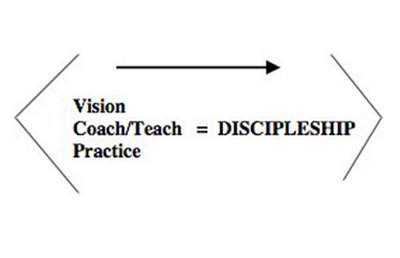
There are very few people that possess all the abilities that characterize a discipler, even though that is what Jesus called us to be. The best we can hope for is a visionary who can see what needs to be done based on having touched and smelled the battle that he is asking the practioner to commit their lives to; for teachers who instruct out of experience, not mere academic theory; through their failures as well as successes in the trenches of real life. A true servant leader is one, like our Lord, who walked the talk, who led through doing, whose chief aim was to do the will of the Father. He did it all by serving alongside, no, in the midst, of those He came to serve.
Like most corporations, the mission industry structure is usually top down. The western church functions so much like a business firm that we have adopted its language, thus we have CEO’s, vice presidents, department heads all the way down to the people who actually churn out a product – in our case, a church plant.

There is nothing inherently wrong with this structure; doesn’t make any difference whether it’s right or wrong, it’s a system that we are stuck with. We pray our CEO’s will learn “servant leadership,” and we tell our teachers that they are now “facilitators.” In many organizations, certainly not all, neither the visionary or the teacher has planted a church, wrestled with the pain of growing a church and haven’t spent twenty-four hours in a village among the unreached people they proclaim to have heart for. I know of one CEO who failed on the field, didn’t even plant a cell group, didn’t get along with the nationals or colleagues on the field but is now head of his sending agency! Go figure. But I digress.
In a perfect world, with a perfect church the perfect structure is not vertical but horizontal. What shall we call it? How about the Jesus model? Jesus knew how to cast the vision; He did ministry (not in a five star but something between a foxes hole and a birds nest), and he taught/coached in the process. His followers wanted Him to be the CEO of the Kingdom, but He turned it down. He could have been the great rabbi/guru, but He wasn’t content just to tell others how to do it, He actually did Kingdom work, He taught by example.

There are very few people that possess all the abilities that characterize a discipler, even though that is what Jesus called us to be. The best we can hope for is a visionary who can see what needs to be done based on having touched and smelled the battle that he is asking the practioner to commit their lives to; for teachers who instruct out of experience, not mere academic theory; through their failures as well as successes in the trenches of real life. A true servant leader is one, like our Lord, who walked the talk, who led through doing, whose chief aim was to do the will of the Father. He did it all by serving alongside, no, in the midst, of those He came to serve.
Friday, September 29, 2006
No Easy Way
I was already in bed when the phone rang. The guy on the other end was a prior student and friend working in one of the former Soviet Union countries. He was calling to get some advice. The work is slow, the language is difficult and after 11 years in the country he said he “felt trapped.” His sending agency won’t give him permission to move to another field where he feels he would be more effective.
“I remember you saying in class,” he recounted, “that there are no more easy places left in the world to serve, only the hard fields.”
Of course there are no easy fields; everything is relative. However, there are countries that are seemingly easier. Countries where the language is manageable, receptive is high, good schools for kids, easy transportation, temperate weather, all make life easier. This guy lives in a place that has none of the above. I doubt that my advice was helpful and as I hung up the phone I was reminded once again the importance of finding one’s niche in ministry.
Evaluating ministry is tough. I recently posted a question to some pastors in the US on what type of missionaries their congregations are drawn to. Their answers were revealing. People who get support are those who have a good media presentation, are articulate, going to fields that are appealing, where there are results. Not one said their mission programs focused on a people group or unreached areas of the world. The heck with strategy …if they have cute kids they will get the support (obviously I’m being facetious, but I’m not too far off from reality).
Another relative ministry is vision casting. True, without vision the people perish, but it’s relative easier to talk about what needs to be done versus those who are doing it. My friend is just a meat and potatoes guy, daily struggling to help the national church, teaching theology and working with pastors. Last week I taught a group of twelve men who are preparing to go to the villages of their country, the backwaters where there are few, if any, believers; places where persecution is often coupled with resistance. The vision casters talk about reaching the nations for Christ, these guys are doing it.
In God’s grand design, we need the visionaries, they motivate others to be involved (primarily financially), and that’s a good thing. But, while the vision casters are staying in nice hotels, wine and dined by the American church, the guys that are really doing the work are marginalized. The vision casters will show the faces of the practioners in their media presentations but the national worker often lives a life of poverty and discouragement (sometimes the "trickle down theory in supporting nationals is just that, a trickle, at best). In spite of the hardships they rejoice in their privilege to serve their Savior.
This post isn’t about dishing anyone; it’s a reminder that we all need to keep missions in balance. Visionaries, practitioners, facilitators, coaches, evangelists, teachers are all important work. However, an attractive young couple does not a mission strategy make. Relatively speaking, getting up front of people showing a presentation, casting a vision what needs to be done, is a lot harder than actually doing it. There are no easy fields, but there are some fields that are definitely more difficult.
“I remember you saying in class,” he recounted, “that there are no more easy places left in the world to serve, only the hard fields.”
Of course there are no easy fields; everything is relative. However, there are countries that are seemingly easier. Countries where the language is manageable, receptive is high, good schools for kids, easy transportation, temperate weather, all make life easier. This guy lives in a place that has none of the above. I doubt that my advice was helpful and as I hung up the phone I was reminded once again the importance of finding one’s niche in ministry.
Evaluating ministry is tough. I recently posted a question to some pastors in the US on what type of missionaries their congregations are drawn to. Their answers were revealing. People who get support are those who have a good media presentation, are articulate, going to fields that are appealing, where there are results. Not one said their mission programs focused on a people group or unreached areas of the world. The heck with strategy …if they have cute kids they will get the support (obviously I’m being facetious, but I’m not too far off from reality).
Another relative ministry is vision casting. True, without vision the people perish, but it’s relative easier to talk about what needs to be done versus those who are doing it. My friend is just a meat and potatoes guy, daily struggling to help the national church, teaching theology and working with pastors. Last week I taught a group of twelve men who are preparing to go to the villages of their country, the backwaters where there are few, if any, believers; places where persecution is often coupled with resistance. The vision casters talk about reaching the nations for Christ, these guys are doing it.
In God’s grand design, we need the visionaries, they motivate others to be involved (primarily financially), and that’s a good thing. But, while the vision casters are staying in nice hotels, wine and dined by the American church, the guys that are really doing the work are marginalized. The vision casters will show the faces of the practioners in their media presentations but the national worker often lives a life of poverty and discouragement (sometimes the "trickle down theory in supporting nationals is just that, a trickle, at best). In spite of the hardships they rejoice in their privilege to serve their Savior.
This post isn’t about dishing anyone; it’s a reminder that we all need to keep missions in balance. Visionaries, practitioners, facilitators, coaches, evangelists, teachers are all important work. However, an attractive young couple does not a mission strategy make. Relatively speaking, getting up front of people showing a presentation, casting a vision what needs to be done, is a lot harder than actually doing it. There are no easy fields, but there are some fields that are definitely more difficult.
Monday, September 25, 2006
Narrative of Grace
 What is it about Christ Jesus that draws people? Skeptics say that only the poor and uneducated people become followers of Christ. It can’t be they intellectually believe in His message, marginalized people are drawn to Christianity so they will have place in society. Marx believed religion was “an opium” for the masses, a mind altering activity so that people could cope their miserable conditions. For some, perhaps this argument is valid, but certainly not accurate for many true followers of Christ.
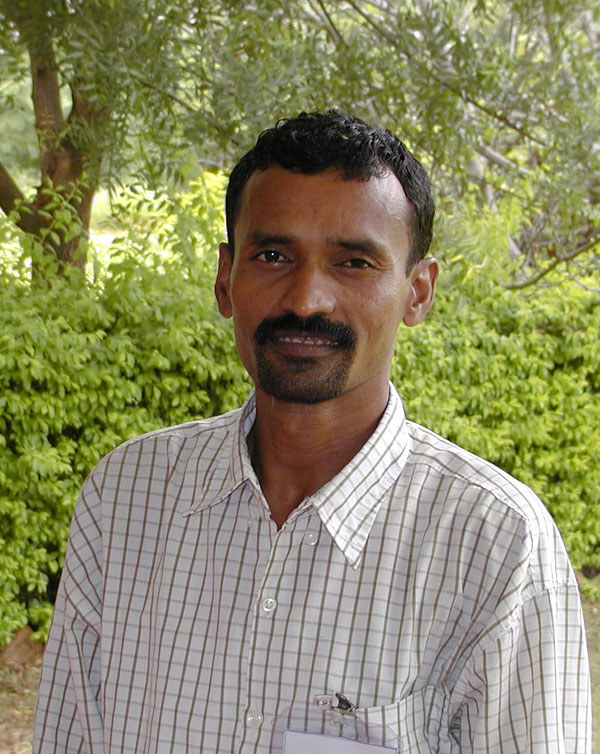
As I sat and listened to Nakul’s story it was truly a remarkable narrative of God’s grace on one man’s life. He told me that at birth he was so tiny (I am guessing born premature), his father, believed he would not live so he tossed him into a pit. A cousin rescued Nakul from the trenched and nursed him. When he was nearly two years old his father came to take him back to their home. Nakul’s mother died before he was three and he has no memory of her. Nakul’s father did not remarry and with five children he could not manage his household so placed Nakul into a Catholic school where he remained until he was eighteen. I asked him if he learned about Jesus while in school and he said no. He learned songs, even prayers, but they did not read the Bible or have classes on the Christian faith.
From high school he worked menial jobs -- breaking rocks, farm labor, manning a PCO station (Public Call Outlets, private run business where anyone with a telephone line can set up a booth from their house and charge people to use their phone). His existence was the typical life that millions of Indian young men live every day.
There was a pastor of a small Mennonite Church in the area who would often use Nakul’s PCO. Each time the pastor came he talked to Nakul about Christ and invited him to church. At first Nakul just argued with the pastor, not interested in the Christian religion. Out of persistence from the pastor and curiosity by Nakul, he eventually went to the church and heard how God loved him and that He gave His only Son Jesus Christ that he might have salvation.
“The one thing in my life I never had,” said Nakul, “was to know that someone loved me. I never knew my mother, cast aside by my father. My brothers and sisters tried to help me in life, but it wasn’t until I heard the Gospel that I understood what it meant to be loved by someone.”
Though Nakul grew up in difficult circumstances you can tell he has keen intellect and a ferocious reader. He eventually received a scholarship at a seminary where he earned an MTh. Nakul is still very much, what many would consider, a common man. Married at the age of thirty-five, he now has one daughter and talks often of his family, people in his life he loves.
Mother Tersa use to say that the greatest poverty in the world was not the lack of money, but the poverty of love and compassion. Whether one is born rich or poor, high caste or low caste, the one common denominator is that people long to loved, that they matter to someone. Nakul was blessed to hear the message, “While we were still in our sins, Christ loved us and gave Himself for us.” It is the love of Christ that draws people to Himself. It is the love of Christ that motivates us to love others and tell the story how God loves them.
Tuesday, September 19, 2006
#5 Why I Love My Job
The fifth reason why I love my job has not always been so. In the early years of my ministry telling the story about our work was rewarding. To tell churches in the U.S. about the Pokot and Turkana people I worked with in the bush was something I felt was educational, therefore beneficial. The transformation of an animist to a believer in the One true living God was a testimony of His power and goodness. People were fascinated with my stories as well as with pictures of people right of National Geographic.
When I became a trainer, coach and consultant to missionaries the story did not seem to be as interesting, it didn’t have that ZING factor. Mission’s is an emotional enterprise. One can become emotional about a half-naked bushman becoming a follower of Christ, but it’s hard to work up much of a heart wrenching illustration about helping others create an effective strategy for cross-cultural ministry. Of course I see the exciting transformation in the lives of my students each time I teach. People, of all ages, educational background, as well as ethnic/linguistic background come into my class with ho-hum expectations and leave with a renewed vision of how they can actually become agents of transformation!
Though it is difficult to capture the passion or emotion of my work, it is a story that I still believe is worth telling people about. The transformation of a soul, from dark to light, from ignorance to understanding, is a work of God. However, it it is the presentation of His followers that is the catalyst, the bridge, from Word to faith. Unless the missionary from Korea, Ukraine, India, America, Nicaragua grasp the dynamics of cross-cultural communication the message of hope and life will lie dormant as ungerminated seed on the side of the road.
The message of Christ is more often ignored than it is rejected. Pastors and missionaries drone through their message and irrelevant theology, undergirded by stale orthodoxy. Our speech is largely Bible babble rather than compelling reasons for people to turn from their indifference to God, their consuming lusts, their superstitions, to a message of hope and meaning. The message of the Cross will always be an offense to the majority, but I see nothing in Scripture that commands His messengers be so. If they hate us, let it be for the truth that we deliver in a culturally relevant way, not because we are careless in how we present the message in their context.
For me, the zing factor happens when I receive a note, in broken English, from a former student in Nepal who is working with a tribal group in the forest,
“Until I took your class I did not truly understand how to talk to the Raute people. Now I know better how to talk to them.”
Though I will never see this man's work or be able to take pictures of the half-naked forest dwellers, his story is partly my story. It's a story, not just of people coming to know the God of heaven, but how God uses all of us -- me, people who support missions and the Nepalese missionary who serves a people that God is drawing to Himself. I've got a great job and I love it!
When I became a trainer, coach and consultant to missionaries the story did not seem to be as interesting, it didn’t have that ZING factor. Mission’s is an emotional enterprise. One can become emotional about a half-naked bushman becoming a follower of Christ, but it’s hard to work up much of a heart wrenching illustration about helping others create an effective strategy for cross-cultural ministry. Of course I see the exciting transformation in the lives of my students each time I teach. People, of all ages, educational background, as well as ethnic/linguistic background come into my class with ho-hum expectations and leave with a renewed vision of how they can actually become agents of transformation!
Though it is difficult to capture the passion or emotion of my work, it is a story that I still believe is worth telling people about. The transformation of a soul, from dark to light, from ignorance to understanding, is a work of God. However, it it is the presentation of His followers that is the catalyst, the bridge, from Word to faith. Unless the missionary from Korea, Ukraine, India, America, Nicaragua grasp the dynamics of cross-cultural communication the message of hope and life will lie dormant as ungerminated seed on the side of the road.
The message of Christ is more often ignored than it is rejected. Pastors and missionaries drone through their message and irrelevant theology, undergirded by stale orthodoxy. Our speech is largely Bible babble rather than compelling reasons for people to turn from their indifference to God, their consuming lusts, their superstitions, to a message of hope and meaning. The message of the Cross will always be an offense to the majority, but I see nothing in Scripture that commands His messengers be so. If they hate us, let it be for the truth that we deliver in a culturally relevant way, not because we are careless in how we present the message in their context.
For me, the zing factor happens when I receive a note, in broken English, from a former student in Nepal who is working with a tribal group in the forest,
“Until I took your class I did not truly understand how to talk to the Raute people. Now I know better how to talk to them.”
Though I will never see this man's work or be able to take pictures of the half-naked forest dwellers, his story is partly my story. It's a story, not just of people coming to know the God of heaven, but how God uses all of us -- me, people who support missions and the Nepalese missionary who serves a people that God is drawing to Himself. I've got a great job and I love it!
Saturday, September 16, 2006
Kingdom Lessons Learned On The Train
Not sure why but the day after 26 hours on a train is a lot like jetlag. No time change, obviously, but the constant motion on the tracks drains me. Eating rice with your fingers is an acquired skill, compounded with the swaying of the back and forth coach, it’s a wonder I get any thing in my mouth. It will take a couple of days to get my equilibrium. Eating supper last night at the house was odd as my plate didn’t move and I had the luxury of a fork.
The train home was empty, which is rare. 11 million people travel by train each day so riding in a coach that had just ten people was a blessing. When boarding I shared a compartment with a businessman. He was a nice guy but I jumped at the chance to switch to a side lower berth where I could be alone. He invited me to have a shot of whiskey with him, but I declined. It’s illegal to drink on the train, but many do.
Indians are very nosy people or, perhaps, just curious. The business guy asked me the standard questions, “Where are you from? What do you do? Why are you in India? What companies do you work with?” I answer most of the questions, “I live in Delhi, am a consultant, different companies, teach anthropology.” When it gets too personal or I just get tired of answering questions I smile and say, “That’s classified information, sorry.” I don’t feel obligated to satisfy all their curiosities.
Some other guys down the aisle must have been drinking as well as they were loud, laughed and played Punjabi music most of the way. I wished I had remembered my headphones to drown out the chatter.
I have been reading McLaren’s latest book, The Secret Message Of Jesus: Uncovering The Truth That Could Change Everything, which is about the real meaning of the Kingdom. His contention is that we, the church, have missed the point of our Lord’s teaching, that the Kingdom is not the future, but now. While our focus seems to be conversion, programs and building local mini-kingdom’s, he asserts that our attention should be in solving present problems such as disease, poverty and injustice. Nothing particularly new in his argument, but as my train passed through the villages I was struck again by the dismal way so many people have to live. Is my role, the role of all of us in evangelical circles, so out of whack with what the Kingdom is really all about?
As I ponder these thoughts, I get off the train and a woman, old, in rags, half-blind, stands before me with her hand out. I reach into my pocket for some money, knowing that no matter how many people I give to I haven’t solved anything. Are we missing the point? Perhaps it’s time of for a paradigm shift in how we live our lives. Status quo doesn’t quite satisfy.
The train home was empty, which is rare. 11 million people travel by train each day so riding in a coach that had just ten people was a blessing. When boarding I shared a compartment with a businessman. He was a nice guy but I jumped at the chance to switch to a side lower berth where I could be alone. He invited me to have a shot of whiskey with him, but I declined. It’s illegal to drink on the train, but many do.
Indians are very nosy people or, perhaps, just curious. The business guy asked me the standard questions, “Where are you from? What do you do? Why are you in India? What companies do you work with?” I answer most of the questions, “I live in Delhi, am a consultant, different companies, teach anthropology.” When it gets too personal or I just get tired of answering questions I smile and say, “That’s classified information, sorry.” I don’t feel obligated to satisfy all their curiosities.
Some other guys down the aisle must have been drinking as well as they were loud, laughed and played Punjabi music most of the way. I wished I had remembered my headphones to drown out the chatter.
I have been reading McLaren’s latest book, The Secret Message Of Jesus: Uncovering The Truth That Could Change Everything, which is about the real meaning of the Kingdom. His contention is that we, the church, have missed the point of our Lord’s teaching, that the Kingdom is not the future, but now. While our focus seems to be conversion, programs and building local mini-kingdom’s, he asserts that our attention should be in solving present problems such as disease, poverty and injustice. Nothing particularly new in his argument, but as my train passed through the villages I was struck again by the dismal way so many people have to live. Is my role, the role of all of us in evangelical circles, so out of whack with what the Kingdom is really all about?
As I ponder these thoughts, I get off the train and a woman, old, in rags, half-blind, stands before me with her hand out. I reach into my pocket for some money, knowing that no matter how many people I give to I haven’t solved anything. Are we missing the point? Perhaps it’s time of for a paradigm shift in how we live our lives. Status quo doesn’t quite satisfy.
Friday, September 08, 2006
Day Two on the Rajhdani Express
One really doesn’t sleep on a train; it’s more like dozing on and off the length of the journey. When the train stops at a station I am aware we’re not moving. I get up to use the toilet at 3 a.m. and it doesn’t make any difference if it’s the Indian or Western style, it all is a direct shot to the tracks below. It’s just matter if you want to squat or sit to make a deposit. Back on my bunk my head is cramped, my back is sore, but at least I don’t have to climb to the upper birth to resettle.
At 6 a.m. a guy pokes his head into my berth and ask if I want coffee or chai. “Nay,” I tell him plainly as I role over to get another twenty winks. At 7:30 breakfast is served. I ordered the night before a non-veg. breakfast meaning an omelet. As I unfurled the foil from the tiny container, along with my egg are English peas and four French fries; the allies are with me, neither of which are much help. Scraping off the peas, I place my omelet between the two dry pieces of bread that is a part of my dining pleasure. Not bad. The tea was good.
I decided to travel by train on this trip because I wanted to see the Indian countryside. I could have flown and the trip would have only been two hours instead of the nearly twenty-four by Rahjdani Express. Living in the capital city is wonderful as it is progressive and, in some places, modern. In the bubble of the city, however, I forget that most of the population still lives in the villages or smaller cities. As I look out the dirty window from my coach I am reminded of the India I met fourteen years ago.
Because it is the monsoon season the landscape is lush green with fields of rice, sugarcane, wheat and assortment of vegetables. The goat’s meander in the fields looking for grass, boys sit on top of their water buffalo’s all day long as they guide them to pasture. Women carry water in round pots on their heads or hips, but these days the vessels are more likely to be plastic than copper. Their sari’s and head coverings have the flavor of village life in the time of Jesus in Palestine rather than modern India.
Of course it’s not paradise. Trash litters the tracks. As the train passes through villages the houses by the tracks are the slum dwellers, landless people who erect any covering of stick and plastic just to have a place to sleep. Kids play near stagnate water, where the pigs and garbage are mixed. The sunrise squatters, as I call them, bear their back end, oblivious to the passengers on the train. Without latrines the best they can hope for would be a bush to conceal their morning ritual, but privacy is not a part of their worldview so an open field seems to be work just fine.
How different these villagers are to those who share my coach. Most of the men have a brief case and cell phones. I notice a lady two sectors down wearing blue jeans with a stylish top. Young people wear shorts, T-shirts that read, “Trouble Is On It’s Way,” and little kids play with their electronic games with their continuous and irritating beeps. The language around me is mostly Hindi, but there is a good mixture of English and local languages as well. I am not looked upon as odd or out of place, just another traveler from a different part of the world.
At 6:45 p.m. we slowly pull into the Secunderabad station. I gather my things and head for the door. This train will continue on another twelve hours to Bangalore so the young girl may have claimed my berth as I stepped from the coach. On the platform a man with a sign of the school I will be teaching is waiting for me. Just one more hour of traveling and I will lie down on a bed that doesn’t move.
At 6 a.m. a guy pokes his head into my berth and ask if I want coffee or chai. “Nay,” I tell him plainly as I role over to get another twenty winks. At 7:30 breakfast is served. I ordered the night before a non-veg. breakfast meaning an omelet. As I unfurled the foil from the tiny container, along with my egg are English peas and four French fries; the allies are with me, neither of which are much help. Scraping off the peas, I place my omelet between the two dry pieces of bread that is a part of my dining pleasure. Not bad. The tea was good.
I decided to travel by train on this trip because I wanted to see the Indian countryside. I could have flown and the trip would have only been two hours instead of the nearly twenty-four by Rahjdani Express. Living in the capital city is wonderful as it is progressive and, in some places, modern. In the bubble of the city, however, I forget that most of the population still lives in the villages or smaller cities. As I look out the dirty window from my coach I am reminded of the India I met fourteen years ago.
Because it is the monsoon season the landscape is lush green with fields of rice, sugarcane, wheat and assortment of vegetables. The goat’s meander in the fields looking for grass, boys sit on top of their water buffalo’s all day long as they guide them to pasture. Women carry water in round pots on their heads or hips, but these days the vessels are more likely to be plastic than copper. Their sari’s and head coverings have the flavor of village life in the time of Jesus in Palestine rather than modern India.
Of course it’s not paradise. Trash litters the tracks. As the train passes through villages the houses by the tracks are the slum dwellers, landless people who erect any covering of stick and plastic just to have a place to sleep. Kids play near stagnate water, where the pigs and garbage are mixed. The sunrise squatters, as I call them, bear their back end, oblivious to the passengers on the train. Without latrines the best they can hope for would be a bush to conceal their morning ritual, but privacy is not a part of their worldview so an open field seems to be work just fine.
How different these villagers are to those who share my coach. Most of the men have a brief case and cell phones. I notice a lady two sectors down wearing blue jeans with a stylish top. Young people wear shorts, T-shirts that read, “Trouble Is On It’s Way,” and little kids play with their electronic games with their continuous and irritating beeps. The language around me is mostly Hindi, but there is a good mixture of English and local languages as well. I am not looked upon as odd or out of place, just another traveler from a different part of the world.
At 6:45 p.m. we slowly pull into the Secunderabad station. I gather my things and head for the door. This train will continue on another twelve hours to Bangalore so the young girl may have claimed my berth as I stepped from the coach. On the platform a man with a sign of the school I will be teaching is waiting for me. Just one more hour of traveling and I will lie down on a bed that doesn’t move.
Wednesday, September 06, 2006
Long Train To Hyderabad
I gazed into the night sky, watching the rain hitting the awning at H. Nizamuddin railway station while waiting for the Rajdhani Express to arrive. I was glad my train departed from this station rather than the main station in New Delhi as HN was forty-five minutes closer to our house. When it rains in this city the streets are easily flooded and traffic, always congested, becomes a snarl as auto rickshaws, buses, cars, motorbikes all try to navigate through pools of water.
I have been riding trains in this country for fifteen years and it is always an adventure. Huddled with other passengers under the canopy I watched as porters pulled hand carts loaded with freight, coolies carrying luggage on their heads for travelers, beggars pulling on my shirt asking for a handout, hawkers selling everything from chains and locks for personal luggage to fruit and bottled water. At other times I’ve watched rats darting in-between posts to find food or playing on the tracks below. No rats tonight, too much rain.
As my train arrives I look for coach A3. I get on and find that my seat is in the middle of a three-tier sleeper and I’m disappointed. My ticket reads a lower side berth so I wonder if I boarded the on the wrong coach? I have plenty of time, so I quickly lock my bags under the lower berth seat and walk down the train platform. Sure enough, I got on AS3; A3 was the second-to-last car at the end of the train.
When I finally find my proper place a young lady had parked herself on seat number five.
“Would you prefer the lower berth?” she asked, hoping it didn’t matter to me.
“Yes,” I said kindly but with firmness, “I’m getting too old to climb up and down to the upper berth.”
You could tell she wasn’t pleased and I suspected I would have to negotiate more to get my assigned seat. I have learned in this country that people are willing to inconvenience others for their convenience. As a student of culture, I’ve learned the rules of how they play the game. If it were an older woman or elderly man I would have gladly made the adjustment, but if status means anything in this society, and it surely does, my grey hair trumped her youthful aggressive gender.
She did not budge, but I was willing to wait. It would not be until the train manager came and inspected our tickets or after supper that I would need my bed, so I sat next to another man, took out a book and began to read. The train pulled out of the station on time, 8:50 p.m.
I refused supper, as I was still full from the lunch earlier in the day. Sandy and I went with some friends to Kareem’s, a Muslim restaurant in the heart of a Muslim colony not far from where we lived. The mutton gravy, dal (bean gravy), chicken and roti (bread), was still heavy on my stomach.
After everyone had finished their supper the porter came by and distributed our bedding. Two clean white sheets, a pillow, washcloth and a blanket. They all looked like army issue bedding, especially the brown coarse blanket. The young girl slipped out of the compartment to wash her hands and I took charge of my space. When she returned I was making my bed. Knowing that I had the advantage she climbed to the berth above me without a word of protest.
For the next two hours I read, a novel I picked up for the journey. I seldom read fiction, but when you know you are going to sitting in one place for twenty hours you look for anything that will engage your mind, even if it has no eternal value. I only read Indian novels and search for those that can tell a good story and that which will also give me insights into the culture.
This particular book is about a young north Indian writer with two great struggles -- writers block and, more significantly, his loss of desire for his lover of fifteen years. To read the story you’d think he’d hardly have time to think about a narrative as he is consumed with reliving, in graphic detail, the passion he once had for the slender, dark haired and fair woman. I wade through the frequent salacious scenes, but more intrigued with the settings of his apartment in Vasant Kunj, Chandi Chowk, Lajpat Nagar and the social interaction of the players in his life. To read from the mind’s eye of another with the benefit of living in this same context, having touched, smelled and seen with my physical eye the word pictures he is painting, makes for engaging distraction.
As my fellow passengers settle in for the night, I turn off my reading light and try to get comfortable on the one inch shorter than needed slab that is my bed. The rhythm of the swaying train and the tempo of metal wheels on steel tracks lull me to sleep. Just nineteen more hours and I will arrive in Hyderabad.
(to be continued)
I have been riding trains in this country for fifteen years and it is always an adventure. Huddled with other passengers under the canopy I watched as porters pulled hand carts loaded with freight, coolies carrying luggage on their heads for travelers, beggars pulling on my shirt asking for a handout, hawkers selling everything from chains and locks for personal luggage to fruit and bottled water. At other times I’ve watched rats darting in-between posts to find food or playing on the tracks below. No rats tonight, too much rain.
As my train arrives I look for coach A3. I get on and find that my seat is in the middle of a three-tier sleeper and I’m disappointed. My ticket reads a lower side berth so I wonder if I boarded the on the wrong coach? I have plenty of time, so I quickly lock my bags under the lower berth seat and walk down the train platform. Sure enough, I got on AS3; A3 was the second-to-last car at the end of the train.
When I finally find my proper place a young lady had parked herself on seat number five.
“Would you prefer the lower berth?” she asked, hoping it didn’t matter to me.
“Yes,” I said kindly but with firmness, “I’m getting too old to climb up and down to the upper berth.”
You could tell she wasn’t pleased and I suspected I would have to negotiate more to get my assigned seat. I have learned in this country that people are willing to inconvenience others for their convenience. As a student of culture, I’ve learned the rules of how they play the game. If it were an older woman or elderly man I would have gladly made the adjustment, but if status means anything in this society, and it surely does, my grey hair trumped her youthful aggressive gender.
She did not budge, but I was willing to wait. It would not be until the train manager came and inspected our tickets or after supper that I would need my bed, so I sat next to another man, took out a book and began to read. The train pulled out of the station on time, 8:50 p.m.
I refused supper, as I was still full from the lunch earlier in the day. Sandy and I went with some friends to Kareem’s, a Muslim restaurant in the heart of a Muslim colony not far from where we lived. The mutton gravy, dal (bean gravy), chicken and roti (bread), was still heavy on my stomach.
After everyone had finished their supper the porter came by and distributed our bedding. Two clean white sheets, a pillow, washcloth and a blanket. They all looked like army issue bedding, especially the brown coarse blanket. The young girl slipped out of the compartment to wash her hands and I took charge of my space. When she returned I was making my bed. Knowing that I had the advantage she climbed to the berth above me without a word of protest.
For the next two hours I read, a novel I picked up for the journey. I seldom read fiction, but when you know you are going to sitting in one place for twenty hours you look for anything that will engage your mind, even if it has no eternal value. I only read Indian novels and search for those that can tell a good story and that which will also give me insights into the culture.
This particular book is about a young north Indian writer with two great struggles -- writers block and, more significantly, his loss of desire for his lover of fifteen years. To read the story you’d think he’d hardly have time to think about a narrative as he is consumed with reliving, in graphic detail, the passion he once had for the slender, dark haired and fair woman. I wade through the frequent salacious scenes, but more intrigued with the settings of his apartment in Vasant Kunj, Chandi Chowk, Lajpat Nagar and the social interaction of the players in his life. To read from the mind’s eye of another with the benefit of living in this same context, having touched, smelled and seen with my physical eye the word pictures he is painting, makes for engaging distraction.
As my fellow passengers settle in for the night, I turn off my reading light and try to get comfortable on the one inch shorter than needed slab that is my bed. The rhythm of the swaying train and the tempo of metal wheels on steel tracks lull me to sleep. Just nineteen more hours and I will arrive in Hyderabad.
(to be continued)
Friday, September 01, 2006
#4 Why I Love My Job
I contend, as well as teach, that the key to success in working overseas is job satisfaction. People say they leave the field because of illness, conflict with associates, finances, persecution, culture stress and a host of other things, but almost any of those obstacles can be overcome if a person really feels they have, as is the title of my book, found their niche in their work.
My niche is teaching cross-cultural studies. Going cross-culturally has different levels. C1 is "like-culture" (mono), which is 90% of ministry activity. C2 is a different culture (better described as social environment) but similar, e.g. middle class Caucasians working with poor illiterate or Americans working in London. C3 is crossing a significant cultural boundary (middle class white American learning enough Arabic to work with Egyptians in Detroit). C4 (not plastic explosives) is anyone who moves from their country into another country, learns the host culture language, customs and social organization. This is the emic principle, becoming an insider. Having been blessed, not only having lived as a C4 worker but being educated in the discipline of how to study and different culture environments, I have a unique and fulfilling career niche.
Globalization means that our world is smaller and culture’s are merging into a collective lingua franca. Those who do not understand the dynamics of culture make the false assumption that similar equal same, believing that just a tweaking of presentation is all that is needed to effectively communicate across cultural barriers. It’s a fatal flaw. Look at any company, church, social or even government policy that is successful and you will find that someone in that organization knows how to read the culture of their market.
I recently taught a class where some MK’s from Australia was going back to the country they were raised. The director of the class warned me, that some of them didn’t feel they needed my class. They grew up in the culture; they didn’t need a cross-cultural course. I suppose it would be true, if they were going to serve exactly in the same place of their parents, among the same people they grew up with. IF, however, they dared to serve among a different geographical, ethnic, socio-economic or age group, they would need to learn the importance of cross-cultural studies. As I gave my presentation a few actually caught on and the lights of cultural understanding started to flicker.
Tomorrow I get on a train, travel 24 hours to a remote part of the country to teach nationals on how to communicate the Gospel in a culturally relevant way. My job is unique; few can do it. I truly have job satisfaction. I love my job.
My niche is teaching cross-cultural studies. Going cross-culturally has different levels. C1 is "like-culture" (mono), which is 90% of ministry activity. C2 is a different culture (better described as social environment) but similar, e.g. middle class Caucasians working with poor illiterate or Americans working in London. C3 is crossing a significant cultural boundary (middle class white American learning enough Arabic to work with Egyptians in Detroit). C4 (not plastic explosives) is anyone who moves from their country into another country, learns the host culture language, customs and social organization. This is the emic principle, becoming an insider. Having been blessed, not only having lived as a C4 worker but being educated in the discipline of how to study and different culture environments, I have a unique and fulfilling career niche.
Globalization means that our world is smaller and culture’s are merging into a collective lingua franca. Those who do not understand the dynamics of culture make the false assumption that similar equal same, believing that just a tweaking of presentation is all that is needed to effectively communicate across cultural barriers. It’s a fatal flaw. Look at any company, church, social or even government policy that is successful and you will find that someone in that organization knows how to read the culture of their market.
I recently taught a class where some MK’s from Australia was going back to the country they were raised. The director of the class warned me, that some of them didn’t feel they needed my class. They grew up in the culture; they didn’t need a cross-cultural course. I suppose it would be true, if they were going to serve exactly in the same place of their parents, among the same people they grew up with. IF, however, they dared to serve among a different geographical, ethnic, socio-economic or age group, they would need to learn the importance of cross-cultural studies. As I gave my presentation a few actually caught on and the lights of cultural understanding started to flicker.
Tomorrow I get on a train, travel 24 hours to a remote part of the country to teach nationals on how to communicate the Gospel in a culturally relevant way. My job is unique; few can do it. I truly have job satisfaction. I love my job.
Tuesday, August 29, 2006
The Power of the Physical
For as long as I knew my mother-in-law she observed one solemn ritual, Decoration Day. In the south, each spring local cemeteries would set aside a day for this special occasion where relatives would go and put flowers on the headstone of their departed loved ones. It’s also a time to remove unsightly weeds and other debris, a type of spring-cleaning for the graveyard. Memorial Day, which initially established to remember fallen soldiers, has taken over Decoration Day, but has the same function.
Of course my mother-in-law understood the remains under the sod had no spiritual significance, at least I don’t think she did, but rather the gravesite was a touchstone, a physical connection to the one who was no more. Catholics in South America has a similar practice called All Saints Day. Some of them have a superstitious notion that by praying to their kin the dead relatives will grant their requests, or perhaps take the request to the Virgin Mary, Saint Peter or maybe even to Jesus Himself. Buddhist pray to their ancestors. Even my aged and sickly Hindu neighbor told me the other day he prays to his mother that she will grant his wish to let him die. Idols, temples, churches, saints even cemeteries are “sacred space,” for us mortals. Why do people do revere these things? It’s the power of the physical. What we see, touch, posses we can conceptualize as real. What we cannot see is perhaps just myth.
Capitalism and the free market economy is the driving force behind the power of the physical. My sister-in-law sells cars, but not just any car, she sells BMW’s. Ah, but she sells more than automobiles, she sells image. If you drive a BMW you are making a statement that you are successful. Certainly a BMW is a nice car, but it has the basics you will find on a Ford or Honda, or even a horse cart for that matter. Four round wheels, a place to sit, a steering system and a power source. Depending on image preference, capitalism will steer (no pun intended) a demographic buyer toward the $40K silver roadster or $40K double cab pickup. Both conjure a powerful physical symbol in the automotive market.
Because we are physical people, living in a physical world, our value system is influenced by our material world. A person's weight, color of hair, whiteness of teeth, skin tone, dress, social associations, house, the comforts one strives for, all point to the physical. Fat means lazy, dark skin means lower class (or caste...or terroist), plastic means poor, country club means status. We kill, cheat, horde for the our cherished physical symbols.
The church is not immune to the power of the physical. The buildings they erect, the music they perform, the programs they create for the special focus groups in their congregation, are all a part of the emphasis on the physical. As I listen to pastors the topic generally is about the three “P’s,” programs, presentation and property. In missions, the focus is on churches planted, fostering a people movement, reproducing the western physical in a foreign context.
What’s the harm? Nothing, except that there are two dimensions of man, one physical the other is the metaphysical (see 8/22 post). So dominant is the physical that it not just overwhelms, it often annihilates the spiritual. The more one buys into the physical the less we are even aware of our “real” needs, which is to love the Lord our God with all our heart, and to love our neighbor as ourselves. When was the last time you heard, in a church business meeting, a serious discussion in the budget to help the homeless, the drug addicts, elderly or handicapped in the community? How ironic that helping others with their physical may be the instrument God will use to lead us to the metaphysical.
As I write this I am aware of the tree trunk in my own eye. I am not only consumed with the physical, I fret and worry about it. Am I doing enough to satisfy my donors who want a report on those ‘saved’ or churches planted under my ministry? How can I make my presentation, my newsletters more attractive so that people will see that I’m a good investment for their support? How do I look before my peers? Do they see me as intellectually capable, or merely an intellectual-wannabe dufus? Do I really care as much about the rag pickers I see on my morning walks as I do about my retirement portfolio? Am I like the young ruler who turned away from Jesus, so close to the kingdom, but walked away sad because he had much wealth he was unable to part with?
Of course Jesus was the antithesis of those dominated by the physical. He didn’t dress for success, he ate with the wrong crowd, blessed and cared for the wrong people. The only image he was concerned about was reflecting the image of His Father. “If you’ve seen me work,” he told Philip, “you have seen the Father.” If I am to ever break this bondage of the physical I must fully embrace His words, “Seek first the kingdom [metaphysical] of God and these other things [physical] will be provided for you.”
Of course my mother-in-law understood the remains under the sod had no spiritual significance, at least I don’t think she did, but rather the gravesite was a touchstone, a physical connection to the one who was no more. Catholics in South America has a similar practice called All Saints Day. Some of them have a superstitious notion that by praying to their kin the dead relatives will grant their requests, or perhaps take the request to the Virgin Mary, Saint Peter or maybe even to Jesus Himself. Buddhist pray to their ancestors. Even my aged and sickly Hindu neighbor told me the other day he prays to his mother that she will grant his wish to let him die. Idols, temples, churches, saints even cemeteries are “sacred space,” for us mortals. Why do people do revere these things? It’s the power of the physical. What we see, touch, posses we can conceptualize as real. What we cannot see is perhaps just myth.
Capitalism and the free market economy is the driving force behind the power of the physical. My sister-in-law sells cars, but not just any car, she sells BMW’s. Ah, but she sells more than automobiles, she sells image. If you drive a BMW you are making a statement that you are successful. Certainly a BMW is a nice car, but it has the basics you will find on a Ford or Honda, or even a horse cart for that matter. Four round wheels, a place to sit, a steering system and a power source. Depending on image preference, capitalism will steer (no pun intended) a demographic buyer toward the $40K silver roadster or $40K double cab pickup. Both conjure a powerful physical symbol in the automotive market.
Because we are physical people, living in a physical world, our value system is influenced by our material world. A person's weight, color of hair, whiteness of teeth, skin tone, dress, social associations, house, the comforts one strives for, all point to the physical. Fat means lazy, dark skin means lower class (or caste...or terroist), plastic means poor, country club means status. We kill, cheat, horde for the our cherished physical symbols.
The church is not immune to the power of the physical. The buildings they erect, the music they perform, the programs they create for the special focus groups in their congregation, are all a part of the emphasis on the physical. As I listen to pastors the topic generally is about the three “P’s,” programs, presentation and property. In missions, the focus is on churches planted, fostering a people movement, reproducing the western physical in a foreign context.
What’s the harm? Nothing, except that there are two dimensions of man, one physical the other is the metaphysical (see 8/22 post). So dominant is the physical that it not just overwhelms, it often annihilates the spiritual. The more one buys into the physical the less we are even aware of our “real” needs, which is to love the Lord our God with all our heart, and to love our neighbor as ourselves. When was the last time you heard, in a church business meeting, a serious discussion in the budget to help the homeless, the drug addicts, elderly or handicapped in the community? How ironic that helping others with their physical may be the instrument God will use to lead us to the metaphysical.
As I write this I am aware of the tree trunk in my own eye. I am not only consumed with the physical, I fret and worry about it. Am I doing enough to satisfy my donors who want a report on those ‘saved’ or churches planted under my ministry? How can I make my presentation, my newsletters more attractive so that people will see that I’m a good investment for their support? How do I look before my peers? Do they see me as intellectually capable, or merely an intellectual-wannabe dufus? Do I really care as much about the rag pickers I see on my morning walks as I do about my retirement portfolio? Am I like the young ruler who turned away from Jesus, so close to the kingdom, but walked away sad because he had much wealth he was unable to part with?
Of course Jesus was the antithesis of those dominated by the physical. He didn’t dress for success, he ate with the wrong crowd, blessed and cared for the wrong people. The only image he was concerned about was reflecting the image of His Father. “If you’ve seen me work,” he told Philip, “you have seen the Father.” If I am to ever break this bondage of the physical I must fully embrace His words, “Seek first the kingdom [metaphysical] of God and these other things [physical] will be provided for you.”
Friday, August 25, 2006
#3 Why I Love My Job
 There is a difference between working with, working for, working alongside national church leaders. There is a lot of talk about “facilitating” the national church, but, like the details, somewhere the devil is in the definition.
When a North American organization states they are working with the national church, many times they mean they have a program or agenda and they have found nationals who provide local bodies to be a part of the program. Many of the facilitating projects in the world are American led and financed, working with nationals. In the grand scheme of things, this is not always bad, but it is not exactly what I do.
A few years back I heard a pastor of a national church say, “Foreign missionaries coming to this country should submit themselves to the national church. If they want to help our country they should serve under the direction of the national leadership.” What he was saying was the role of expat’s should be to work for them. If I was under thirty years old, had no experience overseas, I could see where that might be a rational suggestion. Provided the national leader knew what he was doing, wouldn’t try to exploit free labor and was willing to mentor me in the process of learning culture and ministry. The leader who made this comment is a wonderful person, but he’s not even a good pastor (working with people), so I would hate to think what type of a mentor he would be. Being over forty, ah, over fifty, with thirty years of service and being an independent type, the “S” word is not something I am comfortable with. At this point in my life I don’t want to work for even my most respected national leaders. Like borrowing money, that would be a recipe to end a wonderful friendship.
The reason I love my job at this stage of life is that I truly do work alongside the national church. Because my training is unique (a future post), I do not have to build anything, fund anything (except my training expenses) and, I am not lording over others nor being lorded over. Working alongside national pastors I do not get involved in their finances, politics or internal conflicts. Being a true facilitator is probably the most effective way a North American can serve the national church today.
And, what wonderful national leaders I have worked alongside! In the second term of our work in Kenya I released all responsibilities and decision making to the national pastors. It took awhile, not always a smooth transition, but today they are some great leaders I now visit and facilitate. In India, those I work alongside, are people with vision and unusually high ethical standards. Many of these leaders have their PhD’s, have a passion for Christ and know the difference between with and for. When I go to other countries, like Serbia recently, Moldova in November, I do so knowing that what I provide in training is for their benefit, not my own.

Admittedly, my job is unique. A combination of having the right educational credentials, practical and real life cross-cultural experience, and nearly two million road miles, I am, not one of a kind, but one of the few, who can truly serve in a facilitative role to the church. At this stage in life is it any wonder…I love my job.
Wednesday, August 23, 2006
38 Years of Travel
We met in February, walked down the aisle six months later. We really didn’t know much about each other when we started our journey together, and after thirty-eight years, today, we still don’t always get it exactly right. But, we’re doing better. I can’t imagine what the trek would have been without you. Happy anniversary Sandy.
Tuesday, August 22, 2006
The Gap Between the Physical and the Spiritual
Sometimes my readings come together as a fusion of thought. Yancey (whose book is like a like a good cigar that is to be savored one delightful draw at a time, not puffed as though it was a cigarette on a two minute break) writes of the power of harnessing the physical. “Whoever masters the material world,” he writes, “determines future’s fate.”
Our forefathers harnessed the power of horses, then steam and electricity. Today’s harness is nuclear energy and the microchip. The nations who have the capability to control the physical are advanced; those without such capabilities are regulated to “developing countries,” which means less advanced, even backward.
At the same time I’m reading Paul Hiebert’s book on epistemology. I’m familiar with Hiebert's work so this is more review than new thought, but his reasoning on physics and metaphysics coincided with Yancey’s readings. Aristolean thought divides the world into two dimensions, thus dualism postulates the physical and spiritual world. Hiebert makes the argument that the “reductionist” view of only seeing the world in either one of these spheres can be fatal. For the materialist, his world is detrmined by what he/she can possess and control (a microcosm of state control of material). How one looks, what does for a living, authority, what ones possess or strives to hold is the land of the physical. To focus on the “other world,” where one lives life in light of only the spiritual dimension makes one a monk, sadu or perhaps a fundamental zealot. These are the people who are often cited as being so heavnley minded they are of no earthly use.
The key, in both Yancey and Hiebert’s conclusion is recognize the balance (and isn’t that the key to everything?). Hiebert calls it critical tension, others call it holism. The reality is that, though there may be constitutionally a separation of church and state, there is no such thing as separation from the physical and the metaphysical. Humanity operates in the physical, but it’s transitory. We can neither totally harness it, nor are we to make it our all consuming passion. The spritual realm is real, but elusive. Man can seek the One whose voice he has not heard, his hand that he cannot see, but it is a world of conjecture until he leaves the physical.
After my readings this morning I went down stairs to visit my eighty-five year old landlord. Slowly growing weaker, he lamented that soon he will not have the strength to make it to the bathroom and wondered, “Who will clean me when I urinate or mess in my bed? How will I bathe when I stink so bad I cannot bathe myself?” He prays to die, but does not know the God to whom he seeks help. He no longer cares about controlling the physical, instead he longs for the release with a hope there is a spiritual dimension where he will not suffer. I walk away, knowing that his struggle today will not be mine. Because of ambition, vanity, pride, I will serve the material more than the metaphysical. By concentrating on the material I will control my fate. One day I will be like my friend and realize that’s not true at all.
Our forefathers harnessed the power of horses, then steam and electricity. Today’s harness is nuclear energy and the microchip. The nations who have the capability to control the physical are advanced; those without such capabilities are regulated to “developing countries,” which means less advanced, even backward.
At the same time I’m reading Paul Hiebert’s book on epistemology. I’m familiar with Hiebert's work so this is more review than new thought, but his reasoning on physics and metaphysics coincided with Yancey’s readings. Aristolean thought divides the world into two dimensions, thus dualism postulates the physical and spiritual world. Hiebert makes the argument that the “reductionist” view of only seeing the world in either one of these spheres can be fatal. For the materialist, his world is detrmined by what he/she can possess and control (a microcosm of state control of material). How one looks, what does for a living, authority, what ones possess or strives to hold is the land of the physical. To focus on the “other world,” where one lives life in light of only the spiritual dimension makes one a monk, sadu or perhaps a fundamental zealot. These are the people who are often cited as being so heavnley minded they are of no earthly use.
The key, in both Yancey and Hiebert’s conclusion is recognize the balance (and isn’t that the key to everything?). Hiebert calls it critical tension, others call it holism. The reality is that, though there may be constitutionally a separation of church and state, there is no such thing as separation from the physical and the metaphysical. Humanity operates in the physical, but it’s transitory. We can neither totally harness it, nor are we to make it our all consuming passion. The spritual realm is real, but elusive. Man can seek the One whose voice he has not heard, his hand that he cannot see, but it is a world of conjecture until he leaves the physical.
After my readings this morning I went down stairs to visit my eighty-five year old landlord. Slowly growing weaker, he lamented that soon he will not have the strength to make it to the bathroom and wondered, “Who will clean me when I urinate or mess in my bed? How will I bathe when I stink so bad I cannot bathe myself?” He prays to die, but does not know the God to whom he seeks help. He no longer cares about controlling the physical, instead he longs for the release with a hope there is a spiritual dimension where he will not suffer. I walk away, knowing that his struggle today will not be mine. Because of ambition, vanity, pride, I will serve the material more than the metaphysical. By concentrating on the material I will control my fate. One day I will be like my friend and realize that’s not true at all.
Friday, August 18, 2006
Why I Love My Job #2
 Many years ago I came across a video series called “Faces of Culture.” I still use segments of this anthropological series in my classes as I discuss kinship, economics, religion and worldview. Each segment begins with clips with faces of people around the world. One of the great perks of my job is being able to see the magnificent world that God created, the faces of culture.
When I started out in ministry I had no real knowledge, or interest, in people of other cultures. I was trained in mono-theology, mono-methodolgy and had every intention of living my life working in a mono-cultural pastorate. Not only did I not understand the world beyond my borders, I had little knowledge of “others” in my own community. My parallax of vision, as Tippett describes it, was culturally determined. It’s nothing short of a miracle that I have not lived my life in a mono-cultural existence.
Not all people in my profession have the privilege of experiencing the many faces of culture as I have, but everyone in my profession at least get an opportunity to see the other faces of culture God has created. I’ve seen the faces of the short, (Aka pygmies of Congo), the tall (Masai or Kenya), the brown (Quechua of Bolivia), the yellow (Lisu of southwest China) the oppressed (Vietnam) the liberated (Estonia), those who worship many gods (in Varanasi, India) the orthodox Christian (Russia and Romania), folk Muslims (Mali and Senegal) cultural Muslims (the Tatar of Russia) practicing Muslims (Turkey, Uzbekistan), follower of Buddha (Thailand and Cambodia) and the pure spirit worshipers called animists (Pokot of Kenya).
What I have learned through interacting with these faces of cultures, and others not listed, is profound. One, though we all are a part of the human race, we do not see the world the same. It took me a long time to shake me out of my mono-cultural theology to come to terms with this. Our values are different; our behavior is certainly different which means our conclusions are vastly different. The perception of God, sin, salvation, life and what happens after life is as varied as the faces of culture itself.
Second, through my profession I have learned to value others. Growing up ethnocentristic as well as fundamental, my first thirty years was spent believing that not only was I right, everyone who I came in contact with was both wrong and damned. Inherent to monoculturalism is their values and practices could be improved if they just became more like us. (Again, this is not just an American problem; it’s a disease of all monoculturalists in every country). The faces of culture have taught me that their way of doing things, their food and dress, even their religion, is valid. I may not agree with them, but through my exposure to God’s mosaic of peoples gives me insight on how, through their culture, He speaks uniquely to them. I am not a universalists, not all roads lead to heaven, but in all religion God can and does reveal Himself.
Third, the benefit of my profession is that I can celebrate and appreciate my own culture with a proper perspective. Though I no longer believe my country or my ethnicity is the best, I am confident it is every bit as valid as any other culture. I make no apologies for being an American. I can boast of my culture, not because of a narrow uniformed perspective, but because I have seen the other faces of culture and can claim my place as a part of God’s Divine design.
Tuesday, August 15, 2006
Case Against Reductionism
 I am presently reading RUMORS of Another World, by Philip Yancey. It’s a book that my mom bought but didn’t like, so she gave it to my daughter, who didn’t have time to read so gave to me, which I put into my suitcase at the last minute before we left the states. Maybe it was Providence that I ended up with book; more likely it was sheer chance. That comment alone tells you why I like the book.
Yancey, McLaren, Lewis, Guinness are as much Christian philosophers as they are writers. Only McLaren comes out of the closet and declares he is a postmodernist, but the others are on the edge. It all comes down to definition of what is a postmodernist, but what they all have in common is their approach to the probing questions of the universe and the Creator of it all without coming to definitive conclusions. While they, in their own minds, have found plausible answers, in the end their arguments remain supposition. Writers, like Yancey, who has been a recovering fundamentalist for thirty years, reject the notion of easy believism for a more post-Enlightenment style that is more systematic and less reductionist.
Take the concept of sin as an example. Biological reductionist would suggest that bad behavior is the result of a malfunction of a genetic makeup. Psychologists contend that it’s due to emotional scarring through a dysfunctional family upbringing; sociologist might say the reason is because of a hostile social environment. Of course all of these may be true, in part, but blaming deviant behavior on the sugar content in Twinkies (as one convict claimed) is a more of a defense to avoid taking personal responsibility that recognizing the root cause.
Theological reductionism is the stuff that makes postmodernist cringe and Christian booksellers grin. Sin, according to those with the answers, is a result of not having enough faith, too little Bible study, not following proper study methods, a lack of submission (to God, husband or church), not having a positive attitude, withholding the tithe, following the fashions of the world, watching movies, listening to secular music, reading romance novels or, God help us, listening to someone who doesn’t declare “Thus saith the Lord.” One can jump through a thousand spiritual hoops or lifestyle modifications and, guess what, we will still sin. It’s not the devil that made us do it, we were not predestined to leave our spouse or cheat on our taxes, we made a conscious and deliberate decision. Why? Because we are sinners, we were born in sin. The depravity of man is one of the few theological reductionist views I hold, which runs contrary to the reductionism of science. However, like my biological DNA, the fact that I am born in sin cannot, does not, excuse me. “You know me, Lord, I’m just a sinner,” doesn’t give me a pass to be greedy, lustful, prideful or boastful.
Books like RUMORS remind me that this journey called life is both a process as well as discovery. If there were a magic formula to knowing God it would have been revealed by now. Yancey, and others like him, do not show us the way, they merely point the possible avenues. In this age of “give me the answers, not the questions,” such books may not satisfy, unless, like me, you have come to the realization that living with ambiguity is part of the God of mystery. It’s rumored there is another world. It’s rumored there is a greater power who is the architect of the universe and that designer seeks a relationship with His creation. I believe the rumor is true. I see in part, but not the whole. I’m intrigued with the mystery; I am not satisfied with the reductionism of others.
Friday, August 11, 2006
Why I Love My Job

FORGING TURKWELL RIVER - TURKANA DISTRICT - KENYA
In a little over a month my wife and I will celebrate our 30th anniversary. Not our wedding anniversary (which will be 38 years in a couple of weeks) but 30 years as cross-cultural workers. I can still remember the day we made the approach into the Nairobi airport that September day. As I stared down on the plains of Africa, dotted by mud huts and wandering animals, I looked over at my young daughters, ages 5 and 1, and prayed that I hadn’t made a mistake and wondered, “What the heck have I gotten us into?” Those were the days before short-term trips. Today many people in our profession now visit the field at least once, maybe more, to check out whether they like it before they make a commitment. We made our decision to live in Africa on pure faith.
Three decades later our children are grown, married and have children of their own. Sandy and I live in Asia, on the other side of the globe from our family and friends. What drives someone to take on this lifestyle? The other day, while walking through the streets of this city of 12 million people, I started to list the things I like about this life God has led me to live.
ADVENTURE - Talking with a young missionary recently she confessed that she sometimes feels guilty about wanting to live overseas because she is attracted to the adventure. I told her that I felt it was normal for a missionary to be adventurous. In fact, I wonder if adventure is not essential for people committed to living overseas. People who do not have a wonder about the world they live in, who are satisfied with the status quo of their home surroundings don’t do well overseas. It’s part of the missionary DNA to want to see what’s on the other side of the mountain, river or jungle. Today’s career worker is not unlike our forefathers of Livingston, Carey and Taylor, who were as much explorers as they were messengers of the Gospel. To be a missionary is to be adventurous.
Of course adventure can’t be the only reason to sell all your worldly goods and move to another culture. It doesn’t take long after one arrives in a foreign land that the reality of living among people who think, speak, act and eat differently than you begins to wear thin. For fourteen years I worked with a tribal group that was considered primitive. The first year in the bush was exciting and adventurous. The next thirteen years that adventure was often coupled with heat exhaustion, frequent bouts with malaria, loneliness, and frustration.
There have been times when I’ve thought about packing it in and returning to the states and doing something else. I know, however, that I would never be truly happy. Once one experiences life outside, “home” never seems to satisfy. Missionaries need the adventure. It’s part of who we are. It’s why I like my job.
(Part one in a series)
Monday, August 07, 2006
Relevance Versus Doctrine
The feature article of the recent Biola Connections is entitled, The “D” Word: Has Doctrine Become the New Dirty Word? The basis of the article is that the study of God’s Word has been replaced with support and interest groups, messages that confirm the Christian faith has given way to emotional healing and encouragement. The hymns of faith have been replaced with demonstrative and, sometimes, silly ditties. “Many Christians don’t see the connection between doctrine and life,” the article asserts, “so important doctrines are being discarded.”
The article cites the doctrine of the Trinity as one example of this trend. T.D. Jakes, pastor of a megachurch in Dallas, rejects the historic doctrine of the Trinity with an ancient church heresy called “modalism.” In April 2000 Jakes said in Religion Today, “I am too busy trying to preach the Gospel to split hairs. People in my generation are lost, hungry, in prison, wounded and alone…Many of our generation are dying without knowing God – not dying for the lack of theology.”
Soon after reading the Biola article I read Os Guinness’ work, Prophetic Untimeliness: A Challenge To the idol Of Relevance. Guinness takes the evangelical church to task accusing them of chasing the god of popularity, success and relevance, over sound doctrine. “How are we to be always timely,” questions Guinness, “never trendy? How are we to be redefined – in the right way?”
Because culture determines much of how we see our world and therefore directs our steps in life, the market economy, its business plans and its business management procedures, is the driving force behind much of the church today. In the world of competition, the focus in the church today is what method can we use to make our congregations more “relevant,” e.g. music, youth programs, even the dress code that appeals to the casual. It’s all about making people feel comfortable and having a satisfying worship experience. While pastors struggle for “market share,” in the community, the name of the game is not just merely having a nice building but attention must be given to Location, Location, Location.
As I reflect on the two readings I make application to my field of ministry overseas. The dominance of western influence on the national church is so strong that they, too, seek methods for church growth and therefore mimic the success of those abroad. Mission methods of adopting people groups and how to foster a people movement, is preferred over adequate study in the doctrines of faith or the training of how to present a relevant message in a non-Christian community.
The tension, for me as well as Guinness, is two-fold. One, I do believe the church should be relevant to the world in which we live. Whether one is serving in Dallas or Dakar, the message of Christ must speak in terms that the average American or Muslim can understand. For too many years the emphasis on theology has become an obstacle to the Message. Whether one is pre-trib or post-trib is irrelevant to those who need to understand who Jesus is and why He is "the Way the truth and the life." While I believe there is objective truth, as Brian McLaren has argued, one must wonder if orthodoxy is truly or objective or merely tradition handed down through those who saw their world through the lens of their time and culture.
Second, the postmodern cross-cultural worker, while crafting a relevant message of the Gospel, must not sacrifice objective truth for the sake of relevancy. To suggest that Christ is merely one avenue to salvation is to discredit His uniqueness.
Understanding the tension between relevance and doctrine is not an easy assignment. The failure of the church is that it seems to caught in an “either/or” position, rather than finding the middle ground in-between. Guinness is right, the church must not be swayed in being trendy at the cost of doctrine. At the same time it must not hold on to orthodoxy at the expense of becoming irrelevant. Though the Message may be irrelevant to unbelievers, that does not mean we must be in our presentation of truth.
The article cites the doctrine of the Trinity as one example of this trend. T.D. Jakes, pastor of a megachurch in Dallas, rejects the historic doctrine of the Trinity with an ancient church heresy called “modalism.” In April 2000 Jakes said in Religion Today, “I am too busy trying to preach the Gospel to split hairs. People in my generation are lost, hungry, in prison, wounded and alone…Many of our generation are dying without knowing God – not dying for the lack of theology.”
Soon after reading the Biola article I read Os Guinness’ work, Prophetic Untimeliness: A Challenge To the idol Of Relevance. Guinness takes the evangelical church to task accusing them of chasing the god of popularity, success and relevance, over sound doctrine. “How are we to be always timely,” questions Guinness, “never trendy? How are we to be redefined – in the right way?”
Because culture determines much of how we see our world and therefore directs our steps in life, the market economy, its business plans and its business management procedures, is the driving force behind much of the church today. In the world of competition, the focus in the church today is what method can we use to make our congregations more “relevant,” e.g. music, youth programs, even the dress code that appeals to the casual. It’s all about making people feel comfortable and having a satisfying worship experience. While pastors struggle for “market share,” in the community, the name of the game is not just merely having a nice building but attention must be given to Location, Location, Location.
As I reflect on the two readings I make application to my field of ministry overseas. The dominance of western influence on the national church is so strong that they, too, seek methods for church growth and therefore mimic the success of those abroad. Mission methods of adopting people groups and how to foster a people movement, is preferred over adequate study in the doctrines of faith or the training of how to present a relevant message in a non-Christian community.
The tension, for me as well as Guinness, is two-fold. One, I do believe the church should be relevant to the world in which we live. Whether one is serving in Dallas or Dakar, the message of Christ must speak in terms that the average American or Muslim can understand. For too many years the emphasis on theology has become an obstacle to the Message. Whether one is pre-trib or post-trib is irrelevant to those who need to understand who Jesus is and why He is "the Way the truth and the life." While I believe there is objective truth, as Brian McLaren has argued, one must wonder if orthodoxy is truly or objective or merely tradition handed down through those who saw their world through the lens of their time and culture.
Second, the postmodern cross-cultural worker, while crafting a relevant message of the Gospel, must not sacrifice objective truth for the sake of relevancy. To suggest that Christ is merely one avenue to salvation is to discredit His uniqueness.
Understanding the tension between relevance and doctrine is not an easy assignment. The failure of the church is that it seems to caught in an “either/or” position, rather than finding the middle ground in-between. Guinness is right, the church must not be swayed in being trendy at the cost of doctrine. At the same time it must not hold on to orthodoxy at the expense of becoming irrelevant. Though the Message may be irrelevant to unbelievers, that does not mean we must be in our presentation of truth.
Thursday, August 03, 2006
What Time Is It?
What time is it? My body says it’s now just before mid-night CDT Thursday August 3rd, but my watch says it’s 10:30 a.m. August 4th. Jet lag now begins. It will take me a couple of days for the body to catch up with the watch. Lots of afternoon naps and long nights wishing I could go to sleep when it’s dark. I have never mastered jet lag. I’ve tried to stay awake until night, but I still wake up at 2 a.m. I now sleep when I need to and hope that in a few days I won’t go brain dead at 3 p.m. in the afternoon. By Monday maybe the watch and the body will be in the same time zone.
The trip was uneventful, except that our bags didn’t make it to the airport with us. I’ve had my luggage lost four times in all my journeys and three of them were with Air France. Charles De Gaulle airport is my least favorite airport and it’s amazing to me how they can’t EVER get my bags to join me on a connecting flight. I always remember the joke my brother tells about the guy who went up to the ticket counter and told the lady, “I’d like to go to Chicago but I want my bags to go to Detroit.”
“We can’t do that sir,” the little girl behind the counter replied?
“You did last week,” the smart aleck but experienced traveler replied.
We are in the monsoon season here so humidity is high but the temperature is not too bad (low 90’s). While it is a bit uncomfortable our block apartment doesn’t radiate the heat as it did in May when the temps was over 110 degrees every day.
It’s great to be back in this culture again. While being in the states was a refreshing break, we are anxious to see how God will direct our paths in the months ahead.
The trip was uneventful, except that our bags didn’t make it to the airport with us. I’ve had my luggage lost four times in all my journeys and three of them were with Air France. Charles De Gaulle airport is my least favorite airport and it’s amazing to me how they can’t EVER get my bags to join me on a connecting flight. I always remember the joke my brother tells about the guy who went up to the ticket counter and told the lady, “I’d like to go to Chicago but I want my bags to go to Detroit.”
“We can’t do that sir,” the little girl behind the counter replied?
“You did last week,” the smart aleck but experienced traveler replied.
We are in the monsoon season here so humidity is high but the temperature is not too bad (low 90’s). While it is a bit uncomfortable our block apartment doesn’t radiate the heat as it did in May when the temps was over 110 degrees every day.
It’s great to be back in this culture again. While being in the states was a refreshing break, we are anxious to see how God will direct our paths in the months ahead.
Friday, July 28, 2006
Saying Goodbye Is Hard To Do

Saying goodbye is always tough. We have enjoyed being with our family for the past few weeks, but Sandy and I head back overseas soon. It’s been interesting to see God’s hand in our lives. Sandy’s mom passed away exactly at the right time. Sandy’s mother had been ill for over a year and during that time Sandy was pressed to return early. On this trip home she was able to spend quality time with her mom before her death and God’s timing has also allowed Sandy to be with her dad. She can now return to Asia with perfect peace.
We’ve been saying goodbye to our girls Becky (in red shirt) and Sara (behind her) since they were in the 5th grade. Our girls were in boarding school in Kenya so for years we have enjoyed our time together but continually went through the agony of separation. With the addition of four wonderful grandkids, it doesn’t get any easier.
We are anxious to get back to our assignments in Asia, but through this trip in the states God is forming in us a new vision. I have no idea where this road will lead, but that’s the part of what it means to live by faith.
It may be awhile before I post again. Lots of packing, last minute goodbye’s to family members. Talk to you again from a different time zone.
Monday, July 24, 2006
Cost of Labor Wrap Up
Last week a dear sister wrote me from Tulsa stating, and I am paraphrasing, “I have been reading your blog with interest. I’m not a Doer or a Watcher because I have never been overseas. I’m wondering if I am an Intruder?”
She wrote her note prior to my explanation to the last category but I assured her she was certainly NOT in that class. Kathy is typical of 90% of Americans involved in missions. She loves career missionaries (Doers), prays for them by name, writes notes of encouragement, prays for nationals and their ministries within their countries and contributes when she can for world evangelism. If she were physically or financially able she might be more involved in taking short-term trips, but that’s not what drives her. She, like most people interested in missions, sees her work in a support role.
The reality is my emphasis is, and has always been, that we need people overseas who know what they are doing. No matter who they are in the three categories, I created as a lark, I am convinced we need BETTER Doers, Watchers and Intruders. To be better requires more understanding of the world, the people we communicate and yes, even prayer. In my view we need:
Better Doers - Not everyone who lives overseas is effective. Being able to speak a different language, experiencing the frustrations of a developing country doesn’t automatically mean they are doing a service for God and country. Doers have the potential of being much more effective than Watchers and Intruders, but they still have to grow intellectually and spiritually to become better in their service for Christ.
Better Watchers – Those who are better in doing short-term missions are those who serve with understanding, not just zeal. They go to fields where they are needed, interact with those on the ground (Doers and nationals who are in touch with the reality of their context, not just their feelings), and have a plan for their ministry, not just to have an experience. There are some great Watcher programs. Find them, join them, and learn from them.
Better Intruders - I can really get excited about a church or an individual who wants to be more involved, even ownership, as long as they don’t come in with the attitude that Doers and nationals don’t know anything, aren’t doing anything right, so move over, the Marines have landed. I endorse ownership as long as it facilitates what God is doing rather than trying to make it happen. If Intruders will take the time to really partnership with those who live in the context they will always be welcomed and blessed.
Some people don’t like my approach to mission work. That’s okay; I never claimed to be infallible, the final or best word. After thirty-five years as a Doer, strategist, missiologist, I have a fair understanding of the difference between God’s sovereignty and man’s responsibility. After thirty-five years in the business I have observed the liberal do-gooders with no message and the conservative legalist who think they have the only message communicated only in their way. While I understand God is mysterious, I am uncomfortable with mystics who just want to throw the seed in the air and pray God will do His work by giving a harvest. (It's the stewardship principle in me that rejects the notion that it's okay that three-fourths of the seed can go to waste since God is using one seed to bring people unto Himself. Think what God could do if three out of four seeds actually landed on soil He could use.) I jealously guard and defend those who have committed themselves to make a difference worldwide. I want to do and be better, and challenge those who are involved in missions, in every category, to do the same.
She wrote her note prior to my explanation to the last category but I assured her she was certainly NOT in that class. Kathy is typical of 90% of Americans involved in missions. She loves career missionaries (Doers), prays for them by name, writes notes of encouragement, prays for nationals and their ministries within their countries and contributes when she can for world evangelism. If she were physically or financially able she might be more involved in taking short-term trips, but that’s not what drives her. She, like most people interested in missions, sees her work in a support role.
The reality is my emphasis is, and has always been, that we need people overseas who know what they are doing. No matter who they are in the three categories, I created as a lark, I am convinced we need BETTER Doers, Watchers and Intruders. To be better requires more understanding of the world, the people we communicate and yes, even prayer. In my view we need:
Better Doers - Not everyone who lives overseas is effective. Being able to speak a different language, experiencing the frustrations of a developing country doesn’t automatically mean they are doing a service for God and country. Doers have the potential of being much more effective than Watchers and Intruders, but they still have to grow intellectually and spiritually to become better in their service for Christ.
Better Watchers – Those who are better in doing short-term missions are those who serve with understanding, not just zeal. They go to fields where they are needed, interact with those on the ground (Doers and nationals who are in touch with the reality of their context, not just their feelings), and have a plan for their ministry, not just to have an experience. There are some great Watcher programs. Find them, join them, and learn from them.
Better Intruders - I can really get excited about a church or an individual who wants to be more involved, even ownership, as long as they don’t come in with the attitude that Doers and nationals don’t know anything, aren’t doing anything right, so move over, the Marines have landed. I endorse ownership as long as it facilitates what God is doing rather than trying to make it happen. If Intruders will take the time to really partnership with those who live in the context they will always be welcomed and blessed.
Some people don’t like my approach to mission work. That’s okay; I never claimed to be infallible, the final or best word. After thirty-five years as a Doer, strategist, missiologist, I have a fair understanding of the difference between God’s sovereignty and man’s responsibility. After thirty-five years in the business I have observed the liberal do-gooders with no message and the conservative legalist who think they have the only message communicated only in their way. While I understand God is mysterious, I am uncomfortable with mystics who just want to throw the seed in the air and pray God will do His work by giving a harvest. (It's the stewardship principle in me that rejects the notion that it's okay that three-fourths of the seed can go to waste since God is using one seed to bring people unto Himself. Think what God could do if three out of four seeds actually landed on soil He could use.) I jealously guard and defend those who have committed themselves to make a difference worldwide. I want to do and be better, and challenge those who are involved in missions, in every category, to do the same.
Thursday, July 20, 2006
Weakness of Intruders
It’s understandable why some churches and individuals want to take ownership of missions. They read about unreached people groups and, rather than working with the national church or career missionaries, make a commitment to do it themselves. I have no problem with people wanting to be personally involved in ministry anywhere in the world. I appreciate the commitment that people have to reaching the unreached with the Gospel. But I do have reservations with some people; I call Intruders, who take on the task of world evangelization simply for those two reasons. Many of these self-appointed missioner’s can cause more harm than good. Why?
Missiologically Inept -- The three components of a missiologist is a thorough knowledge of History (church/country), Theology (biblical/mission) and, Anthropology (cultural/applied). The bane of most of mission work is that few Doers are equipped in these areas, how much less those who have never lived overseas but nevertheless want to own an overseas ministry. Missiological incompetence leads to…
Ministry Ineffectiveness -- What’s the plan? What’s the goal? What are you trying to do? If the answer is, “I’m just trying to be witness for Jesus,” that’s not a strategy, that’s a slogan. So you want to reach Muslims, how will you do that and with whom, Sunni’s or Shia’s? Going to use the Jesus Film, feed the poor, hold a healing campaign? How about the Hindu, Jain, Sikhs, what’s your strategy in presenting the Gospel to them? What’s the plan for reaching the upper caste in India, the different tribes in Kenya or those who are marginalized in society (such as the eunuchs of Mumbai or the prostitutes of Bangkok)? I give Intruders an A for zeal and an F for understanding how to put a plan together for ministry.
Mission Waste – I met one Intruding pastor in Nairobi last year who said his church in the states has targeted the “harvest fields” of the world for ministry. Setting up Kenya, which is over 80% Christian, he has led his church in the states to give millions of dollars to buy land, build a building, furnish it with the latest sound equipment, etc., so they can have their slice of the harvest. Statistics show that 95% of the resources (people and money) go to the people and countries of the world where there is already a strong witness. The “more bang for the buck” mentality may make for good newsletters and fundraising, but it adds to the waste and doesn’t reach the two billion people that do not have a Gospel witness of any kind.
So what is my ideal of North American involvement in missions? If they are not going to be Doers, how then should they be engaged in world outreach? Next week.
Missiologically Inept -- The three components of a missiologist is a thorough knowledge of History (church/country), Theology (biblical/mission) and, Anthropology (cultural/applied). The bane of most of mission work is that few Doers are equipped in these areas, how much less those who have never lived overseas but nevertheless want to own an overseas ministry. Missiological incompetence leads to…
Ministry Ineffectiveness -- What’s the plan? What’s the goal? What are you trying to do? If the answer is, “I’m just trying to be witness for Jesus,” that’s not a strategy, that’s a slogan. So you want to reach Muslims, how will you do that and with whom, Sunni’s or Shia’s? Going to use the Jesus Film, feed the poor, hold a healing campaign? How about the Hindu, Jain, Sikhs, what’s your strategy in presenting the Gospel to them? What’s the plan for reaching the upper caste in India, the different tribes in Kenya or those who are marginalized in society (such as the eunuchs of Mumbai or the prostitutes of Bangkok)? I give Intruders an A for zeal and an F for understanding how to put a plan together for ministry.
Mission Waste – I met one Intruding pastor in Nairobi last year who said his church in the states has targeted the “harvest fields” of the world for ministry. Setting up Kenya, which is over 80% Christian, he has led his church in the states to give millions of dollars to buy land, build a building, furnish it with the latest sound equipment, etc., so they can have their slice of the harvest. Statistics show that 95% of the resources (people and money) go to the people and countries of the world where there is already a strong witness. The “more bang for the buck” mentality may make for good newsletters and fundraising, but it adds to the waste and doesn’t reach the two billion people that do not have a Gospel witness of any kind.
So what is my ideal of North American involvement in missions? If they are not going to be Doers, how then should they be engaged in world outreach? Next week.
Monday, July 17, 2006
Positive Intruders
When I began this thread my categories were tongue-in-cheek as it related to a sign I saw in a muffler shop (see Cost of Labor). The term, Intruder, is a bit harsh, but it did grab the attention for the discussion, a term for affect, not meant to slander.
Intruders are people who want to help do the work, maybe even take over from the people who are on the field. They are more than just Watchers, who dabble in missions; they take ownership. ItÂ’s my opinion that a committed Watcher eventually become a Doer or an Intruder. Intruders, like Watchers, can have a positive function, if they keep things in balance.
The primary reason for Intruders is two-fold. First, as I have mentioned, they are committed to the task of world evangelization. Secondly they want ownership overseas as feel they can do things better than career Doers. Intruders are people or churches that become their own agents of ministry overseas, while still living in the U.S. I have met pastor/intruders who have led their congregations to adopt people groups, cities and even countries, who by-pass North American missionaries and, sometimes, even national leaders, to reach their goals doing ministry themselves on the field. I know of one congregation who adopted Bosnia a few years back and in the ten years they have been involved they have established schools, sent in medical teams for refugees and nearly sixty percent of their membership has made a least one trip to the country that one time was a part of Yugoslavia.
Those who desire to be involved, more than a ten-day excursion, less than a full commitment to living in a country, see their role as being equal to that of the career Doers. In some cases, Intruders do indeed move things faster, maybe even more effectively than Doers. In the grand scheme of what God is doing all over the world; Intruders have made a positive contribution to world outreach. But, Intruders have a down side. Stay tuned.
Intruders are people who want to help do the work, maybe even take over from the people who are on the field. They are more than just Watchers, who dabble in missions; they take ownership. ItÂ’s my opinion that a committed Watcher eventually become a Doer or an Intruder. Intruders, like Watchers, can have a positive function, if they keep things in balance.
The primary reason for Intruders is two-fold. First, as I have mentioned, they are committed to the task of world evangelization. Secondly they want ownership overseas as feel they can do things better than career Doers. Intruders are people or churches that become their own agents of ministry overseas, while still living in the U.S. I have met pastor/intruders who have led their congregations to adopt people groups, cities and even countries, who by-pass North American missionaries and, sometimes, even national leaders, to reach their goals doing ministry themselves on the field. I know of one congregation who adopted Bosnia a few years back and in the ten years they have been involved they have established schools, sent in medical teams for refugees and nearly sixty percent of their membership has made a least one trip to the country that one time was a part of Yugoslavia.
Those who desire to be involved, more than a ten-day excursion, less than a full commitment to living in a country, see their role as being equal to that of the career Doers. In some cases, Intruders do indeed move things faster, maybe even more effectively than Doers. In the grand scheme of what God is doing all over the world; Intruders have made a positive contribution to world outreach. But, Intruders have a down side. Stay tuned.
Thursday, July 13, 2006
Downside of Short-Term Missions
Let me give you the bottom line upfront. WATCHERS (short-term missions) are great for casting vision, however, they are seldom strategic for actual on-field ministries. Second, WATCHER programs confuse the issue of what really is missions and the role of DOERS on the field. Third, WATCHERS can actually hinder the work of the national church and DOERS. Fourth, the long-term profit of WATCHERS is disproportionate in relation to its benefits.
I am well aware that the national church and DOERS, not WATCHER programs, should develop strategy. Unfortunately there are many WATCHER programs developed by WATCHER ministries, who have no intention to live on the field but want to do good work and create programs that may be fun, but not effective. Prayer walks, Bible distribution, feeding programs may be helpful, but they are not necessarily strategic. Most of my life is spent working and thinking about the best way to present the Gospel in a culturally relevant way. For people who do not understand who Jesus is and what He is about, the simple approach provided by most WATCHER programs cannot, will not, reach the heart issues of most people in this world.
Second, as I have stated before, if everything is missions, nothing is missions. The little ditty that “You are either a missionary or a mission field,” is just wrong. DOERS pay a price for their commitment to go to the field, by leaving their host culture and families, the humiliating process of raising support, learning language and suffering through culture longer than ten days. The church has so confused and, in my opinion, demeaned the profession of DOERS, that the career person is looked upon as being no different than those who just came back from their vacation with a purpose. The mindset with North American church members today is not only can everybody be a missionary, anybody can be a missionary.
Third, after the WATCHERS return home, what do they leave behind? Goodwill, maybe. A church built, perhaps. But they also leave behind things like, the local church pastor is being paid by foreigners so the local church members don’t have to support the church; Christianity is about goods and services that only the WATCHERS can provide. In anthropology there is a term for a religious sect called the “cargo cult.” (I don’t have time to explain it; you will have to research this yourself). In a similar way, nationals (and even some DOERS), look to the sky each summer waiting for the god of goods to fly in. Sure salvation is in Christ, but the blessings of that salvation is surely in the hands of the WATCHERS.
Fourth, while some WATCHERS do become DOERS, donors, prayer partners or involved in their community, I dare say that the commitment of short-term missionaries is as long as their trip. Hard to quantify this reality, as far as I know there are no studies on the subject, but given that the fact that there are literally thousands of people engaged in WATCHER programs each year, the number of people to sign up to be career DOERS are a fraction of those taking short-term trips. Donations for the support of national work and DOERS is certainly disproportionate to the money spent on WATCHER expeditions.
I am not on a campaign to do away with WATCHER programs. I am on a campaign to help people understand that missions is not simple. I am educator and one of my roles is to inform people that short-term mission programs should be done right and be well thought out. In a few days I will discuss the up and down side of INTRUDERS, but this should be enough for further discussion among yourselves.
I am well aware that the national church and DOERS, not WATCHER programs, should develop strategy. Unfortunately there are many WATCHER programs developed by WATCHER ministries, who have no intention to live on the field but want to do good work and create programs that may be fun, but not effective. Prayer walks, Bible distribution, feeding programs may be helpful, but they are not necessarily strategic. Most of my life is spent working and thinking about the best way to present the Gospel in a culturally relevant way. For people who do not understand who Jesus is and what He is about, the simple approach provided by most WATCHER programs cannot, will not, reach the heart issues of most people in this world.
Second, as I have stated before, if everything is missions, nothing is missions. The little ditty that “You are either a missionary or a mission field,” is just wrong. DOERS pay a price for their commitment to go to the field, by leaving their host culture and families, the humiliating process of raising support, learning language and suffering through culture longer than ten days. The church has so confused and, in my opinion, demeaned the profession of DOERS, that the career person is looked upon as being no different than those who just came back from their vacation with a purpose. The mindset with North American church members today is not only can everybody be a missionary, anybody can be a missionary.
Third, after the WATCHERS return home, what do they leave behind? Goodwill, maybe. A church built, perhaps. But they also leave behind things like, the local church pastor is being paid by foreigners so the local church members don’t have to support the church; Christianity is about goods and services that only the WATCHERS can provide. In anthropology there is a term for a religious sect called the “cargo cult.” (I don’t have time to explain it; you will have to research this yourself). In a similar way, nationals (and even some DOERS), look to the sky each summer waiting for the god of goods to fly in. Sure salvation is in Christ, but the blessings of that salvation is surely in the hands of the WATCHERS.
Fourth, while some WATCHERS do become DOERS, donors, prayer partners or involved in their community, I dare say that the commitment of short-term missionaries is as long as their trip. Hard to quantify this reality, as far as I know there are no studies on the subject, but given that the fact that there are literally thousands of people engaged in WATCHER programs each year, the number of people to sign up to be career DOERS are a fraction of those taking short-term trips. Donations for the support of national work and DOERS is certainly disproportionate to the money spent on WATCHER expeditions.
I am not on a campaign to do away with WATCHER programs. I am on a campaign to help people understand that missions is not simple. I am educator and one of my roles is to inform people that short-term mission programs should be done right and be well thought out. In a few days I will discuss the up and down side of INTRUDERS, but this should be enough for further discussion among yourselves.


