
In 1994 I was asked to join a team to survey possible
ministry in southwest China. This was my
first trip to China so, as it is with many of my travels, it was a “learn as
you go” situation. It was in April and I
assumed it would be warmer in the spring, but I was cold most of the trip.

I arrived in the city of Guangzhou, in the southeast of the
country. I didn’t have a ticket to my next destination but I arrived early in
the morning so booked a ticket to Kunming.
(I usually try to have all my tickets for my whole journey, but for some
reason was unable to do that on this trip.
Looking back, it was probably something I wouldn’t do today.) Of course I was by myself and didn’t know the
language, but managed to buy a ticket to my next stop.
That afternoon I flew to the city of Kunming, Yunnan
Provence, where I met up with the American team, which consisted of the young
married couple who were planning on moving to China, their missions pastor and
two other young men from that church.

A plan was devised to travel upcountry to the city of
Shangri La (yes, there is such a place (https://en.wikipedia.org/wiki/Shangri-La). Our guide, the missions pastor, made
reservations for us to take the scenic route, which wasn’t all that scenic, a two
day bus ride. I don’t remember all the
details but remember we did visit an American family on the way. I also remember they served us yak milk and
butter (https://en.wikipedia.org/wiki/Yak_butter)
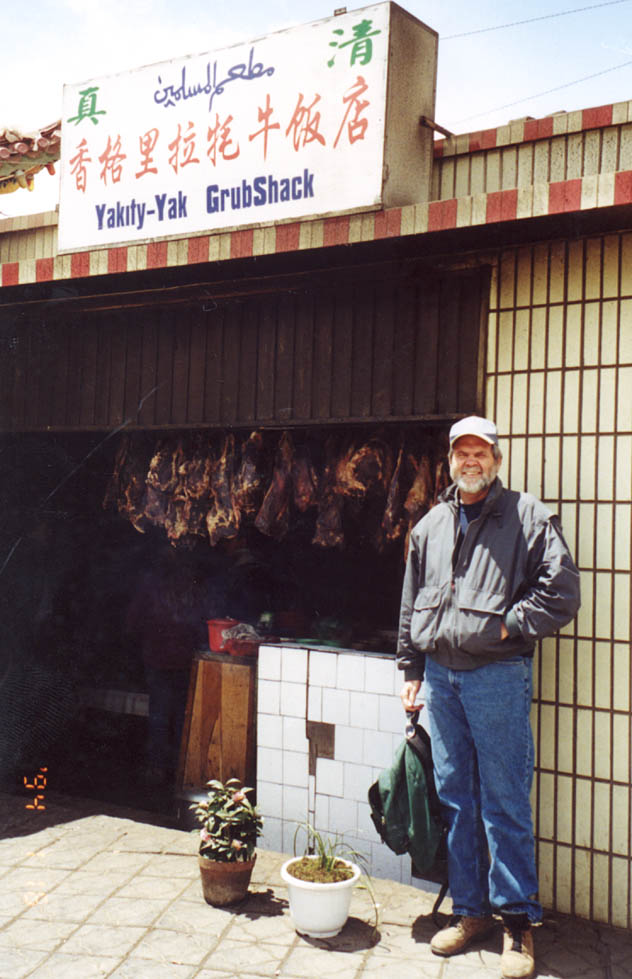
which made me nauseas. Yak meat was okay
and the picture below is the butchery appropriately named (probably the
American) the “Yak Shack.”
My other memory of the journey was arriving in the middle of
the night at a bus station. Having the
need to go, the public latrine experience one doesn’t easily forget. It was dark and cold and there may have been
a 50-watt bulb providing light…just enough to leave an indelible imprint on my
mind.
The picture, which I pulled of the Internet, is similar to
my experience, but I distinctly remember the walls between the squatting holes
were only about four feet high. I guess
the communal culture included exchanging gossip while natured called. I also remember the squealing pigs below who
fought over that which we deposited.

Our time in Shangri La was brief, but memorable. Half of the 100,000 people that lived there
at that time were Tibetan, the rest are Han Chinese and other ethnic
groups.

One of my regrets is that I did not know much about Tibetan
Buddhism before this trip (http://www.bbc.co.uk/religion/religions/buddhism/subdivisions/tibetan_1.shtm).
I found their art very dark, but their architecture quite fascinating.
Visiting the Songzanlin Monastery was intriguing. We had free reign to walk throughout the
premises and, in hindsight, wish I could have stayed there much longer for
cultural study. The pictures below are a
few shots of me at the entrance of the monastery, inside by the prayers wheels
and even a group photo of some friendly monks.


We found a hotel by late afternoon. The best thing I can say about this hotel is
that it had electric blankets. I was so
cold that I went immediately to bed with my clothes on under my warm
blanket. (I have no idea who these girls
are, enthusiastic kids enjoying a picture with a foreigner).


The next morning we headed for the mountains, the next leg
and post of our travels.
Learn more about our cross-cultural work by visiting: http://Lewis-Training.com


