The feature article of the recent Biola Connections is entitled, The “D” Word: Has Doctrine Become the New Dirty Word? The basis of the article is that the study of God’s Word has been replaced with support and interest groups, messages that confirm the Christian faith has given way to emotional healing and encouragement. The hymns of faith have been replaced with demonstrative and, sometimes, silly ditties. “Many Christians don’t see the connection between doctrine and life,” the article asserts, “so important doctrines are being discarded.”
The article cites the doctrine of the Trinity as one example of this trend. T.D. Jakes, pastor of a megachurch in Dallas, rejects the historic doctrine of the Trinity with an ancient church heresy called “modalism.” In April 2000 Jakes said in Religion Today, “I am too busy trying to preach the Gospel to split hairs. People in my generation are lost, hungry, in prison, wounded and alone…Many of our generation are dying without knowing God – not dying for the lack of theology.”
Soon after reading the Biola article I read Os Guinness’ work, Prophetic Untimeliness: A Challenge To the idol Of Relevance. Guinness takes the evangelical church to task accusing them of chasing the god of popularity, success and relevance, over sound doctrine. “How are we to be always timely,” questions Guinness, “never trendy? How are we to be redefined – in the right way?”
Because culture determines much of how we see our world and therefore directs our steps in life, the market economy, its business plans and its business management procedures, is the driving force behind much of the church today. In the world of competition, the focus in the church today is what method can we use to make our congregations more “relevant,” e.g. music, youth programs, even the dress code that appeals to the casual. It’s all about making people feel comfortable and having a satisfying worship experience. While pastors struggle for “market share,” in the community, the name of the game is not just merely having a nice building but attention must be given to Location, Location, Location.
As I reflect on the two readings I make application to my field of ministry overseas. The dominance of western influence on the national church is so strong that they, too, seek methods for church growth and therefore mimic the success of those abroad. Mission methods of adopting people groups and how to foster a people movement, is preferred over adequate study in the doctrines of faith or the training of how to present a relevant message in a non-Christian community.
The tension, for me as well as Guinness, is two-fold. One, I do believe the church should be relevant to the world in which we live. Whether one is serving in Dallas or Dakar, the message of Christ must speak in terms that the average American or Muslim can understand. For too many years the emphasis on theology has become an obstacle to the Message. Whether one is pre-trib or post-trib is irrelevant to those who need to understand who Jesus is and why He is "the Way the truth and the life." While I believe there is objective truth, as Brian McLaren has argued, one must wonder if orthodoxy is truly or objective or merely tradition handed down through those who saw their world through the lens of their time and culture.
Second, the postmodern cross-cultural worker, while crafting a relevant message of the Gospel, must not sacrifice objective truth for the sake of relevancy. To suggest that Christ is merely one avenue to salvation is to discredit His uniqueness.
Understanding the tension between relevance and doctrine is not an easy assignment. The failure of the church is that it seems to caught in an “either/or” position, rather than finding the middle ground in-between. Guinness is right, the church must not be swayed in being trendy at the cost of doctrine. At the same time it must not hold on to orthodoxy at the expense of becoming irrelevant. Though the Message may be irrelevant to unbelievers, that does not mean we must be in our presentation of truth.
Monday, August 07, 2006


Thursday, August 03, 2006
What Time Is It?
What time is it? My body says it’s now just before mid-night CDT Thursday August 3rd, but my watch says it’s 10:30 a.m. August 4th. Jet lag now begins. It will take me a couple of days for the body to catch up with the watch. Lots of afternoon naps and long nights wishing I could go to sleep when it’s dark. I have never mastered jet lag. I’ve tried to stay awake until night, but I still wake up at 2 a.m. I now sleep when I need to and hope that in a few days I won’t go brain dead at 3 p.m. in the afternoon. By Monday maybe the watch and the body will be in the same time zone.
The trip was uneventful, except that our bags didn’t make it to the airport with us. I’ve had my luggage lost four times in all my journeys and three of them were with Air France. Charles De Gaulle airport is my least favorite airport and it’s amazing to me how they can’t EVER get my bags to join me on a connecting flight. I always remember the joke my brother tells about the guy who went up to the ticket counter and told the lady, “I’d like to go to Chicago but I want my bags to go to Detroit.”
“We can’t do that sir,” the little girl behind the counter replied?
“You did last week,” the smart aleck but experienced traveler replied.
We are in the monsoon season here so humidity is high but the temperature is not too bad (low 90’s). While it is a bit uncomfortable our block apartment doesn’t radiate the heat as it did in May when the temps was over 110 degrees every day.
It’s great to be back in this culture again. While being in the states was a refreshing break, we are anxious to see how God will direct our paths in the months ahead.
The trip was uneventful, except that our bags didn’t make it to the airport with us. I’ve had my luggage lost four times in all my journeys and three of them were with Air France. Charles De Gaulle airport is my least favorite airport and it’s amazing to me how they can’t EVER get my bags to join me on a connecting flight. I always remember the joke my brother tells about the guy who went up to the ticket counter and told the lady, “I’d like to go to Chicago but I want my bags to go to Detroit.”
“We can’t do that sir,” the little girl behind the counter replied?
“You did last week,” the smart aleck but experienced traveler replied.
We are in the monsoon season here so humidity is high but the temperature is not too bad (low 90’s). While it is a bit uncomfortable our block apartment doesn’t radiate the heat as it did in May when the temps was over 110 degrees every day.
It’s great to be back in this culture again. While being in the states was a refreshing break, we are anxious to see how God will direct our paths in the months ahead.
Friday, July 28, 2006
Saying Goodbye Is Hard To Do

Saying goodbye is always tough. We have enjoyed being with our family for the past few weeks, but Sandy and I head back overseas soon. It’s been interesting to see God’s hand in our lives. Sandy’s mom passed away exactly at the right time. Sandy’s mother had been ill for over a year and during that time Sandy was pressed to return early. On this trip home she was able to spend quality time with her mom before her death and God’s timing has also allowed Sandy to be with her dad. She can now return to Asia with perfect peace.
We’ve been saying goodbye to our girls Becky (in red shirt) and Sara (behind her) since they were in the 5th grade. Our girls were in boarding school in Kenya so for years we have enjoyed our time together but continually went through the agony of separation. With the addition of four wonderful grandkids, it doesn’t get any easier.
We are anxious to get back to our assignments in Asia, but through this trip in the states God is forming in us a new vision. I have no idea where this road will lead, but that’s the part of what it means to live by faith.
It may be awhile before I post again. Lots of packing, last minute goodbye’s to family members. Talk to you again from a different time zone.
Monday, July 24, 2006
Cost of Labor Wrap Up
Last week a dear sister wrote me from Tulsa stating, and I am paraphrasing, “I have been reading your blog with interest. I’m not a Doer or a Watcher because I have never been overseas. I’m wondering if I am an Intruder?”
She wrote her note prior to my explanation to the last category but I assured her she was certainly NOT in that class. Kathy is typical of 90% of Americans involved in missions. She loves career missionaries (Doers), prays for them by name, writes notes of encouragement, prays for nationals and their ministries within their countries and contributes when she can for world evangelism. If she were physically or financially able she might be more involved in taking short-term trips, but that’s not what drives her. She, like most people interested in missions, sees her work in a support role.
The reality is my emphasis is, and has always been, that we need people overseas who know what they are doing. No matter who they are in the three categories, I created as a lark, I am convinced we need BETTER Doers, Watchers and Intruders. To be better requires more understanding of the world, the people we communicate and yes, even prayer. In my view we need:
Better Doers - Not everyone who lives overseas is effective. Being able to speak a different language, experiencing the frustrations of a developing country doesn’t automatically mean they are doing a service for God and country. Doers have the potential of being much more effective than Watchers and Intruders, but they still have to grow intellectually and spiritually to become better in their service for Christ.
Better Watchers – Those who are better in doing short-term missions are those who serve with understanding, not just zeal. They go to fields where they are needed, interact with those on the ground (Doers and nationals who are in touch with the reality of their context, not just their feelings), and have a plan for their ministry, not just to have an experience. There are some great Watcher programs. Find them, join them, and learn from them.
Better Intruders - I can really get excited about a church or an individual who wants to be more involved, even ownership, as long as they don’t come in with the attitude that Doers and nationals don’t know anything, aren’t doing anything right, so move over, the Marines have landed. I endorse ownership as long as it facilitates what God is doing rather than trying to make it happen. If Intruders will take the time to really partnership with those who live in the context they will always be welcomed and blessed.
Some people don’t like my approach to mission work. That’s okay; I never claimed to be infallible, the final or best word. After thirty-five years as a Doer, strategist, missiologist, I have a fair understanding of the difference between God’s sovereignty and man’s responsibility. After thirty-five years in the business I have observed the liberal do-gooders with no message and the conservative legalist who think they have the only message communicated only in their way. While I understand God is mysterious, I am uncomfortable with mystics who just want to throw the seed in the air and pray God will do His work by giving a harvest. (It's the stewardship principle in me that rejects the notion that it's okay that three-fourths of the seed can go to waste since God is using one seed to bring people unto Himself. Think what God could do if three out of four seeds actually landed on soil He could use.) I jealously guard and defend those who have committed themselves to make a difference worldwide. I want to do and be better, and challenge those who are involved in missions, in every category, to do the same.
She wrote her note prior to my explanation to the last category but I assured her she was certainly NOT in that class. Kathy is typical of 90% of Americans involved in missions. She loves career missionaries (Doers), prays for them by name, writes notes of encouragement, prays for nationals and their ministries within their countries and contributes when she can for world evangelism. If she were physically or financially able she might be more involved in taking short-term trips, but that’s not what drives her. She, like most people interested in missions, sees her work in a support role.
The reality is my emphasis is, and has always been, that we need people overseas who know what they are doing. No matter who they are in the three categories, I created as a lark, I am convinced we need BETTER Doers, Watchers and Intruders. To be better requires more understanding of the world, the people we communicate and yes, even prayer. In my view we need:
Better Doers - Not everyone who lives overseas is effective. Being able to speak a different language, experiencing the frustrations of a developing country doesn’t automatically mean they are doing a service for God and country. Doers have the potential of being much more effective than Watchers and Intruders, but they still have to grow intellectually and spiritually to become better in their service for Christ.
Better Watchers – Those who are better in doing short-term missions are those who serve with understanding, not just zeal. They go to fields where they are needed, interact with those on the ground (Doers and nationals who are in touch with the reality of their context, not just their feelings), and have a plan for their ministry, not just to have an experience. There are some great Watcher programs. Find them, join them, and learn from them.
Better Intruders - I can really get excited about a church or an individual who wants to be more involved, even ownership, as long as they don’t come in with the attitude that Doers and nationals don’t know anything, aren’t doing anything right, so move over, the Marines have landed. I endorse ownership as long as it facilitates what God is doing rather than trying to make it happen. If Intruders will take the time to really partnership with those who live in the context they will always be welcomed and blessed.
Some people don’t like my approach to mission work. That’s okay; I never claimed to be infallible, the final or best word. After thirty-five years as a Doer, strategist, missiologist, I have a fair understanding of the difference between God’s sovereignty and man’s responsibility. After thirty-five years in the business I have observed the liberal do-gooders with no message and the conservative legalist who think they have the only message communicated only in their way. While I understand God is mysterious, I am uncomfortable with mystics who just want to throw the seed in the air and pray God will do His work by giving a harvest. (It's the stewardship principle in me that rejects the notion that it's okay that three-fourths of the seed can go to waste since God is using one seed to bring people unto Himself. Think what God could do if three out of four seeds actually landed on soil He could use.) I jealously guard and defend those who have committed themselves to make a difference worldwide. I want to do and be better, and challenge those who are involved in missions, in every category, to do the same.
Thursday, July 20, 2006
Weakness of Intruders
It’s understandable why some churches and individuals want to take ownership of missions. They read about unreached people groups and, rather than working with the national church or career missionaries, make a commitment to do it themselves. I have no problem with people wanting to be personally involved in ministry anywhere in the world. I appreciate the commitment that people have to reaching the unreached with the Gospel. But I do have reservations with some people; I call Intruders, who take on the task of world evangelization simply for those two reasons. Many of these self-appointed missioner’s can cause more harm than good. Why?
Missiologically Inept -- The three components of a missiologist is a thorough knowledge of History (church/country), Theology (biblical/mission) and, Anthropology (cultural/applied). The bane of most of mission work is that few Doers are equipped in these areas, how much less those who have never lived overseas but nevertheless want to own an overseas ministry. Missiological incompetence leads to…
Ministry Ineffectiveness -- What’s the plan? What’s the goal? What are you trying to do? If the answer is, “I’m just trying to be witness for Jesus,” that’s not a strategy, that’s a slogan. So you want to reach Muslims, how will you do that and with whom, Sunni’s or Shia’s? Going to use the Jesus Film, feed the poor, hold a healing campaign? How about the Hindu, Jain, Sikhs, what’s your strategy in presenting the Gospel to them? What’s the plan for reaching the upper caste in India, the different tribes in Kenya or those who are marginalized in society (such as the eunuchs of Mumbai or the prostitutes of Bangkok)? I give Intruders an A for zeal and an F for understanding how to put a plan together for ministry.
Mission Waste – I met one Intruding pastor in Nairobi last year who said his church in the states has targeted the “harvest fields” of the world for ministry. Setting up Kenya, which is over 80% Christian, he has led his church in the states to give millions of dollars to buy land, build a building, furnish it with the latest sound equipment, etc., so they can have their slice of the harvest. Statistics show that 95% of the resources (people and money) go to the people and countries of the world where there is already a strong witness. The “more bang for the buck” mentality may make for good newsletters and fundraising, but it adds to the waste and doesn’t reach the two billion people that do not have a Gospel witness of any kind.
So what is my ideal of North American involvement in missions? If they are not going to be Doers, how then should they be engaged in world outreach? Next week.
Missiologically Inept -- The three components of a missiologist is a thorough knowledge of History (church/country), Theology (biblical/mission) and, Anthropology (cultural/applied). The bane of most of mission work is that few Doers are equipped in these areas, how much less those who have never lived overseas but nevertheless want to own an overseas ministry. Missiological incompetence leads to…
Ministry Ineffectiveness -- What’s the plan? What’s the goal? What are you trying to do? If the answer is, “I’m just trying to be witness for Jesus,” that’s not a strategy, that’s a slogan. So you want to reach Muslims, how will you do that and with whom, Sunni’s or Shia’s? Going to use the Jesus Film, feed the poor, hold a healing campaign? How about the Hindu, Jain, Sikhs, what’s your strategy in presenting the Gospel to them? What’s the plan for reaching the upper caste in India, the different tribes in Kenya or those who are marginalized in society (such as the eunuchs of Mumbai or the prostitutes of Bangkok)? I give Intruders an A for zeal and an F for understanding how to put a plan together for ministry.
Mission Waste – I met one Intruding pastor in Nairobi last year who said his church in the states has targeted the “harvest fields” of the world for ministry. Setting up Kenya, which is over 80% Christian, he has led his church in the states to give millions of dollars to buy land, build a building, furnish it with the latest sound equipment, etc., so they can have their slice of the harvest. Statistics show that 95% of the resources (people and money) go to the people and countries of the world where there is already a strong witness. The “more bang for the buck” mentality may make for good newsletters and fundraising, but it adds to the waste and doesn’t reach the two billion people that do not have a Gospel witness of any kind.
So what is my ideal of North American involvement in missions? If they are not going to be Doers, how then should they be engaged in world outreach? Next week.
Monday, July 17, 2006
Positive Intruders
When I began this thread my categories were tongue-in-cheek as it related to a sign I saw in a muffler shop (see Cost of Labor). The term, Intruder, is a bit harsh, but it did grab the attention for the discussion, a term for affect, not meant to slander.
Intruders are people who want to help do the work, maybe even take over from the people who are on the field. They are more than just Watchers, who dabble in missions; they take ownership. ItÂ’s my opinion that a committed Watcher eventually become a Doer or an Intruder. Intruders, like Watchers, can have a positive function, if they keep things in balance.
The primary reason for Intruders is two-fold. First, as I have mentioned, they are committed to the task of world evangelization. Secondly they want ownership overseas as feel they can do things better than career Doers. Intruders are people or churches that become their own agents of ministry overseas, while still living in the U.S. I have met pastor/intruders who have led their congregations to adopt people groups, cities and even countries, who by-pass North American missionaries and, sometimes, even national leaders, to reach their goals doing ministry themselves on the field. I know of one congregation who adopted Bosnia a few years back and in the ten years they have been involved they have established schools, sent in medical teams for refugees and nearly sixty percent of their membership has made a least one trip to the country that one time was a part of Yugoslavia.
Those who desire to be involved, more than a ten-day excursion, less than a full commitment to living in a country, see their role as being equal to that of the career Doers. In some cases, Intruders do indeed move things faster, maybe even more effectively than Doers. In the grand scheme of what God is doing all over the world; Intruders have made a positive contribution to world outreach. But, Intruders have a down side. Stay tuned.
Intruders are people who want to help do the work, maybe even take over from the people who are on the field. They are more than just Watchers, who dabble in missions; they take ownership. ItÂ’s my opinion that a committed Watcher eventually become a Doer or an Intruder. Intruders, like Watchers, can have a positive function, if they keep things in balance.
The primary reason for Intruders is two-fold. First, as I have mentioned, they are committed to the task of world evangelization. Secondly they want ownership overseas as feel they can do things better than career Doers. Intruders are people or churches that become their own agents of ministry overseas, while still living in the U.S. I have met pastor/intruders who have led their congregations to adopt people groups, cities and even countries, who by-pass North American missionaries and, sometimes, even national leaders, to reach their goals doing ministry themselves on the field. I know of one congregation who adopted Bosnia a few years back and in the ten years they have been involved they have established schools, sent in medical teams for refugees and nearly sixty percent of their membership has made a least one trip to the country that one time was a part of Yugoslavia.
Those who desire to be involved, more than a ten-day excursion, less than a full commitment to living in a country, see their role as being equal to that of the career Doers. In some cases, Intruders do indeed move things faster, maybe even more effectively than Doers. In the grand scheme of what God is doing all over the world; Intruders have made a positive contribution to world outreach. But, Intruders have a down side. Stay tuned.
Thursday, July 13, 2006
Downside of Short-Term Missions
Let me give you the bottom line upfront. WATCHERS (short-term missions) are great for casting vision, however, they are seldom strategic for actual on-field ministries. Second, WATCHER programs confuse the issue of what really is missions and the role of DOERS on the field. Third, WATCHERS can actually hinder the work of the national church and DOERS. Fourth, the long-term profit of WATCHERS is disproportionate in relation to its benefits.
I am well aware that the national church and DOERS, not WATCHER programs, should develop strategy. Unfortunately there are many WATCHER programs developed by WATCHER ministries, who have no intention to live on the field but want to do good work and create programs that may be fun, but not effective. Prayer walks, Bible distribution, feeding programs may be helpful, but they are not necessarily strategic. Most of my life is spent working and thinking about the best way to present the Gospel in a culturally relevant way. For people who do not understand who Jesus is and what He is about, the simple approach provided by most WATCHER programs cannot, will not, reach the heart issues of most people in this world.
Second, as I have stated before, if everything is missions, nothing is missions. The little ditty that “You are either a missionary or a mission field,” is just wrong. DOERS pay a price for their commitment to go to the field, by leaving their host culture and families, the humiliating process of raising support, learning language and suffering through culture longer than ten days. The church has so confused and, in my opinion, demeaned the profession of DOERS, that the career person is looked upon as being no different than those who just came back from their vacation with a purpose. The mindset with North American church members today is not only can everybody be a missionary, anybody can be a missionary.
Third, after the WATCHERS return home, what do they leave behind? Goodwill, maybe. A church built, perhaps. But they also leave behind things like, the local church pastor is being paid by foreigners so the local church members don’t have to support the church; Christianity is about goods and services that only the WATCHERS can provide. In anthropology there is a term for a religious sect called the “cargo cult.” (I don’t have time to explain it; you will have to research this yourself). In a similar way, nationals (and even some DOERS), look to the sky each summer waiting for the god of goods to fly in. Sure salvation is in Christ, but the blessings of that salvation is surely in the hands of the WATCHERS.
Fourth, while some WATCHERS do become DOERS, donors, prayer partners or involved in their community, I dare say that the commitment of short-term missionaries is as long as their trip. Hard to quantify this reality, as far as I know there are no studies on the subject, but given that the fact that there are literally thousands of people engaged in WATCHER programs each year, the number of people to sign up to be career DOERS are a fraction of those taking short-term trips. Donations for the support of national work and DOERS is certainly disproportionate to the money spent on WATCHER expeditions.
I am not on a campaign to do away with WATCHER programs. I am on a campaign to help people understand that missions is not simple. I am educator and one of my roles is to inform people that short-term mission programs should be done right and be well thought out. In a few days I will discuss the up and down side of INTRUDERS, but this should be enough for further discussion among yourselves.
I am well aware that the national church and DOERS, not WATCHER programs, should develop strategy. Unfortunately there are many WATCHER programs developed by WATCHER ministries, who have no intention to live on the field but want to do good work and create programs that may be fun, but not effective. Prayer walks, Bible distribution, feeding programs may be helpful, but they are not necessarily strategic. Most of my life is spent working and thinking about the best way to present the Gospel in a culturally relevant way. For people who do not understand who Jesus is and what He is about, the simple approach provided by most WATCHER programs cannot, will not, reach the heart issues of most people in this world.
Second, as I have stated before, if everything is missions, nothing is missions. The little ditty that “You are either a missionary or a mission field,” is just wrong. DOERS pay a price for their commitment to go to the field, by leaving their host culture and families, the humiliating process of raising support, learning language and suffering through culture longer than ten days. The church has so confused and, in my opinion, demeaned the profession of DOERS, that the career person is looked upon as being no different than those who just came back from their vacation with a purpose. The mindset with North American church members today is not only can everybody be a missionary, anybody can be a missionary.
Third, after the WATCHERS return home, what do they leave behind? Goodwill, maybe. A church built, perhaps. But they also leave behind things like, the local church pastor is being paid by foreigners so the local church members don’t have to support the church; Christianity is about goods and services that only the WATCHERS can provide. In anthropology there is a term for a religious sect called the “cargo cult.” (I don’t have time to explain it; you will have to research this yourself). In a similar way, nationals (and even some DOERS), look to the sky each summer waiting for the god of goods to fly in. Sure salvation is in Christ, but the blessings of that salvation is surely in the hands of the WATCHERS.
Fourth, while some WATCHERS do become DOERS, donors, prayer partners or involved in their community, I dare say that the commitment of short-term missionaries is as long as their trip. Hard to quantify this reality, as far as I know there are no studies on the subject, but given that the fact that there are literally thousands of people engaged in WATCHER programs each year, the number of people to sign up to be career DOERS are a fraction of those taking short-term trips. Donations for the support of national work and DOERS is certainly disproportionate to the money spent on WATCHER expeditions.
I am not on a campaign to do away with WATCHER programs. I am on a campaign to help people understand that missions is not simple. I am educator and one of my roles is to inform people that short-term mission programs should be done right and be well thought out. In a few days I will discuss the up and down side of INTRUDERS, but this should be enough for further discussion among yourselves.
Tuesday, July 11, 2006
What I Like About Watchers
Since my last post, a lot of interesting comments from my drive-by shooting of Doers, Watchers and Intruders. So, for the next couple of posts I will try to unpack my thoughts on the subject. Today, what I like about Watchers (short-term mission programs, 1 week to three months).
It will surprise some of you to know that my eyes to the world of missions was through a short-term trip in 1974 to Mexico. I was a pastor in Texas and took a group of teenagers to Monterrey. God used that trip to show me the meaning of Matthew 28:19 ff. Up to that point in life my worldview was parochial and ethnocentristic. For the first time I came to realize that not all people in this world lived like Americans. That trip challenged my view of helping the poor and taking the Gospel to people who had never heard the Good News. It was a defining moment in my life.
THE primary reason for short-term missions is for people to catch a vision of a world that is beyond their own neighborhood. Spending a week or a month in a different country is the hands-on experience of lifting ones eyes and seeing the fields are white ready for harvest (John 4:35). A person can catch that vision if they never leave their community, but it’s better caught than taught when someone touches, feels and smells that world outside of one’s own culture.
Many Doers on the field will tell you that they became career workers because of a short-term trip. There are countless hundreds of people who went on short-term trips who are now active in their local church outreach programs. One of the kids who went with us to Mexico over 30 years ago is now one of our sponsors and active in their community. Short-term projects CAN have long-term implications.
Recently a pastor friend of mine came back from Cambodia. He’s been in ministry for a long time and loves Doers. He has visited several countries down through the years and each time he comes back from a trip he is revitalized for global outreach. Listening to him the other Sunday as he spoke it was obvious his recent trip had an impact on his life. All the reports and slide presentations from Doers visiting his church pale in comparison to his experiencing the field firsthand. Short-term missions can be a great tool for world evangelization.
But, there is a downside to short-term projects, which I will talk about next time.
It will surprise some of you to know that my eyes to the world of missions was through a short-term trip in 1974 to Mexico. I was a pastor in Texas and took a group of teenagers to Monterrey. God used that trip to show me the meaning of Matthew 28:19 ff. Up to that point in life my worldview was parochial and ethnocentristic. For the first time I came to realize that not all people in this world lived like Americans. That trip challenged my view of helping the poor and taking the Gospel to people who had never heard the Good News. It was a defining moment in my life.
THE primary reason for short-term missions is for people to catch a vision of a world that is beyond their own neighborhood. Spending a week or a month in a different country is the hands-on experience of lifting ones eyes and seeing the fields are white ready for harvest (John 4:35). A person can catch that vision if they never leave their community, but it’s better caught than taught when someone touches, feels and smells that world outside of one’s own culture.
Many Doers on the field will tell you that they became career workers because of a short-term trip. There are countless hundreds of people who went on short-term trips who are now active in their local church outreach programs. One of the kids who went with us to Mexico over 30 years ago is now one of our sponsors and active in their community. Short-term projects CAN have long-term implications.
Recently a pastor friend of mine came back from Cambodia. He’s been in ministry for a long time and loves Doers. He has visited several countries down through the years and each time he comes back from a trip he is revitalized for global outreach. Listening to him the other Sunday as he spoke it was obvious his recent trip had an impact on his life. All the reports and slide presentations from Doers visiting his church pale in comparison to his experiencing the field firsthand. Short-term missions can be a great tool for world evangelization.
But, there is a downside to short-term projects, which I will talk about next time.
Friday, July 07, 2006
Cost of Labor
I walked into the muffler shop today and noticed the sign on the wall.
PRICE LIST
$40 an hour if we do the work.
$60 an hour if you watch us work.
$80 an hour if you help us work.
“Clever”, I mused, “that looks like a blog theme to me.” I then thought of the high cost of missions.
DOERS - Those who do the work are the people who have made a commitment to take on the task of cross-cultural service as a career. I can hardly believe how expensive it is to live in places like Mumbai, Kiev or Santiago. For a family of four a flat will can easily cost $1,000 a month. To do be engaged in the work overseas, along with taxes and insurance, you’re looking at least $50K a year. Financing the doers is not cheap, but still probably the most cost effective.
WATCHERS - Those who observe the work are short-term teams who travel overseas to experience ministry for two weeks or less. Take an average group of ten to fifteen people and the tab will easily be $30K. Glad they came, hope they caught the vision; the money they spent for the experience probably wouldn’t be given to missions anyway. Who knows, the 10 day trip might be a good investment in the long-term, but short-term missions is a program primarily for the watchers, they can’t really contribute much to the real work on the field.
INTRUDERS - Those who want to do the work are congregations who have determined that they want to be stakeholders in overseas ministry, though they don’t want to live on the field, learn a language or send their kids to local schools. By underwriting national programs, schools, orphanages, they will easily invest $100K a year, which includes teams going to the field, buying land and buildings. I know of one fellowship that has “adopted” a people group in Asia and is building a school, though they cannot mention the name of Christ nor even display a cross. Another congregation is involved in “harvest ministries,” which starts churches in Africa and Philippines by pouring thousands of dollars to reach those nations who already have a huge Christian population. Believing they can do better or maybe just a well, they by-pass the on-field doers.
Like the muffler shop, anyone of the three option’s one chooses will get the job done. It’s a matter of how much do you want to pay for the process to get the best results.
PRICE LIST
$40 an hour if we do the work.
$60 an hour if you watch us work.
$80 an hour if you help us work.
“Clever”, I mused, “that looks like a blog theme to me.” I then thought of the high cost of missions.
DOERS - Those who do the work are the people who have made a commitment to take on the task of cross-cultural service as a career. I can hardly believe how expensive it is to live in places like Mumbai, Kiev or Santiago. For a family of four a flat will can easily cost $1,000 a month. To do be engaged in the work overseas, along with taxes and insurance, you’re looking at least $50K a year. Financing the doers is not cheap, but still probably the most cost effective.
WATCHERS - Those who observe the work are short-term teams who travel overseas to experience ministry for two weeks or less. Take an average group of ten to fifteen people and the tab will easily be $30K. Glad they came, hope they caught the vision; the money they spent for the experience probably wouldn’t be given to missions anyway. Who knows, the 10 day trip might be a good investment in the long-term, but short-term missions is a program primarily for the watchers, they can’t really contribute much to the real work on the field.
INTRUDERS - Those who want to do the work are congregations who have determined that they want to be stakeholders in overseas ministry, though they don’t want to live on the field, learn a language or send their kids to local schools. By underwriting national programs, schools, orphanages, they will easily invest $100K a year, which includes teams going to the field, buying land and buildings. I know of one fellowship that has “adopted” a people group in Asia and is building a school, though they cannot mention the name of Christ nor even display a cross. Another congregation is involved in “harvest ministries,” which starts churches in Africa and Philippines by pouring thousands of dollars to reach those nations who already have a huge Christian population. Believing they can do better or maybe just a well, they by-pass the on-field doers.
Like the muffler shop, anyone of the three option’s one chooses will get the job done. It’s a matter of how much do you want to pay for the process to get the best results.
Tuesday, July 04, 2006
One Nation Under God
 In 1976, when our country celebrated its 200th birthday, I was living in Africa and people we’re talking about America’s “image” before the rest of the world. We were a couple of years out of the unpopular Viet Nam war, one year after Watergate and the resignation of President Richard Nixon. This morning as I woke to our nations 230th founding as a nation I again listened to those discussing America’s image in other parts of the world.
I am not one of those card-carrying conservatives that believe that the hope of the world rests in the hands of our country. Economically, if we falter the domino effect will indeed have repercussions globally. We are not a particularly moral country and we seem to be less so with each passing year. Our government policies have gaping holes in them and I, quite honestly, wish our leaders, both Democrat and Republicans, would make decisions based on what is right versus what they think is more popular in getting them elected to office or gaining favor with world opinion. But in spite of the obvious deficiencies with my country I am not apologetic of who we are as nation.
What many people in other countries do not understand about America is our values, as they don’t share those values. All nations are built on principles, some being religious such as Islam, Hindu or Buddhist. Some countries hold the ideology of “the common good,” with policies that lean toward social programs and state run assistance. Many countries are driven by nationalism, which tend to splinter the population by ethnicity or tribe. When values are in conflict, so, too, will their disagreement on how things should be.
The value of a majority of American’s is one of freedom and independence, primarily religious freedom. Our rebellion from the rule of King George of England over 200 years ago still remains the same, i.e., we want less government interference in our lives and the common good is through what we believe is best for collective individualism. Government is only good as it is seen to benefit us, individually as well as collective. If our government officials don’t reflect our wishes we vote them out of office.
If we have disagreement with our own, it shouldn’t surprise anyone that most Americans are not be driven by what others, outside of our country, think on how we should behave. While we do want to be liked and respected by others, our values are as unique as our country itself. We understand our responsibility as the only superpower; we understand that our values do affect the nations of the world. Governments, represented in the U.N., have never appreciated our values and are frustrated that we don’t conform to what they think is best for the rest of the world.
What is always interesting to me is that; while the most popular thing to do is bash America, most countries privately seek our aid, trade and even our form of government. In essence, they want the best of what we are but reserve the right to hold their own values. As best we can accommodate those conflicting issues we try. But in the end of the day, Americans will always hold onto their values in spite of those who disagree with us.
God is not a politician. His values are neither American nor that of any other nation. America’s success or failure is dependent on America’s willingness to submit to His will and His values. If America becomes more concerned by the will of others over its desire to seek His agenda for all mankind it will go down in history as other nations who have turned their back on God. I’m a follower of Christ first, an American second. Make no mistake; I am a proud to be an American. America is a country where freedom of religion is a value, and because of that value I had the opportunity to hear the Gospel. Through my own free will, without fear of oppression or persecution from family or state, America gave me the opportunity to become a follower of Christ. It is for that reason I join my country today to celebrate 230 years as a nation.
Friday, June 30, 2006
Never No More
“They are no more.”
That is the way Hindu’s refer to the death of their family or friends. It’s an interesting expression, which says a great deal about their worldview. In contrast, in the West we refer to the death of someone by saying they have “passed away.”
Most Hindu’s believe in reincarnation, a 12,000 recycling of the soul into other forms of life until one reaches moksha (freedom from cyclical life). When someone dies they are no more from their present state; they are also no more from their identity as a person. My 80-year-old friend, Mr. Kumar, ceases not only to live, but also to be Mr. Kumar. He really wasn’t Mr. Kumar when I knew him; it was just his present state. Mr. Kumar is no more; he is now someone or something else. While this teaching may seem odd to those outside the faith, Hindu’s find comfort that life continues even if the state of that person does not.
Those in the West, who do not believe in reincarnation, and especially those of the Christian tradition, view death as the continuation of the personality, passing from life on this earth into an eternal condition. Where that eternal state may be is often a subject of debate. For evangelical Christians we point to the Holy Scriptures, the book of Hebrews which states, “It is appointed ONCE to die, and after that the judgment” (9:27). (Judgment does not refer to punishment but accountability).
Working with the Turkana of Kenya, most of the people were animists. They did not have a concept of an on-going living soul and therefore believed that the death of person meant they were no more. Unlike the Hindu, however, the soul does not move into another cycle of life, but really are no more. The worldview of the nomads in the desert and that of the educated atheist in the halls of academia, at least on this issue, are the same.
As I write this post, my mother-in-law is near death (which literally means separation). When she is separated from this life, her family and friends, she will pass to an eternal state. She, like all of us, has been created unique in person, uniquely an eternal personality. Our Eternal Creator, which does not change in either form or function, remains consistent with His creation. For those who are followers of Christ, we move from separation of life on earth, but we are never no more.
That is the way Hindu’s refer to the death of their family or friends. It’s an interesting expression, which says a great deal about their worldview. In contrast, in the West we refer to the death of someone by saying they have “passed away.”
Most Hindu’s believe in reincarnation, a 12,000 recycling of the soul into other forms of life until one reaches moksha (freedom from cyclical life). When someone dies they are no more from their present state; they are also no more from their identity as a person. My 80-year-old friend, Mr. Kumar, ceases not only to live, but also to be Mr. Kumar. He really wasn’t Mr. Kumar when I knew him; it was just his present state. Mr. Kumar is no more; he is now someone or something else. While this teaching may seem odd to those outside the faith, Hindu’s find comfort that life continues even if the state of that person does not.
Those in the West, who do not believe in reincarnation, and especially those of the Christian tradition, view death as the continuation of the personality, passing from life on this earth into an eternal condition. Where that eternal state may be is often a subject of debate. For evangelical Christians we point to the Holy Scriptures, the book of Hebrews which states, “It is appointed ONCE to die, and after that the judgment” (9:27). (Judgment does not refer to punishment but accountability).
Working with the Turkana of Kenya, most of the people were animists. They did not have a concept of an on-going living soul and therefore believed that the death of person meant they were no more. Unlike the Hindu, however, the soul does not move into another cycle of life, but really are no more. The worldview of the nomads in the desert and that of the educated atheist in the halls of academia, at least on this issue, are the same.
As I write this post, my mother-in-law is near death (which literally means separation). When she is separated from this life, her family and friends, she will pass to an eternal state. She, like all of us, has been created unique in person, uniquely an eternal personality. Our Eternal Creator, which does not change in either form or function, remains consistent with His creation. For those who are followers of Christ, we move from separation of life on earth, but we are never no more.
Tuesday, June 27, 2006
In The Area?
I never call a business meeting unless there is business to discuss.
I never run through an airport to catch a flight.
I never make eye contact with women when traveling through Asia, even if I am talking to them.
I almost never say “grace” over my food unless the person with me insists.
I never read the manual prior to plugging in a new computer program.
and…I AM SELDOM IN THE AREA.
I announced last spring that I would be in the states for the summer. The months of May through July it is too hot in the country we live and my teaching assignments are not in that period, so it’s a good time to return home and visit friends, sponsors and family. At least three donors have written, “If you’re in the area, please come by and see us.”
Perhaps we need definition – what does it mean to be in the area? Between the price of gas and driving time, my area is about 350 miles. Living in northwest Arkansas when we are home, my area then is Arkansas, Oklahoma, north Texas, Kansas and Missouri. Anything beyond that and we are looking at it being cheaper and more time efficient for me to fly.
It was 1975 when I first went out to raise support for our work. Back then gas was $0.58 a gallon (about $1.69 adjusting for inflation in today’s economy) and so driving 300 miles for a $50 dollar honorarium and $35 dollar monthly support wasn’t a bad deal. I wish I could have stayed in a 500-mile radius of home, but that was impossible, so our partners are spread from California to Connecticut. I’m only in another area if someone invites me.
I try to communicate to our partners via email monthly, sometimes more. But I know a personal visit is important. I suppose next year I should plan on being in other areas, but I can already hear it now...“June is not a good month for us, will you be in the area in July?”
I never run through an airport to catch a flight.
I never make eye contact with women when traveling through Asia, even if I am talking to them.
I almost never say “grace” over my food unless the person with me insists.
I never read the manual prior to plugging in a new computer program.
and…I AM SELDOM IN THE AREA.
I announced last spring that I would be in the states for the summer. The months of May through July it is too hot in the country we live and my teaching assignments are not in that period, so it’s a good time to return home and visit friends, sponsors and family. At least three donors have written, “If you’re in the area, please come by and see us.”
Perhaps we need definition – what does it mean to be in the area? Between the price of gas and driving time, my area is about 350 miles. Living in northwest Arkansas when we are home, my area then is Arkansas, Oklahoma, north Texas, Kansas and Missouri. Anything beyond that and we are looking at it being cheaper and more time efficient for me to fly.
It was 1975 when I first went out to raise support for our work. Back then gas was $0.58 a gallon (about $1.69 adjusting for inflation in today’s economy) and so driving 300 miles for a $50 dollar honorarium and $35 dollar monthly support wasn’t a bad deal. I wish I could have stayed in a 500-mile radius of home, but that was impossible, so our partners are spread from California to Connecticut. I’m only in another area if someone invites me.
I try to communicate to our partners via email monthly, sometimes more. But I know a personal visit is important. I suppose next year I should plan on being in other areas, but I can already hear it now...“June is not a good month for us, will you be in the area in July?”
Monday, June 26, 2006

Thursday, June 22, 2006
Struggling With Discontentment
I always enjoy being in my home country, but inevitably I feel unsettled and unhappy with my life. Recently I was with a couple of guys who were telling me about their homes, their vacations and their investments. There is nothing wrong with any of this, but then I begin comparing what I have, or more to the point, what I don’t have, to others. If I wasn’t a nomad, bouncing all over God’s planet, and would settle down in the US, perhaps I would be content. Then again…naw, I probably wouldn’t. But discontent in not being content drives me to write this blog.
The Scriptures (1 Timothy 6:6) tell us that having godly contentment is great gain. Random thoughts on contentment:
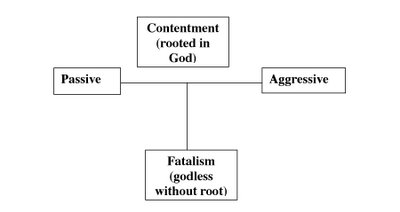
• Contentment is not something to achieve…it’s a process. The prayer of the frustrated, “Lord give me patience and give it to me NOW,” doesn’t work. Contentment and patience often work hand-in-hand.
• If one cannot be content in their present state they probably will never be content. Ask anyone who sought fame and found it, or fortune and became rich, most of the time they die lonely. Contentment is a state of mind, not a goal to achieve.
• Our culture is rooted in discontent (capitalism exports discontent). A thousand voices yell at me each day saying, “If you just had this, you’d be happy.” The genius of capitalism is that it markets a necessity that you really don’t need. It’s called an illusion.
• Interestingly, Hindu’s (dharma) and Muslims Inshaallah (the will of God) are a form of contentment based on fatalism. They are not happier, they are just resigned.
• Unchecked ambition pulls one off balance from being centered in contentment. Nothing wrong with ambition until one strives for the prize, which in the end, will never satisfy.
• On the other end of the spectrum is the idleness disguised as being passively content. You’re not content, you’re just lazy squandering God given ability.
Paul also says (6:8), having food and clothing we should be content. I may not have the best food or clothing, but I sure have it better than many of the people I work with every day outside the US. Wisdom plans for the future, but does not strive to attain that which will always be out of reach. If we work to seek first the things of God, the other things will take care of itself.
The Scriptures (1 Timothy 6:6) tell us that having godly contentment is great gain. Random thoughts on contentment:
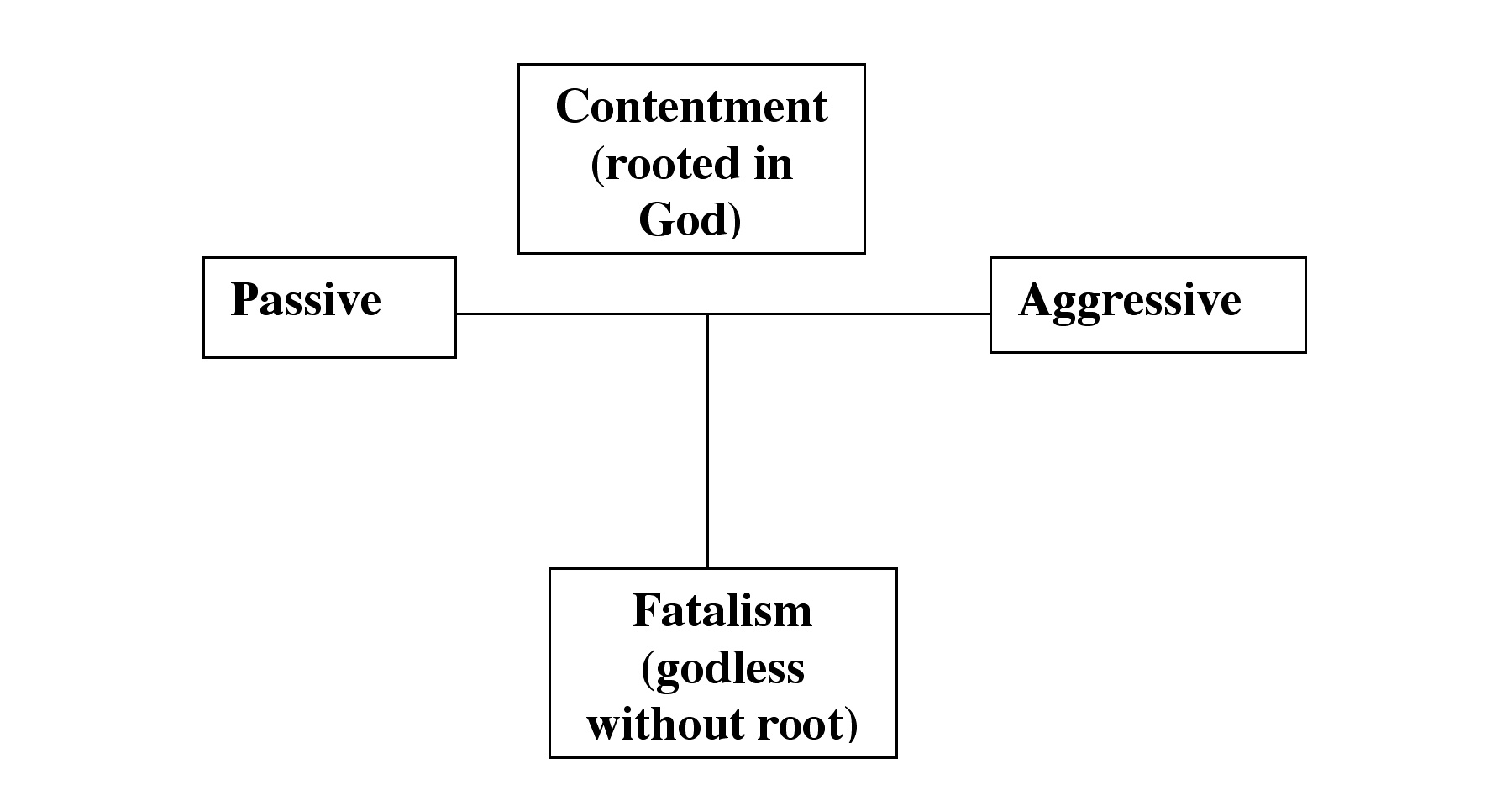
• Contentment is not something to achieve…it’s a process. The prayer of the frustrated, “Lord give me patience and give it to me NOW,” doesn’t work. Contentment and patience often work hand-in-hand.
• If one cannot be content in their present state they probably will never be content. Ask anyone who sought fame and found it, or fortune and became rich, most of the time they die lonely. Contentment is a state of mind, not a goal to achieve.
• Our culture is rooted in discontent (capitalism exports discontent). A thousand voices yell at me each day saying, “If you just had this, you’d be happy.” The genius of capitalism is that it markets a necessity that you really don’t need. It’s called an illusion.
• Interestingly, Hindu’s (dharma) and Muslims Inshaallah (the will of God) are a form of contentment based on fatalism. They are not happier, they are just resigned.
• Unchecked ambition pulls one off balance from being centered in contentment. Nothing wrong with ambition until one strives for the prize, which in the end, will never satisfy.
• On the other end of the spectrum is the idleness disguised as being passively content. You’re not content, you’re just lazy squandering God given ability.
Paul also says (6:8), having food and clothing we should be content. I may not have the best food or clothing, but I sure have it better than many of the people I work with every day outside the US. Wisdom plans for the future, but does not strive to attain that which will always be out of reach. If we work to seek first the things of God, the other things will take care of itself.
Monday, June 19, 2006
What Is Missions?
There is a lot of confusion in the American church when it comes to missions. First of all, what is missions? Which project listed below would your church fund out of the mission budget?
a. Vacation Bible School
b. Radio or television ministry
c. Youth camp
d. Christian crisis pregnancy clinics
e. Promise Keepers event
f. Starting a new church in the neighboring town or state
g. Funding mission or global outreach conference
If your view of missions leans more towards cross-cultural work, what projects does your church support (probably a combination with the list below, so what are the percentages)?
1. Church planting only
2. Church planting primarily in unreached countries
3. Social programs (orphanages, food programs or medical projects)
4. Training programs (schools, training material, trainers)
5. Literature (Bibles, tracts)
6. American personnel
7. National pastors or evangelists
What is your definition of missions? Last week I heard of a young couple that presented their ministry for Senegal. The mission committee responded by saying, “We would love to support you, but our short-term mission trips have depleted our budget.” Recently a “mission team” from Louisianaiana traveled to northwest Arkansas to conduct Back Yard Bible Clubs. Just what is missions?
a. Vacation Bible School
b. Radio or television ministry
c. Youth camp
d. Christian crisis pregnancy clinics
e. Promise Keepers event
f. Starting a new church in the neighboring town or state
g. Funding mission or global outreach conference
If your view of missions leans more towards cross-cultural work, what projects does your church support (probably a combination with the list below, so what are the percentages)?
1. Church planting only
2. Church planting primarily in unreached countries
3. Social programs (orphanages, food programs or medical projects)
4. Training programs (schools, training material, trainers)
5. Literature (Bibles, tracts)
6. American personnel
7. National pastors or evangelists
What is your definition of missions? Last week I heard of a young couple that presented their ministry for Senegal. The mission committee responded by saying, “We would love to support you, but our short-term mission trips have depleted our budget.” Recently a “mission team” from Louisianaiana traveled to northwest Arkansas to conduct Back Yard Bible Clubs. Just what is missions?
Thursday, June 15, 2006
Training In Ukraine
 I met Sergey in Ukraine at a pastors conference hosted by Church Leadership Development International (CLDI.org). He attended my workshop on “Being a Bridge for God.” Sergey had a lot of questions, as everything I taught was new to him. English is not his first language, but I was delighted to receive this note from him.
"I want to tell you, that after that week that I had a possibility to attend your lectures I refilled my spiritual strength, and started to work even willingly at the God’s field. When I came back home from that conference I talked to my wife and we come to decision that my family will follow the Lord, and since that time our home belongs to God and we will serve him.
Please pray for a chance to start a service among Gypsies. If everything will be alright I am planning to start this in September. I wish I could visit you and learn more about correct missionary work. I am grateful to you once again that you devote your time for me."
Sergey, like most pastors in the former Soviet Union, serve bi-vocationally. I have great admiration for guys like Sergey and so many other faithful servants who work hard each day to put physical bread on their table but also work diligently to give the Bread of Life to those in their community. CLDI provides a great opportunity for pastors to get training. I am grateful for the opportunity I had to be a part of this year’s conference and to get an chance to encourage and help people, like Sergey, in their ministry.
Sunday, June 11, 2006
Role Model In Dying
Malcom is a guy who works in Taiwan. I’m not sure if I’ve personally met Malcom, but we have interacted several times over email. I think we probably don’t see eye-to-eye on some missiological issues, but we have more in common than disagreements.
Malcom is dying. He has cancer and, according to a recent post by his wife, probably doesn’t have long to live. Malcom sent a post today to his friends saying that he is too weak to continue much dialogue and gave a farewell to those who know him.
I’m writing these thoughts about Malcom because he is a bit of a role model to me on how to die. Even though his fate is sealed with an incurable disease, he hasn’t made a big deal about it. Instead of dwelling on the inevitable, he has been trying to carry on with life as usual. I know he is concerned about his families welfare after he’s gone, but the tone of the way he is winding up his days on this earth seems to be one of quite resolve and bit matter-of-fact. That’s what I admire about Malcom’s dying.
I contrast Malcom’s situation with others I have known which have faced the expected. Their letters, unlike Malcom’s, is a weekly medical update and prayer for deliverance, that God will miraculously intervene. Malcom has also asked that people pray for him, but more for grace as he nears his end as well as for those who he will leave behind.
I have no idea how I would react if I was told I had cancer and may or may not live for another year. But as a Christian, who claims that my hope is in Christ and to be absent from the body is to be present with the Lord, I should see death as a spectacular transition to the fulfillment of my purpose of existence. I would like to think I would seek all the medical help possible, as I don’t think we are to foolishly hasten our own demise. But when it becomes crystal clear that my days are few, I hope that, as much as my ailing body will allow, I will carry on with life as usual until I can’t wake up.
Thanks, Malcom, for a great example on how to die. We will see you soon.
Malcom is dying. He has cancer and, according to a recent post by his wife, probably doesn’t have long to live. Malcom sent a post today to his friends saying that he is too weak to continue much dialogue and gave a farewell to those who know him.
I’m writing these thoughts about Malcom because he is a bit of a role model to me on how to die. Even though his fate is sealed with an incurable disease, he hasn’t made a big deal about it. Instead of dwelling on the inevitable, he has been trying to carry on with life as usual. I know he is concerned about his families welfare after he’s gone, but the tone of the way he is winding up his days on this earth seems to be one of quite resolve and bit matter-of-fact. That’s what I admire about Malcom’s dying.
I contrast Malcom’s situation with others I have known which have faced the expected. Their letters, unlike Malcom’s, is a weekly medical update and prayer for deliverance, that God will miraculously intervene. Malcom has also asked that people pray for him, but more for grace as he nears his end as well as for those who he will leave behind.
I have no idea how I would react if I was told I had cancer and may or may not live for another year. But as a Christian, who claims that my hope is in Christ and to be absent from the body is to be present with the Lord, I should see death as a spectacular transition to the fulfillment of my purpose of existence. I would like to think I would seek all the medical help possible, as I don’t think we are to foolishly hasten our own demise. But when it becomes crystal clear that my days are few, I hope that, as much as my ailing body will allow, I will carry on with life as usual until I can’t wake up.
Thanks, Malcom, for a great example on how to die. We will see you soon.
Thursday, June 08, 2006
So You Think Your Church Is Missional?
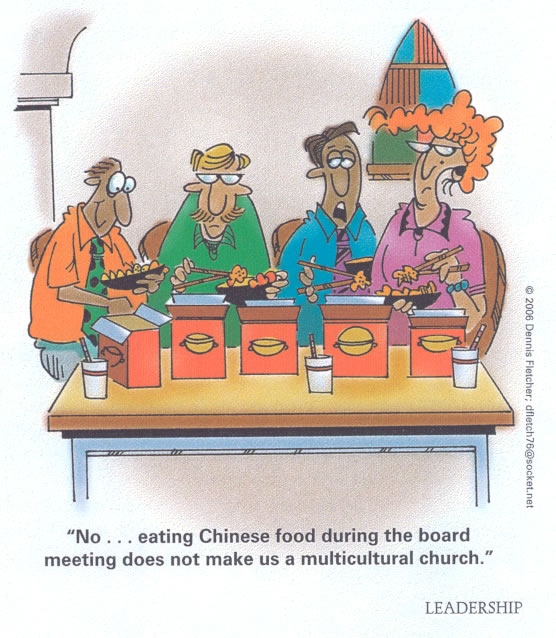
My wife, Sandy, has a theory about churches and their understanding of world missions. If in the Q and A they ask questions beyond, "What do the natives eat?" they are probably above average.
I thought about that theory when I received this cartoon from a friend of mine.
Monday, June 05, 2006
I'm Back
After one week in Colorado and this past week in Ukraine, I am back to the world of blogosphere. Things I learned while away from my computer:
1. I still can’t fish. I like the concept of catching trout with a fly (seems more organic), and it’s more fun slinging the fly-line back and forth…but I still don’t catch fish.
2. I’m not in as good physical shape as I thought. The mountain I climbed at Crested Butte three years ago I gave up on before reaching the top this year. The route we took was steeper than before, but the reality is my legs gave up on me.
3. I hate to drive. The reason God created airplanes was for trips over six hours. Even with my son-in-law sharing the driving load, 16 hours in a van is not an enjoyable experience.
4. Even though they are grown and we lived in the same house for a week, I still love my kids and grandkids.
5. People who share their wealth are a rare treasure. The people who provided the lodge we stayed in built it specifically to give people who live overseas a place of retreat.
6. Russian food is still my least favorite. Hot dogs and potatoes for lunch or supper is not a hardy meal.
7. I hate flying in the summer. Way too many tourists.
8. Charles de Gaulle is the most inefficient airport in Europe. If you have an hour or less to catch your connecting flight, forget about it.
9. Good cheeseburgers can be had at TGI Friday’s in Kiev.
10. The world keeps on moving, whether I have Internet access or not.
1. I still can’t fish. I like the concept of catching trout with a fly (seems more organic), and it’s more fun slinging the fly-line back and forth…but I still don’t catch fish.
2. I’m not in as good physical shape as I thought. The mountain I climbed at Crested Butte three years ago I gave up on before reaching the top this year. The route we took was steeper than before, but the reality is my legs gave up on me.
3. I hate to drive. The reason God created airplanes was for trips over six hours. Even with my son-in-law sharing the driving load, 16 hours in a van is not an enjoyable experience.
4. Even though they are grown and we lived in the same house for a week, I still love my kids and grandkids.
5. People who share their wealth are a rare treasure. The people who provided the lodge we stayed in built it specifically to give people who live overseas a place of retreat.
6. Russian food is still my least favorite. Hot dogs and potatoes for lunch or supper is not a hardy meal.
7. I hate flying in the summer. Way too many tourists.
8. Charles de Gaulle is the most inefficient airport in Europe. If you have an hour or less to catch your connecting flight, forget about it.
9. Good cheeseburgers can be had at TGI Friday’s in Kiev.
10. The world keeps on moving, whether I have Internet access or not.
Friday, May 19, 2006
Gone Fishin
In a couple of hours we travel to the backside of God's Rockies for a week of vacation. Along with our kids and grankids, I don't plan to post anything. Actually, I'm not sure, where we will be, that I will even have access to email. I do my most of my writing, not at the keyboard, but while I am driving or walking. I suspect that as I try my hand at fly fishing I will have plenty of time to write several blogs. I might even write another book.
From Colorado I travel to Ukraine. Somewhere in-between I will touch base.
From Colorado I travel to Ukraine. Somewhere in-between I will touch base.


