Every one justifies what they do. So, when my friend asked me last week in Serbia if I believed the day of North American missionary was over, my answer was probably self-serving. There is no question that what I did thirty years ago in Kenya isn’t what I would do today. Yet, there are many people still going to Kenya, and other places in the world, doing ministry that the national church should, and indeed are doing. I’m not sure there is any place in the world, where there is a strong Christian presence, that requires Americans to be involved in hands-on church planting. My self-serving belief is that Westerners should only be going to the field to be a resource for the national church. To be a good resource one should have the gifts and expertise to add value for what God is already doing throughout the world.
“The problem I see,” I continued, “is that mission organizations continue to send people to the field to either do pioneer work or as facilitators for the national church though they have no gifts in those areas of need.”
“If that’s, true,” he asked, “Why do agencies continue to send them?”
“It’s a combination of things. First, and foremost, the American church wants to be involved in global outreach. This is right and noble, even if it’s not always effective. Secondly, [admittedly a more sinister and uncharitable opinion] it’s an economic issue,” I replied. “With each support dollar a missionary raises the organization siphons off between 12 to 25 cents. Missions has become a business. Mission organizations don’t recruit people for a task; they recruit them to be a part of the grand scheme of world evangelization whether they have gifts for the task or not. If people were recruited for a specialized task, half of those on the field would have to come home. But everyone feels their job is essential because everyone justifies what they do.”
While this is true of faith organizations, which rely on field people for their operating budget, it is no less true of large organizations that have salaried personnel. I’m always amazed with those denominations that have tons of money but don’t seem to be any more effective than the mom-and-pop groups. I’ve met some of these salaried people who are as lost on what they should be doing as the independent franchisers.
If we recruited people for a task two things would happen. First, those serving overseas will be people with special and proven skills. Whether that skill is helping in organizational management, teaching (specialized subjects) or assisting in social development programs (micro-business enterprises, facilitating global English-medium based projects, etc.), a focused task skill will always be in demand. The numbers for such people are significant, though not enormous, which leads to the second development for task (purpose) driven missions – fewer people on the field and the death of many missionary-sending agencies.
Will there come a time when there will never be a role for Western missionaries? No. Because we are a part of the Body of Christ worldwide, we will always have a function. And, our role should certainly be more than just funding nationals. But to serve as an essential component of the Body, we need to continue to define what is our greatest contribution. Those of us who understand our role will always have a part to play, but then again, everyone justifies what they do.
Saturday, April 01, 2006


Tuesday, March 28, 2006
Samsung Field Internship
Recently I received an email from Brian, a Korean who recently moved to our city. Brian is a Christian and wanted to find a church to attend so my wife and I asked him to join us. After services we had lunch and he told us his story.
Brian is a PK (preachers kid) who works for Samsung. His company sent he and twenty-two other Koreans to live one year and do research in this culture on business practices. Though Brian is married with two children, they did not come with him to the country. The structure of Brian’s one-year internship is not well defined, though he is expected to send reports to Samsung regularly on what he is learning. After this internship he may return to this country as one of their overseas managers, though that is not guaranteed.
As a trainer in cross-cultural studies I, of course, was interested in this program. At first blush I observed a few things that was both positive and negative in this internship model. On the positive side, I liked the idea that Samsung has sent people out to ask questions first, rather than coming with a market assumption. This is a continual drumbeat for me -- ask the questions before giving the answers. Too many times in businesses, including church business, there is a focus on selling the product before even knowing if the product has a market.
I’ve told this story before, but before I moved to Asia I spent a good deal of time visiting leaders to learn what the need was. I believe what I do is vital, but I wasn’t sure (a) if anyone else saw “my product” as important and, (b) if there was anyone else already here providing the same service as I do. No need to sell a product that is not needed or try to sell something to an already saturated market. If the church and missions would follow this model, I believe our work would be more effective.
The other thing I liked about Samsung’s approach was that they made it clear that, though twenty-two came over together, they were to live and work separately. After one year it will be interesting to analyze the notes of each intern. What are the common experiences? Who did well and why? Who did not do well, and why? What did each of them learn about the culture and how can they use that information for the benefit of the company?
Living separately also insures that the participants actually lean on the host culture or other expat business people for their cultural discovery, not just from their own cultural group.
The fact that the family is not involved in this project is both a strength and a weakness. It’s a strength in that the husband can focus on the job he was sent to do and not be consumed with making the family comfortable. New people coming to the field spend half, or more, of their first term dealing family adjustments (housing, schooling, etc.). The weakness in this approach is that if Brain is assigned to this country after the internship there is no guarantee that his wife and kids will adjust. Companies of every business suffer with attrition because the family cannot cope in an overseas environment. What the Korean family has over American family is the extended family structure. Brain’s family lives with his parents and is well taken care of, but that doesn’t mean that his wife will adjust to an overseas environment.
The major weakness of the program is that Samsung did not provide ANY pre-field training before sending this group on their internship. So, basically, these people are trying to discover the answers without having an idea of what questions to ask. Even a one week intensive on cultural anthropology designed to help people think about what to look for in another culture would enrich their internship tremendously. To send people to find their own way is a huge flaw in strategy.
Brian will probably do well. I think Samsung will be happy with this man’s work as he is mature and seems to have a well thought out plan for what he will be doing for a year. I would encourage all businesses, and especially those involved in Kingdom business, to think about how to better prepare people for cross-cultural work.
Brian is a PK (preachers kid) who works for Samsung. His company sent he and twenty-two other Koreans to live one year and do research in this culture on business practices. Though Brian is married with two children, they did not come with him to the country. The structure of Brian’s one-year internship is not well defined, though he is expected to send reports to Samsung regularly on what he is learning. After this internship he may return to this country as one of their overseas managers, though that is not guaranteed.
As a trainer in cross-cultural studies I, of course, was interested in this program. At first blush I observed a few things that was both positive and negative in this internship model. On the positive side, I liked the idea that Samsung has sent people out to ask questions first, rather than coming with a market assumption. This is a continual drumbeat for me -- ask the questions before giving the answers. Too many times in businesses, including church business, there is a focus on selling the product before even knowing if the product has a market.
I’ve told this story before, but before I moved to Asia I spent a good deal of time visiting leaders to learn what the need was. I believe what I do is vital, but I wasn’t sure (a) if anyone else saw “my product” as important and, (b) if there was anyone else already here providing the same service as I do. No need to sell a product that is not needed or try to sell something to an already saturated market. If the church and missions would follow this model, I believe our work would be more effective.
The other thing I liked about Samsung’s approach was that they made it clear that, though twenty-two came over together, they were to live and work separately. After one year it will be interesting to analyze the notes of each intern. What are the common experiences? Who did well and why? Who did not do well, and why? What did each of them learn about the culture and how can they use that information for the benefit of the company?
Living separately also insures that the participants actually lean on the host culture or other expat business people for their cultural discovery, not just from their own cultural group.
The fact that the family is not involved in this project is both a strength and a weakness. It’s a strength in that the husband can focus on the job he was sent to do and not be consumed with making the family comfortable. New people coming to the field spend half, or more, of their first term dealing family adjustments (housing, schooling, etc.). The weakness in this approach is that if Brain is assigned to this country after the internship there is no guarantee that his wife and kids will adjust. Companies of every business suffer with attrition because the family cannot cope in an overseas environment. What the Korean family has over American family is the extended family structure. Brain’s family lives with his parents and is well taken care of, but that doesn’t mean that his wife will adjust to an overseas environment.
The major weakness of the program is that Samsung did not provide ANY pre-field training before sending this group on their internship. So, basically, these people are trying to discover the answers without having an idea of what questions to ask. Even a one week intensive on cultural anthropology designed to help people think about what to look for in another culture would enrich their internship tremendously. To send people to find their own way is a huge flaw in strategy.
Brian will probably do well. I think Samsung will be happy with this man’s work as he is mature and seems to have a well thought out plan for what he will be doing for a year. I would encourage all businesses, and especially those involved in Kingdom business, to think about how to better prepare people for cross-cultural work.
Friday, March 24, 2006
Family Title
 When Becky, our oldest daughter, was pregnant with their first child she asked me what I wanted my grandchildren to call me?
 “Anything but something stupid,” I answered. “I don’t want them to call me ‘pee-paw’ or ‘boo-boo’ or ‘big-daddy.’”
I thought Your Excellence had a nice ring, but no one bought it.
It was about that time I received my Doctorate in Intercultural Studies, so she came up with Doc. Not bad. A little more human than I envisioned, but I could live with it.
Recently my extremely lovely, talented and gifted grandkids were together in North Carolina and found this ice cream store. Pictured are Molly, holding cousin Simon, next to cousin Isabella and brother Colin on the far right.
Names are important. One should take care in receiving their paternal consanguine name as their “good name.” Your Imminence would have been nice, but I’m proud to be just Doc.
Thursday, March 23, 2006
Taco Bell Says...
My flight from Belgrade to Milan had mechanical problems so 20 minutes after take off we turned around and made our way back to point of departure. I sat for two hours in a dingy and uncomfortable waiting room before Alitalia called to tell me I was going to miss my connecting flight to Delhi. After collecting my bag and going to the Alitalia office the lady at the desk asked me if I wanted the same flight for the next day.
“Yes,” I replied, “but I would prefer you get to me to Milan today. Get me a hotel there tonight and I will continue my journey tomorrow.”
“Oh, I can’t do that,” she said, “As your flight has not yet been cancelled.”
“So, you can’t get me to Milan to get my connecting flight and you can’t give me a hotel because officially it isn't canceled? So what should I do, wait another five hours before you do cancel the flight so I can get a room?”
Eventually they put me on a Lufthansa flight and I arrived in Delhi the next day. I thought about the events of this journey and how interesting standard operating procedures prohibit people from thinking rationally. I realize procedures are put into place for a purpose, but procedures, sometimes, confine people inside a process box that does not allow them to logically view problems and seek alternatives. You would think that there would be training, especially in customer service, that would help employees solve problems whether it is within procedure or not. Here are some training tips on how to help employees think outside the grid of rules and regulations.
1. Your First Responsibility is to Solve The Problem - If the predicament is the company’s fault, the representative for the company should be trained to solve the customer’s problem? The lady at the Alitalia service(?) counter would have been happy to book me for the next day’s flight, if I paid for my own hotel room. She was trained to follow procedure, not helping me, the paying customer, to rectify a situation that was clearly the fault of the airline.
2. Problem Solving Is Profitable - Solving problems for the customer, in the long run, will add to the bottom line, not detract from it. I suspect Alitalia was trying to save a few bucks by not paying for a room to keep me that night. I’m not sure how they come out better by passing me off to Lufthansa but, it seemed apparent to me the lady was trained to think about how to save the company money, not how to help the customer. When a company has that mentality it shouldn’t come as a surprise when they loose market-share. Next time perhaps I will simply book on Lufthansa as I am not sure Alitalia will help me in a pinch. If the company would have solved my problem it is a company I am more likely to want to do business with in the future. If I have to solve problems created by others, I will find another travel option.
3. Take Responsibility - After two hours standing around in an stuffy lounge, the natives were getting restless. When people asked those at the desk for information, i.e., what is the estimated time we might continue our journey; who will help with the connecting flights? those with the walkie-talkies and badges merely shrugged their shoulders and said, “I’m not in charge.” Hey, we don’t want you to be in charge, but since you do work here it would be nice for someone to say, “I’m not in charge, but I will find the person who can and will help.” Maybe they won’t be any more helpful than the lady behind the customer service (?) desk, but, as Taco Bells says, think outside the bun -- take responsibility. It’s called taking initiative, which seems to be lacking in customer service training.
The good news is I made it home with just a 10-hour delay. Through it all I never lost my temper, was never rude and didn’t act like an idiot, which is more than I can say for some of my fellow passengers. It does no good to burst a blood vessel when things go wrong, especially when it's things out of my control. My outlet is this blog, which few people will read. But, who knows, maybe someone from Alitalia or someone else in customer service will stumble across it will and be of help. Either way, I’ve got it off my chest. Blogging can be so therapeutic.
“Yes,” I replied, “but I would prefer you get to me to Milan today. Get me a hotel there tonight and I will continue my journey tomorrow.”
“Oh, I can’t do that,” she said, “As your flight has not yet been cancelled.”
“So, you can’t get me to Milan to get my connecting flight and you can’t give me a hotel because officially it isn't canceled? So what should I do, wait another five hours before you do cancel the flight so I can get a room?”
Eventually they put me on a Lufthansa flight and I arrived in Delhi the next day. I thought about the events of this journey and how interesting standard operating procedures prohibit people from thinking rationally. I realize procedures are put into place for a purpose, but procedures, sometimes, confine people inside a process box that does not allow them to logically view problems and seek alternatives. You would think that there would be training, especially in customer service, that would help employees solve problems whether it is within procedure or not. Here are some training tips on how to help employees think outside the grid of rules and regulations.
1. Your First Responsibility is to Solve The Problem - If the predicament is the company’s fault, the representative for the company should be trained to solve the customer’s problem? The lady at the Alitalia service(?) counter would have been happy to book me for the next day’s flight, if I paid for my own hotel room. She was trained to follow procedure, not helping me, the paying customer, to rectify a situation that was clearly the fault of the airline.
2. Problem Solving Is Profitable - Solving problems for the customer, in the long run, will add to the bottom line, not detract from it. I suspect Alitalia was trying to save a few bucks by not paying for a room to keep me that night. I’m not sure how they come out better by passing me off to Lufthansa but, it seemed apparent to me the lady was trained to think about how to save the company money, not how to help the customer. When a company has that mentality it shouldn’t come as a surprise when they loose market-share. Next time perhaps I will simply book on Lufthansa as I am not sure Alitalia will help me in a pinch. If the company would have solved my problem it is a company I am more likely to want to do business with in the future. If I have to solve problems created by others, I will find another travel option.
3. Take Responsibility - After two hours standing around in an stuffy lounge, the natives were getting restless. When people asked those at the desk for information, i.e., what is the estimated time we might continue our journey; who will help with the connecting flights? those with the walkie-talkies and badges merely shrugged their shoulders and said, “I’m not in charge.” Hey, we don’t want you to be in charge, but since you do work here it would be nice for someone to say, “I’m not in charge, but I will find the person who can and will help.” Maybe they won’t be any more helpful than the lady behind the customer service (?) desk, but, as Taco Bells says, think outside the bun -- take responsibility. It’s called taking initiative, which seems to be lacking in customer service training.
The good news is I made it home with just a 10-hour delay. Through it all I never lost my temper, was never rude and didn’t act like an idiot, which is more than I can say for some of my fellow passengers. It does no good to burst a blood vessel when things go wrong, especially when it's things out of my control. My outlet is this blog, which few people will read. But, who knows, maybe someone from Alitalia or someone else in customer service will stumble across it will and be of help. Either way, I’ve got it off my chest. Blogging can be so therapeutic.
Monday, March 20, 2006
Back Home
 I just returned from a five-day trip to Belgrade where I taught church leaders from Serbia, Albania, Macedonia, Romania, Hungary and Bulgaria. The challenges of ministry in Eastern Europe are immense, but God is working through some very faithful leaders.
It’s ironic that I was in Serbia while the funeral of Slobodan Milosevic was taking place. Milosevic single handedly destroyed that country in his attempt the make the former Yugoslavia into a greater Serbia. He was in the Hague for war crimes against humanity when he died of a heart attack. The funeral drew many supporters, but for most of the Serbian people the week’s events was just a reminder of a painful period in their life and were anxious to get him buried so they could move on in life.
While in the airport I saw Ramsey Clark. Clark was once a defense lawyer for Milosevic but took time away from his present client, Saddam Hussein, to attend an old friends funeral. Of course Clark wasn’t the only Communist present, as the airport was full of Red supporters from Russia and other eastern block countries. Absent from the funeral was Slobodan’s wife and son, who have arrest warrants out for them which kept them in Russia where they are in exile.
It will take me a couple of days to collect my thoughts and reflect on my time in Serbia, but the contrast between meeting with men and women of God who are trying to be a positive influence in the region to that of the Balkan Butcher, couldn’t have been greater. I’m grateful that my life work is around people who are messengers of life rather than those who seek to destroy it. We are not seeking a greater Serbia, Russia or even the United States; our focus is on a greater Kingdom that is not built through ethnic cleansing, but a cleansing that comes through the cross.
Tuesday, March 14, 2006
Noise Pollution

A friend from the states called me on Skype this morning. He asked, “Where are you? I hear dogs barking and horns honking?
Delhi is one loud place. We live in an average neighborhood that is not near a highway, but from sun-up to sun-down we are off the racket-o-meter with NOISE. In the early morning it’s hawkers pushing their carts selling fruit, vegetables, brooms, carpets, manure and potted plants. Along with them are guys who ride up and down the lane on bicycles yelling out their services as plumbers, electricians, shoe repairman and carpenters. The streets are narrow and the voices of those yelling bounce off the three story concrete buildings.
While all this is going on, there is the traffic. The auto-rickshaws are not much more than lawn mower engines, so you can imagine what they sound like going up and down the neighborhood. There is the occasional truck, motorcycles, cars, all with their hands firmly on the horn if not the steering wheel. About every-other-day air traffic control diverts incoming flight over our house and as they make their approach we can read the fine print on the belly of the plane.
Did you know that the word noise comes from the Latin word nausea? I looked up noise pollution and found that it has an effect on the health and behavior of people causing a rise in blood pressure as well as vasoconstriction leading to the increase of coronary artery disease. There are also potential adverse effects on sexual desire and performance. Yep, noise pollution is a serious matter.
My friend Lloyd Kwast use to pray, “Lord, today we will hear a thousand voices...may we hear yours.” Yes, Lord, I want to hear your voice over the noise clutter of the city, but if you won’t do talk to me, would you at least grant me a half hour of quiet for a nap?
Thursday, March 09, 2006
I'm Software

What would you suppose is more important for the operation of a computer, the hardware or the software? A little like which came first, the shell or the feathers, isn’t it? The answer, of course, is that both are equally important. A computer is not a computer without the chip, screen and keyboard. But without the spreadsheet, word processor and OS program, the computer is just a shiny thing on your desk without purpose.
In spite of that obvious truth there seems to be in the business world, and especially in the religious world, a greater emphasis on the hardware than software. People like to support building projects, feeding programs, schools for orphans, and halfway houses for those on the way to recovery. Why? Because it’s tangible, something they can see, take a pictures of, even write to (the child one sponsor’s for $10 a month, or the national evangelist for $20 a month). It’s all good. Part of God’s equation in bringing people to himself is those involved in hardware ministry.
Software developers are not nearly as popular, but they are no less important. Those involved in software work range from administrators to consultants. Software makes the hardware function and without it it's merely a ministry that drains resources but doesn’t really produce anything of Kingdom value.
The worth of software depends on its function. I can’t imagine trying to write without a program that doesn’t have a spell checker, font options or has the capacity to move text around. Good software provides a helping hand. If it doesn’t make my job easier then I don’t need it.
When I got my first computer, back in 1984 (which I still have, a Kaypro II with its awesome power of 64K memory, pictured above), software was bulky, but so was the computer. As I upgraded (going to a Mac and never looking back) I use to put all type of junk on my computer. I had so many bells and whistles that it talked and giggled every time I turned it on, off or made a mistake. Much older and wiser now, I put nothing on my hard-drive except for what I absolutely need. Software is not something to collect, it’s something to use.
When I lived in Kenya I started out in the hardware business. I built churches, schools and operated feeding programs. There’s good money in hardware (obviously not my motivation) and people loved to buy bricks for the glory of God. Later I switched to software and wrote lessons for our institute. Twenty years later, I’m still in the software business.
There are tons of generic software programs on the market today -- leadership, interpersonal relationships, evangelism and discipleship seminars. Those who sell these products are usually mono-cultural common brands that one pulls off the shelf in Colorado Springs and teach in Calcutta. It’s all good. It’s all part of God’s equation in bringing people to Himself.
My software is not a big seller, though I believe it’s one of the most important programs on the market (of course I would say that!). There are not many of us who teach people how to effectively communicate the message to people of different ethnic, socio-economic or cultural backgrounds; how to take what is taught and apply it to real life situations. Businesses, non-profits, institutions, even the military and governments would benefit from this software product as it helps people think about others and their needs. When one understands their market, they are better able to sell their product, whether that is an ideology, policy or the latest computer.
I’m grateful for those who deal in hardware. Those of us who are in software know that to make that machine work efficiently our work is equally important. We may not be the sexiest thing on the market, but without us, you can’t even boot up.
Monday, March 06, 2006
Language Study

Raise your hands if you’ve heard this one before.
A person who speaks three languages is…trilingual
A person who speaks two languages is…bilingual.
A person who speaks only one language is…AMERICAN!
For structuralist, anthropologists who look for the patterns of structure when studying culture, there is no more important organized pattern in society than that of language. Language is the ordering of the mind. How one sees their world is determined by how they think. The vocabulary of a person’s culture reflects not only their worldview but also their values. Example: The Eskimo’s have hundreds of words for “snow” because the white stuff is an integral part of their being. The Pokot, the tribe I worked with in Kenya, has no words for snow as it is not a part of their world. They do have, however, hundreds of cattle word terms. Pastoralists need these words not only to communicate but to express value.
I tell students to learn language well when entering another country. To know the worldview of others is to know the heart of who they are and that is reflected in culture.
I also tell my class to learn the language in which they are going to work. If one has targeted the Malinke of Mali, don’t waste your time on learning French. Though it is the official language of the country, unless you will be working among the elite of Bamako, learn the language of the common man. Most Malinke don’t know French, so learn Bambara, which is the trade language.
As a consultant and teacher living in southeast Asia, I have made a conscious choice to work only with those who know English. This is not a small group, in fact there are more English speakers here than in the U.S. and the U.K. combined (granted many of them do not speak it fluently, but they are still not the people I work with on a daily basis). My focus are on the future leaders of the country, those who will influence every segment of society. At my age to concentrate on learning another language I will never teach in is a waste of my time and energy and not strategic. As, I have frequently quoted, “Good strategy ends up being defeated by bad management.” This is true of time management as well. Like everyone, I cannot do everything that needs to be done, so I concentrate on those things I can do and don’t waste time doing things that’s not the best use of my time or talent.
Because I am bilingual I know how difficult learning language can be. Learning language is essential and should command one’s full attention. To avoid wasting time, learn what you need know, use what you learn, but learn only the language that you can effectively use.
Thursday, March 02, 2006
The Kingdom of God and Hamburgers
 I am neither Buddhist nor Hindu, but if I believed in reincarnation then surely my former life was that of Wimpy J. Wellington. It was Wimpy who uttered the immortal words; “I will gladly pay you Tuesday for a hamburger today.” I love hamburgers and consider myself quite a connoisseur of the beef patty between the bun. Mayo on the side, absolutely no ketchup or mustard, with cheese, please.
 So this week I’m in Chennai and someone asks, “Have you been to Sparky’s? It’s worth visiting.”
I intended to just get a salad, trying to get my weight under control, but then I saw it on the menu…hamburger and fries. I was skeptical as this is not beef country. I have never had a good hamburger in India, not even in a five star hotel, as the beef is not Angus but water buffalo. But alas, I couldn’t resist.
On the burger scale, the worse being 1 and best 10, the Sparky burger was 3.5 -- the fries counting for the half point bump. You just can’t make buffalo taste like good old USDA ground round. The bun, also key for quality taste, was a bit doughy.
In spite of the burger bust, I give the restaurant a solid 10 for atmosphere and purpose. For an American living overseas there is nothing like being in a home atmosphere. At Sparky’s there are license plates from every state in the union, banners of US colleges, classic Rock-N-Roll music, lots of nostalgia Americanism on the walls. They tell me the owner has been shopping on eBay for four years to decorate his diner. As for purpose, the guy who started the eatery is with an outreach organization. All profits above cost from this highly successful enterprise goes into funding orphanages and youth programs.
Most serious Christian businessmen I’ve met see their function in the Body of Christ in a support role. They don’t see themselves as church planters, teachers or social workers. Rather, they recognize the importance of their gifts in business to help others who have that calling to accomplish their task. Different from non-Christian businessmen, whose focus is only about making money and taking care of their families, these unique, and surprisingly few, people are focused on using their talents to support the Kingdom as well as their own.
There are many things a person can do overseas that does not require them to understand Greek, Hebrew or know the meaning of soteriology. While you’re waiting on a call from God, how about just doing something you’re gifted in, like being a chef, starting a computer business or a health club. Nothing wrong with being salt and light while at the same time working alongside those have taken on the Kingdom business as a fulltime profession. Life does not end or begin at the doors of a seminary; it may be as close as the entrance of a hamburger joint.
I hope to get back to Sparky’s and try their most popular menu item, according to one of the waitresses, chicken fried steak. I guess if you add enough gravy it makes the buffalo taste better. I want to meet the owner. You can’t go wrong with a guy whose motto on the door reads, “Never Trust A Skinny Chef.”
Sunday, February 26, 2006
Ethnocentrism
In my lectures in anthropology I talk about the curse of ethnocentrism. To be ethoncentristic is to have an attitude that one’s own culture is superior to others. It was a word developed around the Victorian age of colonialism, whereas cultures were classified as civilized or primitive by the criterion of how people lived, Europe being the highest standard of civilization.
Ethnocentrism manifest’s itself in subtle ways by making snide and unkind remarks about other people, e.g. they are stupid, lazy or dirty. A friend in Kenya use to say, when frustrated with the way things worked (or didn’t), “TIK” (This Is Kenya). In India one American family says, when they are stressed out, “We’re having an Indian culture day today.” One guy I know tells storeowners if they want his business they should meet his expectations as an American! It was in 1958 that the book The Ugly American was published…it’s a book about ethnocentrism and this pejorative term is still used today when American arrogance is displayed.
Ethnocentrism is not just a Western characteristic; it’s true of all cultures. "Skin tax" is common in developing countries where there are always two prices for every commodity, one for locals and one for foreigners. A popular book presently in India entitled One Night At A Call Center, is full of wisecracks about ignorant Americans. The kids working at the call center have come up with an IQ formula they call the 10 = 35 (the mentality of a 10 year old Indian equals the IQ of a 35 year old American). There is even a pastor of a church my wife attends for a women’s Bible study class who chides the Indian women by asking them, “Why do you want to be around these white skinned people?” Ethnocentrism is an insidious disease that affects all people in every culture.
Certainly people should be proud of their cultural heritage. I get weary listening to Americans apologize for their country; our policies, wealth, inequalities, etc. If something goes wrong in the world we can always blame the United States. Though my culture (and your culture), indeed have flaws, there is nothing inherently wrong with being proud of who you are and where you are from. We cross the line into ethnocentrism, however, when we begin to act out a spirit of superiority and voice that attitude with rude remarks about others.
I was reminded of this issue this past week. I purchased some airline tickets that were issued in the states. A friend said his father-in-law would bring the tickets for me when they come for a visit next month. I got a message from him Friday saying, “Sorry but they have lost the tickets.” I now have to go through the process of time and money in getting the tickets reissued. Hey, I understand, mistakes happen, we are all fallible. But I wondered, if someone in India had made this blunder, would we say it was just a mistake, or would we talk about the irresponsibility of the people in this culture? To err is human, unless you are of a different ethnicity and then you’re just an idiot.
I must admit I’m fighting ethnocentrism right now. As I think of the hours I’m going to have to put into correcting the goof-up of someone else, I know I should be charitable and say, “It could happen to anyone, everyone makes mistakes.” But in my black heart what I’m feeling is “the incompetent don’t live in Kenya or India, but in Texas.”
Ethnocentrism manifest’s itself in subtle ways by making snide and unkind remarks about other people, e.g. they are stupid, lazy or dirty. A friend in Kenya use to say, when frustrated with the way things worked (or didn’t), “TIK” (This Is Kenya). In India one American family says, when they are stressed out, “We’re having an Indian culture day today.” One guy I know tells storeowners if they want his business they should meet his expectations as an American! It was in 1958 that the book The Ugly American was published…it’s a book about ethnocentrism and this pejorative term is still used today when American arrogance is displayed.
Ethnocentrism is not just a Western characteristic; it’s true of all cultures. "Skin tax" is common in developing countries where there are always two prices for every commodity, one for locals and one for foreigners. A popular book presently in India entitled One Night At A Call Center, is full of wisecracks about ignorant Americans. The kids working at the call center have come up with an IQ formula they call the 10 = 35 (the mentality of a 10 year old Indian equals the IQ of a 35 year old American). There is even a pastor of a church my wife attends for a women’s Bible study class who chides the Indian women by asking them, “Why do you want to be around these white skinned people?” Ethnocentrism is an insidious disease that affects all people in every culture.
Certainly people should be proud of their cultural heritage. I get weary listening to Americans apologize for their country; our policies, wealth, inequalities, etc. If something goes wrong in the world we can always blame the United States. Though my culture (and your culture), indeed have flaws, there is nothing inherently wrong with being proud of who you are and where you are from. We cross the line into ethnocentrism, however, when we begin to act out a spirit of superiority and voice that attitude with rude remarks about others.
I was reminded of this issue this past week. I purchased some airline tickets that were issued in the states. A friend said his father-in-law would bring the tickets for me when they come for a visit next month. I got a message from him Friday saying, “Sorry but they have lost the tickets.” I now have to go through the process of time and money in getting the tickets reissued. Hey, I understand, mistakes happen, we are all fallible. But I wondered, if someone in India had made this blunder, would we say it was just a mistake, or would we talk about the irresponsibility of the people in this culture? To err is human, unless you are of a different ethnicity and then you’re just an idiot.
I must admit I’m fighting ethnocentrism right now. As I think of the hours I’m going to have to put into correcting the goof-up of someone else, I know I should be charitable and say, “It could happen to anyone, everyone makes mistakes.” But in my black heart what I’m feeling is “the incompetent don’t live in Kenya or India, but in Texas.”
Thursday, February 23, 2006
Friends and Enemies
Talking with a colleague several years ago, he mentioned a person whom I had business with. In the course of the conversation he let it be known that he did not have a good relationship with this mutual acquaintance. When I told him that, not only did I know this person, he was a friend of mine and wondered if that was a problem with us working together? He said to me, “Lewis, you don’t have to adopt my enemies to be my friend.”
I thought about that in my early morning walk today in Chennai. I have a friend here I have been working with for over ten years. He’s a visionary, charismatic and opinionated. He is also obstinate, a bit preachy and I certainly don’t agree with some of his projects. I have known people who have partnered with my friend who decided that he was either dishonest or a dictatorial tyrant and therefore severed their relationship with him. Many of those people wonder why I continue my relationship with such a man. The reasons are basic.
First, people who develop relationships based on competing agenda’s are bound to clash. When everyone wants to take the credit for how many souls are saved, how many churches are planted, how many orphans are supported, someone is going to be unhappy on how the money is or should be spent. My friend and I do not have competing agenda’s. His goals and mine are the same, i.e. training people how to take the message of Christ cross-culturally. Neither he nor I use each other for our own end. Because his goals and mine are the same we are not in competition.
Second, most people who work my friend do not understand culture. Indian’s do not, for the most part, operate in an egalitarian fashion. Family businesses function with a very strong sense of hierarchy. Roles are well defined and few people get a vote on how the organization is run. I don’t make the rules; I just know how the rules are created which most people from the outside fail to understand. If someone wants to work with people in this culture they must understand that the person at the top is in control and to try and make them “accountable” (as they define accountability) is a waste of time. (Hierarchy is usually the result of a family run business. For established business and schools that is not run by the founder or his sons, the structure is more bureaucratic. There are egalitarian companies in India, but they are the minority).
Lastly, the reason I continue to work with my friend is that I do not desire to adopt someone else’s enemies for their approval. In every relationship it is a matter of give-and-take. Certainly that is true in marriage, so is it with all friendships. I know the parameters in which I can work with my friend. I work with him; I do not work for him. When I am on his turf I operate by his rules. When I disagree with him, which is often, we discuss it. We have built a mutual respect for each other in spite of our differences in opinion or personality.
As I continued my walk I thought about my younger brother who has made a mess of his family because he insists that one must adopt his enemies to be his friend. Others in the family have embraced that same philosophy making it impossible for reconciliation. I thought about church members who, not only left a church over a disagreement, have broken relationships with those of their former church because they are unwilling to support their unhappy position. I thought about people in my life that I no longer have a relationship with because I refuse to adopt their enemies. Life is too short. I may not like your friends, but you don’t have to adopt my enemies to be a friend of mine.
I thought about that in my early morning walk today in Chennai. I have a friend here I have been working with for over ten years. He’s a visionary, charismatic and opinionated. He is also obstinate, a bit preachy and I certainly don’t agree with some of his projects. I have known people who have partnered with my friend who decided that he was either dishonest or a dictatorial tyrant and therefore severed their relationship with him. Many of those people wonder why I continue my relationship with such a man. The reasons are basic.
First, people who develop relationships based on competing agenda’s are bound to clash. When everyone wants to take the credit for how many souls are saved, how many churches are planted, how many orphans are supported, someone is going to be unhappy on how the money is or should be spent. My friend and I do not have competing agenda’s. His goals and mine are the same, i.e. training people how to take the message of Christ cross-culturally. Neither he nor I use each other for our own end. Because his goals and mine are the same we are not in competition.
Second, most people who work my friend do not understand culture. Indian’s do not, for the most part, operate in an egalitarian fashion. Family businesses function with a very strong sense of hierarchy. Roles are well defined and few people get a vote on how the organization is run. I don’t make the rules; I just know how the rules are created which most people from the outside fail to understand. If someone wants to work with people in this culture they must understand that the person at the top is in control and to try and make them “accountable” (as they define accountability) is a waste of time. (Hierarchy is usually the result of a family run business. For established business and schools that is not run by the founder or his sons, the structure is more bureaucratic. There are egalitarian companies in India, but they are the minority).
Lastly, the reason I continue to work with my friend is that I do not desire to adopt someone else’s enemies for their approval. In every relationship it is a matter of give-and-take. Certainly that is true in marriage, so is it with all friendships. I know the parameters in which I can work with my friend. I work with him; I do not work for him. When I am on his turf I operate by his rules. When I disagree with him, which is often, we discuss it. We have built a mutual respect for each other in spite of our differences in opinion or personality.
As I continued my walk I thought about my younger brother who has made a mess of his family because he insists that one must adopt his enemies to be his friend. Others in the family have embraced that same philosophy making it impossible for reconciliation. I thought about church members who, not only left a church over a disagreement, have broken relationships with those of their former church because they are unwilling to support their unhappy position. I thought about people in my life that I no longer have a relationship with because I refuse to adopt their enemies. Life is too short. I may not like your friends, but you don’t have to adopt my enemies to be a friend of mine.
Monday, February 20, 2006
Conflict and Cultures
I am presently reading The Argumentative Indian, by Amartya Sen. He begins,
“Prolixity is not alien to us in India. We are able to talk at some length. Krishna Menon (when he was leading the Indian delegation) holds the longest speech ever delivered in the United Nations (nine hours non-stop), established half a century ago and, has not been equaled by anyone from any where. We do like to speak.”
I thought about Sen’s book while in the bank the other day. Sure, one gets use to the talking, arguing, bartering in the bazaar, but the bank? I was amused as I listened to the complaints by customers and the defense by the employees. Then I thought about my own culture and how that, when it comes to money, or frustrated with poor service, we can get more than a bit testy as well. I guess it’s true of all cultures. Or is it?
Cultures are usually put into one of two categories, conflict or shame. Shame cultures are often thought to be primarily among peoples of the Far East -- China, Japan, Thailand, etc. It’s not that they don’t argue, they can and they do. However, especially as it relates to interpersonal relationships, they are less confrontational. The best way to handle conflict in those cultures is through third party mediation.
Southeast Asian countries of India, Pakistan, and the Middle East are conflict cultures. One does not need a reason to argue in these societies; even the daily buying of bread is enough for debate. Latin American’s are not passive in their interactions so they, too, would be in the conflict group, but not as much as in Southeast Asia.
In some parts of the Western Europe, tolerance often means no opinion, but one would still not classify them as a shame culture -- perhaps a milk toast combination depending on the situation. American’s can be in-your-face and they lend more toward conflict, though not as severe as the Middle East. I am certain the kids working in the call centers of Mumbai would disagree with my accommodating assessment, but dealing with people who get unsolicited telemarketing calls is not a true gauge of society.
As one looks at confrontation and culture it’s easy to see the transference of religious belief and behavior. (Is religion born out of culture, or is cultural behavior shaped by religion?) The cultures of Buddhism and Shintoism hold humility as a value. While in Korea recently I observed that even among Christian’s, the Shinto approach to life is adopted by everyone in society. Confrontation is dealt with behind the scenes so that one does not lose face.
Evangelical North Americans are individualistic and opinionated and therefore prone more toward confrontation “The Bible says it, I believe it and that settles it,” is not an argument but merely a confrontational slogan. Christians whose motto is “live and let live,” hold a more passive liberal theology and are as useless as the turn-or-burn fundamentalists in communicating the message of Christ to non-belivers.
Muslims of course are in constant conflict. It’s not just a derogatory cartoon that will send them into the streets to riot; they kill their own as a matter of course on issues they find objectionable. Today’s enemy are the infidels, tomorrow it will be the Shiite that lives on the other side of town. “Have a nice day” isn’t a part of their worldview.
The behavior of Hindu’s runs from soup to nuts as it relates to their faith. They either will vehemently argue or arrogantly dismiss those who do not share their beliefs, but they are never neutral.
No matter where you live, the argumentative Indian is in us all. How one manifests that disagreement depends on your culture. In Rome they will ask for a bowl of water as a sign that they will not be involved in such matters, while in Jerusalem they have no problem defending God’s honor by nailing you to a cross. .
“Prolixity is not alien to us in India. We are able to talk at some length. Krishna Menon (when he was leading the Indian delegation) holds the longest speech ever delivered in the United Nations (nine hours non-stop), established half a century ago and, has not been equaled by anyone from any where. We do like to speak.”
I thought about Sen’s book while in the bank the other day. Sure, one gets use to the talking, arguing, bartering in the bazaar, but the bank? I was amused as I listened to the complaints by customers and the defense by the employees. Then I thought about my own culture and how that, when it comes to money, or frustrated with poor service, we can get more than a bit testy as well. I guess it’s true of all cultures. Or is it?
Cultures are usually put into one of two categories, conflict or shame. Shame cultures are often thought to be primarily among peoples of the Far East -- China, Japan, Thailand, etc. It’s not that they don’t argue, they can and they do. However, especially as it relates to interpersonal relationships, they are less confrontational. The best way to handle conflict in those cultures is through third party mediation.
Southeast Asian countries of India, Pakistan, and the Middle East are conflict cultures. One does not need a reason to argue in these societies; even the daily buying of bread is enough for debate. Latin American’s are not passive in their interactions so they, too, would be in the conflict group, but not as much as in Southeast Asia.
In some parts of the Western Europe, tolerance often means no opinion, but one would still not classify them as a shame culture -- perhaps a milk toast combination depending on the situation. American’s can be in-your-face and they lend more toward conflict, though not as severe as the Middle East. I am certain the kids working in the call centers of Mumbai would disagree with my accommodating assessment, but dealing with people who get unsolicited telemarketing calls is not a true gauge of society.
As one looks at confrontation and culture it’s easy to see the transference of religious belief and behavior. (Is religion born out of culture, or is cultural behavior shaped by religion?) The cultures of Buddhism and Shintoism hold humility as a value. While in Korea recently I observed that even among Christian’s, the Shinto approach to life is adopted by everyone in society. Confrontation is dealt with behind the scenes so that one does not lose face.
Evangelical North Americans are individualistic and opinionated and therefore prone more toward confrontation “The Bible says it, I believe it and that settles it,” is not an argument but merely a confrontational slogan. Christians whose motto is “live and let live,” hold a more passive liberal theology and are as useless as the turn-or-burn fundamentalists in communicating the message of Christ to non-belivers.
Muslims of course are in constant conflict. It’s not just a derogatory cartoon that will send them into the streets to riot; they kill their own as a matter of course on issues they find objectionable. Today’s enemy are the infidels, tomorrow it will be the Shiite that lives on the other side of town. “Have a nice day” isn’t a part of their worldview.
The behavior of Hindu’s runs from soup to nuts as it relates to their faith. They either will vehemently argue or arrogantly dismiss those who do not share their beliefs, but they are never neutral.
No matter where you live, the argumentative Indian is in us all. How one manifests that disagreement depends on your culture. In Rome they will ask for a bowl of water as a sign that they will not be involved in such matters, while in Jerusalem they have no problem defending God’s honor by nailing you to a cross. .
Thursday, February 16, 2006
Essentializing Experience
New words and phrases are always helpful. Most of us grapple with communicating thought and wish we had better way of saying things. Finding new words or phrases is like finding a precious gem, or perhaps, less dramatic, a morsel of savory meat at the bottom of a bowl of soup.
While attending a missiological consultation a few weeks back, a woman asked the speaker at the conclusion of his presentation how the subject matter related to women (it didn’t make any difference what the subject was, the same woman asked the same question to everyone who spoke). In the course of his response he acknowledged that, being a man, he certainly couldn’t address the subject as it relates to her experience.
“However,” he continued, “I reject the idea that my thoughts are not valid just because I view this situation differently. Essentializing experiences is, on the whole, not helpful.”
Essentializing experience. Great phrase. Don’t know if it’s a word (as my spellchecker can’t find it), but a great thought nevertheless. What does it mean?
When a person makes his or her experience THE experience for everyone to emulate they are essentializing. Essentializing experience is the kissing-cousin of reductionism, i.e. everything can be reduced to a biological, psychological, gender-specific or theological explanation. All religions practice both essentialism and reductionism. I can either prove it through the holy writings or I believe it because I have had an experience.
As a follower of Jesus Christ I can give both a theological as well as an experiential argument for my faith. And, while my experience is important and helpful in dialogue, essentializing my faith neither proves anything nor should be the basis for argument. I may argue that I experienced peace and forgiveness the day I accepted Christ as my Savior and became a decided follower of Him, but my experience does not mean that others must have the same feeling for their faith to be legitimate.
It’s the essentializing of experience that has caused much grief in the church. I’m quite content, though often skeptical, to know that others have experienced healing, talked with Jesus face-to-face, spoke in an unknown tongue or sense a warm feeling of His presence when they pray. However, when others insist that everyone must have that same feeling to be truly born-again, filled with the Spirit or be sanctified, the experience becomes a barrier and a point of contention for those who have not been so blessed with that same experience. Must one shed tears of remorse to be a true repentant? Must one take baptism immediately after embracing Christ to show they are true believer? Personal experience should not be taught as a universal principle.
Is experience therefore unimportant? Of course it’s important, to the believer, and can be used in the course of discussion, but its apologetic value is limited. The Apostle Paul talked about his experience on the road to Damascus (the Lord appearing and speaking to him – Acts 9:1-9), but Paul does not teach that a person must hear from heaven to be a follower and does not suggest that every missionary call must include a blinding light. When Paul recounted his Damascus road experience, non-believers merely dismissed him as being mad.
Space doesn’t allow for the discussion that experience itself is, not only a bad position for argument, it can also be dangerous. False doctrine is born more often through a combination of poor hermeneutics coupled with essentializing experience.
Essentializing experience. Great phrase. Embrace your experience, make sure that it has proper biblical support, but don’t make it an essential doctrine for others.
While attending a missiological consultation a few weeks back, a woman asked the speaker at the conclusion of his presentation how the subject matter related to women (it didn’t make any difference what the subject was, the same woman asked the same question to everyone who spoke). In the course of his response he acknowledged that, being a man, he certainly couldn’t address the subject as it relates to her experience.
“However,” he continued, “I reject the idea that my thoughts are not valid just because I view this situation differently. Essentializing experiences is, on the whole, not helpful.”
Essentializing experience. Great phrase. Don’t know if it’s a word (as my spellchecker can’t find it), but a great thought nevertheless. What does it mean?
When a person makes his or her experience THE experience for everyone to emulate they are essentializing. Essentializing experience is the kissing-cousin of reductionism, i.e. everything can be reduced to a biological, psychological, gender-specific or theological explanation. All religions practice both essentialism and reductionism. I can either prove it through the holy writings or I believe it because I have had an experience.
As a follower of Jesus Christ I can give both a theological as well as an experiential argument for my faith. And, while my experience is important and helpful in dialogue, essentializing my faith neither proves anything nor should be the basis for argument. I may argue that I experienced peace and forgiveness the day I accepted Christ as my Savior and became a decided follower of Him, but my experience does not mean that others must have the same feeling for their faith to be legitimate.
It’s the essentializing of experience that has caused much grief in the church. I’m quite content, though often skeptical, to know that others have experienced healing, talked with Jesus face-to-face, spoke in an unknown tongue or sense a warm feeling of His presence when they pray. However, when others insist that everyone must have that same feeling to be truly born-again, filled with the Spirit or be sanctified, the experience becomes a barrier and a point of contention for those who have not been so blessed with that same experience. Must one shed tears of remorse to be a true repentant? Must one take baptism immediately after embracing Christ to show they are true believer? Personal experience should not be taught as a universal principle.
Is experience therefore unimportant? Of course it’s important, to the believer, and can be used in the course of discussion, but its apologetic value is limited. The Apostle Paul talked about his experience on the road to Damascus (the Lord appearing and speaking to him – Acts 9:1-9), but Paul does not teach that a person must hear from heaven to be a follower and does not suggest that every missionary call must include a blinding light. When Paul recounted his Damascus road experience, non-believers merely dismissed him as being mad.
Space doesn’t allow for the discussion that experience itself is, not only a bad position for argument, it can also be dangerous. False doctrine is born more often through a combination of poor hermeneutics coupled with essentializing experience.
Essentializing experience. Great phrase. Embrace your experience, make sure that it has proper biblical support, but don’t make it an essential doctrine for others.
Monday, February 13, 2006
Names
Most people have heard the story of the soldier who was brought before Alexander the Great to be judged for misconduct.
“What is your name?” the Emperor asked.
Timidly the solder replied, “Alexander, sir.”
Outraged the great general roared, “Either change your ways or change your name.”
Names are a fascinating study. In America, where a name is more likely a reflection of the time than meaning, the days of Fred and Frank of the ‘50’s is now given way to Justin and Jamie of today. We might be grateful for the change as who would want to be stuck with names of the ‘20’s such as Ola (which is my mom’s name) or Wathena or Lila Venus.
In India I am often asked what’s “my good name.” I still don’t know if they want my given or surname, but since they are confused with both Richard and Lewis it doesn’t make much difference what I give them.
In Kenya you can usually get a clue of the tribe of a person by their last name. If it has a strong “gha” or “ka” sound like, “Gichuki” or “Kariuki,” they are usually Kikuyu; names that begin with “M” are Luya’s, such as Mgoya. For the Luo tribe almost all names begin with “O” such as Odinga. I had Luo guy working for me by the name of Ochieng. Whenever I got a letter from him the envelope was addressed to a Mr. Lichard Oruis.
Indians love “pet” names. There are a lot of women called Pinky, a few Bubbles and one Punjabi guy is called Dimples. My advice is if he goes to the states he not take that name with him. Names carry meaning in India as they often reveal status or caste. In the south, where the majority of the Christians live, there are a lot of people with the surname Thomas, Matthews and Samuels. Occasionally I have even met a few David Livingston’s and Charles Spurgeon’s.
While I was in Korea last month I was intrigued with those who had taken on Western names. There are a lot of Kim’s and Cho’s, but their first names are real tongue twisters. When I met my translator she told me her name was Becky.
“Really,” I said. How did you get that name?
She told me her friend gave it to her. I asked others who had taken on Western names how they got theirs. One guy told me that an American friend, who couldn’t pronounce his given first name, said, “You look like a ‘Joe’ to me, and so that’s what I’ll call you.” Now, when he meets an American he just tells them his name is Joe.
I met another Korean by the name of Brian. He said a friend gave him the name and he liked it. When I asked how his wife came to be called Brenda he told me, “My favorite singer growing up was Brenda Lee. I gave her the name Brenda because I loved Brenda Lee.” To me, that’s dangerous. I’m not sure my wife would like it if I called her Raquel (and I will let you guess who I’m thinking about).
In parts of Ethiopia a child is given two names. One that is revealed and one that is secret. The secret name is only revealed when the person is old enough to protect himself.
Some say that we will have a new name when we get to heaven (Rev. 2:17), though I’m not sure of that interpretation. Christ is given a name that only he himself knows (Rev. 19:12). I do think we need to think a bit more about the name Christian, which means “little Christ,” or “follower of Christ.” Like Alexander told the soldier, perhaps sometimes we need to either change our behavior or change our name.
“What is your name?” the Emperor asked.
Timidly the solder replied, “Alexander, sir.”
Outraged the great general roared, “Either change your ways or change your name.”
Names are a fascinating study. In America, where a name is more likely a reflection of the time than meaning, the days of Fred and Frank of the ‘50’s is now given way to Justin and Jamie of today. We might be grateful for the change as who would want to be stuck with names of the ‘20’s such as Ola (which is my mom’s name) or Wathena or Lila Venus.
In India I am often asked what’s “my good name.” I still don’t know if they want my given or surname, but since they are confused with both Richard and Lewis it doesn’t make much difference what I give them.
In Kenya you can usually get a clue of the tribe of a person by their last name. If it has a strong “gha” or “ka” sound like, “Gichuki” or “Kariuki,” they are usually Kikuyu; names that begin with “M” are Luya’s, such as Mgoya. For the Luo tribe almost all names begin with “O” such as Odinga. I had Luo guy working for me by the name of Ochieng. Whenever I got a letter from him the envelope was addressed to a Mr. Lichard Oruis.
Indians love “pet” names. There are a lot of women called Pinky, a few Bubbles and one Punjabi guy is called Dimples. My advice is if he goes to the states he not take that name with him. Names carry meaning in India as they often reveal status or caste. In the south, where the majority of the Christians live, there are a lot of people with the surname Thomas, Matthews and Samuels. Occasionally I have even met a few David Livingston’s and Charles Spurgeon’s.
While I was in Korea last month I was intrigued with those who had taken on Western names. There are a lot of Kim’s and Cho’s, but their first names are real tongue twisters. When I met my translator she told me her name was Becky.
“Really,” I said. How did you get that name?
She told me her friend gave it to her. I asked others who had taken on Western names how they got theirs. One guy told me that an American friend, who couldn’t pronounce his given first name, said, “You look like a ‘Joe’ to me, and so that’s what I’ll call you.” Now, when he meets an American he just tells them his name is Joe.
I met another Korean by the name of Brian. He said a friend gave him the name and he liked it. When I asked how his wife came to be called Brenda he told me, “My favorite singer growing up was Brenda Lee. I gave her the name Brenda because I loved Brenda Lee.” To me, that’s dangerous. I’m not sure my wife would like it if I called her Raquel (and I will let you guess who I’m thinking about).
In parts of Ethiopia a child is given two names. One that is revealed and one that is secret. The secret name is only revealed when the person is old enough to protect himself.
Some say that we will have a new name when we get to heaven (Rev. 2:17), though I’m not sure of that interpretation. Christ is given a name that only he himself knows (Rev. 19:12). I do think we need to think a bit more about the name Christian, which means “little Christ,” or “follower of Christ.” Like Alexander told the soldier, perhaps sometimes we need to either change our behavior or change our name.
Thursday, February 09, 2006
Food and Globalization
“Let me see,” I said to myself as I looked at the menu board in front of me, “what am I hungry for?” There was an assortment of platters: Aloo (potato) Tikki, Biyriani (rice) Combo and the ever popular Pratha (flat bread) N Curry. Since I had my fill of Indian food for the week, I opted for the local made chicken burger.
As I stood in line at the noisy food court in Hyderabad, I observed my social context. Those gathered on the top floor of the mall were young, mostly under 30 years of age and middle class. The price, as well as the quality, of goods sold at the mall is much greater than the street market or bazaar. The music blasted a few decimals short of a jet engine and the kids looked like any other group of kids at any food court. That’s when it struck me…globalization!
Globalization does mean the blending of customs, language, dress and music. Like MTV, which is Rock no matter where you are, though sung in Lao or Latvian, food courts are a global/local phenomena. The new term for today’s trend is “glocal.” Whether the favorite dish is hot dogs (with only mayonnaise) in Santiago, or red chimchi and squid in Seoul, or the fajita wraps in Dallas, fast food at shopping malls is now a part of the international scene.
Those who resist globalization point to food courts as a prime example of the deterioration of culture. Stuart Miller writes in UNDERSTANDING EUROPEANS:
“With some exceptions, Americans are not very interested in the things they eat or in eating itself...we tend to be swallowers rather than tasters. In Milan, the most modern of Italian cities, the business lunch is still virtually unknown. Instead, they have their attention on the moment and they dedicate it to the food and the ceremony of eating. At the table, the food is discussed and food of other meals is remembered and compared with what one is eating now. Often, half the meal is taken up with talking about the food one is eating, the food one ate, the food one will eat, even how food is grown.”
Most people, especially in this hectic fast pace lifestyle of today’s world, treat food more as feed, not something to be savored. However, even in food courts, it’s not what we eat that is the issue but the social context of our dining experience. Anthropologist Mary Douglas states, “Food is a system of social communication...Food may nourish us, but we do not eat in order just to be nourished. Most people do not usually eat alone at irregular times and without the paraphernalia of seated eating. Nor do we eat what is best for us. Food events are like little rituals, [and] like rituals they involve communication.”
My epiphany in Hyderabad was that fast food is today’s version of the “raw,” of ancient man. Raw (or fast) food is for the informal, whereas cooked food is for meaningful communication. Okay, perhaps the food court is a pre-dating ritual for teenagers and therefore important for the socialization of raging hormones. In today’s glocal world food courts symbolize, what Thomas Friedman (THE WORLD IS FLAT) calls, the flattening of the earth.
My thoughts are interrupted as the kid with the funny hat behind the counter says to me in broken English, “Sir, would you like fries with that burger?” No wonder I like this place, it’s just like home.
As I stood in line at the noisy food court in Hyderabad, I observed my social context. Those gathered on the top floor of the mall were young, mostly under 30 years of age and middle class. The price, as well as the quality, of goods sold at the mall is much greater than the street market or bazaar. The music blasted a few decimals short of a jet engine and the kids looked like any other group of kids at any food court. That’s when it struck me…globalization!
Globalization does mean the blending of customs, language, dress and music. Like MTV, which is Rock no matter where you are, though sung in Lao or Latvian, food courts are a global/local phenomena. The new term for today’s trend is “glocal.” Whether the favorite dish is hot dogs (with only mayonnaise) in Santiago, or red chimchi and squid in Seoul, or the fajita wraps in Dallas, fast food at shopping malls is now a part of the international scene.
Those who resist globalization point to food courts as a prime example of the deterioration of culture. Stuart Miller writes in UNDERSTANDING EUROPEANS:
“With some exceptions, Americans are not very interested in the things they eat or in eating itself...we tend to be swallowers rather than tasters. In Milan, the most modern of Italian cities, the business lunch is still virtually unknown. Instead, they have their attention on the moment and they dedicate it to the food and the ceremony of eating. At the table, the food is discussed and food of other meals is remembered and compared with what one is eating now. Often, half the meal is taken up with talking about the food one is eating, the food one ate, the food one will eat, even how food is grown.”
Most people, especially in this hectic fast pace lifestyle of today’s world, treat food more as feed, not something to be savored. However, even in food courts, it’s not what we eat that is the issue but the social context of our dining experience. Anthropologist Mary Douglas states, “Food is a system of social communication...Food may nourish us, but we do not eat in order just to be nourished. Most people do not usually eat alone at irregular times and without the paraphernalia of seated eating. Nor do we eat what is best for us. Food events are like little rituals, [and] like rituals they involve communication.”
My epiphany in Hyderabad was that fast food is today’s version of the “raw,” of ancient man. Raw (or fast) food is for the informal, whereas cooked food is for meaningful communication. Okay, perhaps the food court is a pre-dating ritual for teenagers and therefore important for the socialization of raging hormones. In today’s glocal world food courts symbolize, what Thomas Friedman (THE WORLD IS FLAT) calls, the flattening of the earth.
My thoughts are interrupted as the kid with the funny hat behind the counter says to me in broken English, “Sir, would you like fries with that burger?” No wonder I like this place, it’s just like home.
Tuesday, January 31, 2006
Wedding Culture
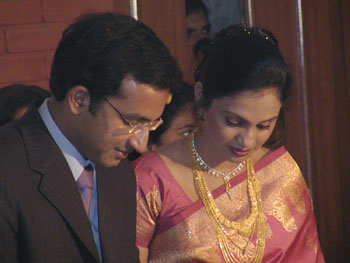 Last week we were invited to attend a wedding reception, which was an interesting cultural experience. The groom is the son of a friend of my wife who is a fellow leader in Bible Study Fellowship here in New Delhi. Some observations about the evening:
The couple is from Kerala, a state in the south where the wedding took place. It’s tradition that the couple will live in with the grooms parents, who live in Delhi, thus the reason for a reception two weeks after the actual ceremony in the south. It was an arranged marriage, like most marriages in India. I didn’t get a chance to do an in-depth research (I was more interested in the food that was served), but my guess the union was based on three things --- both bride and groom were from Kerala and probably close in caste, both belonging to the same church (Marthoma Syrian, which was supposedly founded by St. Thomas, Apostle of Jesus) and, both being from a middle upper class of society.

As the MC was giving his speech the emphases was on the couples education; the groom has an advanced degree in civil engineering and the bride is completing her M.A. in food technology (whatever the heck that is). One can’t help but be struck by the importance of education in this society. I don’t think I ever attended a wedding in the states where they talked about educational and occupational accomplishments, just memories of the couple when they were little and their character qualities as being sweet, honest or hard working.
After the introduction everyone went by to give their gifts and have their picture taken with the bride and groom. Because it was a Christian wedding of a very strict denomination, there was no alcohol served. The Sikh guy who was there to be the D.J. was told to turn off the Punjabi music, so instead, we listened to the Beatles, Bee Gees, John Denver and Abba. We left early, but I understand the kids danced until about midnight. The food was more South Indian -- dal, rice, dosa and masala chicken. It was a non-veg. affair. Because everyone was from Kerala the women wore sari’s, the men wore western suits and those under 25 wore casual sweaters and jeans. The formal comments and most conversation was in English, though the older folks spoke Malayalam.

Being the only non-Indian couple there, it was obviously a very interesting event for Sandy and me. The mosaic of cultures God has created is amazing to observe.
Friday, January 27, 2006
Tolerance Is Not Open-Ended
There’s a fine line between being tolerant of others views yet holding to what we perceive to be truth. Those who have no strong opinions on issues berate those who do have an opinion, characterizing them as intolerant, at best, narrow minded bigots, at worse. Clearly one can be open to others opinion and gently agree to disagree. Depending on whether you are a radical open-minded person (who dismisses anyone who has a strong conviction about anything) or a radical closed-minded person (there is only one way correct answer, which is theirs), will determine whether there is room for dialogue. Example:
Wickets responded to one of my blogs (More Than Religion), stating he had a warm feeling toward Jesus, but had a poor opinion of Christianity. So far so good. I, too, have a poor opinion of institutional Christianity as some times it promotes the vehicle (church or denominationalism) of the message (Christ) than it does the Person (Jesus) of the message. This could be said of all institutional religion, Muslim, Hindu, and Buddhist.
Then Wickets said, “For me Jesus is as much sweet & benevolent as is Buddha... and more.” Ooops, we’ve crossed the line of tolerance to no man’s land of radical open-mindedness, i.e. situational ethics, relativism and the territory of whaaateverrrr.
As a follower of Jesus I would, of course, make a distinction between Jesus and Buddha. Actually the two are not in the same camp. Buddha taught self-enlightenment which leads to self-salvation. Jesus, however, taught that man’s salvation could never be attained through his own efforts. The whole reason Jesus came on the scene of the world was to provide salvation through His death and resurrection (I know it’s a strange story to non-believers, but I didn’t write the script, God did).
I realize that religion is divisive. Part of the reason is because of the fanaticism of the open and the closed minded. But a closer study of Jesus will reveal that he was a divisive personality. Heck, they nailed him to a cross because he told the world that he was the way, the truth and the life, and that if anyone wished to see God it would be through him. Jesus was hardly confused in who he was, nor was he very accommodating to those who disagreed with him. For over 2,000 years the person of Jesus continues to be divisive, especially to those who reject his claim or who preach the message of open-mindedness.
Tolerance is not open ended. The line of tolerance ends when a person becomes intolerant of those who hold a conviction of truth. Or, it ends when one seizes a conviction. You can say you love Jesus and Buddha, but in the sight of God, only one claimed to be His Christ. They are not mutually exclusive. Like loving two women, you have to choose one to be your wife…unless, of course, you can find a woman that is tolerant enough to allow you to love others at the same time. It doesn’t work that way on earth; it certainly doesn’t work that way in eternity.
Wickets responded to one of my blogs (More Than Religion), stating he had a warm feeling toward Jesus, but had a poor opinion of Christianity. So far so good. I, too, have a poor opinion of institutional Christianity as some times it promotes the vehicle (church or denominationalism) of the message (Christ) than it does the Person (Jesus) of the message. This could be said of all institutional religion, Muslim, Hindu, and Buddhist.
Then Wickets said, “For me Jesus is as much sweet & benevolent as is Buddha... and more.” Ooops, we’ve crossed the line of tolerance to no man’s land of radical open-mindedness, i.e. situational ethics, relativism and the territory of whaaateverrrr.
As a follower of Jesus I would, of course, make a distinction between Jesus and Buddha. Actually the two are not in the same camp. Buddha taught self-enlightenment which leads to self-salvation. Jesus, however, taught that man’s salvation could never be attained through his own efforts. The whole reason Jesus came on the scene of the world was to provide salvation through His death and resurrection (I know it’s a strange story to non-believers, but I didn’t write the script, God did).
I realize that religion is divisive. Part of the reason is because of the fanaticism of the open and the closed minded. But a closer study of Jesus will reveal that he was a divisive personality. Heck, they nailed him to a cross because he told the world that he was the way, the truth and the life, and that if anyone wished to see God it would be through him. Jesus was hardly confused in who he was, nor was he very accommodating to those who disagreed with him. For over 2,000 years the person of Jesus continues to be divisive, especially to those who reject his claim or who preach the message of open-mindedness.
Tolerance is not open ended. The line of tolerance ends when a person becomes intolerant of those who hold a conviction of truth. Or, it ends when one seizes a conviction. You can say you love Jesus and Buddha, but in the sight of God, only one claimed to be His Christ. They are not mutually exclusive. Like loving two women, you have to choose one to be your wife…unless, of course, you can find a woman that is tolerant enough to allow you to love others at the same time. It doesn’t work that way on earth; it certainly doesn’t work that way in eternity.
Monday, January 23, 2006
You Make The Call
After I presented my paper on saturation church planting at a recent consultation, someone from the audience asked me my opinion on those in India classified as “churchless Christians.” The next day another presenter gave this case study.
“Last January while traveling to Goa by a Volvo bus from Bangalore, Kiran, a soft ware engineer was sitting next to me. I paused for prayer before the bus started. Immediately Kiran said, “I am also a believer. She shared her testimony. It was a joy to know how God captured her life and how the amazing love of God has been enabling her to witness for the Lord at work and in the neighborhood. She wanted to be discipled. Initially I helped her through emails and phone calls and later I put her in touch with a team to disciple her. After a few months God enabled her to lead her elder sister, Kokila, to Christ. Both the sisters have not taken baptism as they do not want to hurt the feelings of their devout Hindu parents, siblings and grandparents. They will be baptized in God’s appointed time. Nevertheless they continue to maintain a warm relationship with their family members.”
How do you feel about this case study? What are your thoughts on the churchless Christian? You make the call.
“Last January while traveling to Goa by a Volvo bus from Bangalore, Kiran, a soft ware engineer was sitting next to me. I paused for prayer before the bus started. Immediately Kiran said, “I am also a believer. She shared her testimony. It was a joy to know how God captured her life and how the amazing love of God has been enabling her to witness for the Lord at work and in the neighborhood. She wanted to be discipled. Initially I helped her through emails and phone calls and later I put her in touch with a team to disciple her. After a few months God enabled her to lead her elder sister, Kokila, to Christ. Both the sisters have not taken baptism as they do not want to hurt the feelings of their devout Hindu parents, siblings and grandparents. They will be baptized in God’s appointed time. Nevertheless they continue to maintain a warm relationship with their family members.”
How do you feel about this case study? What are your thoughts on the churchless Christian? You make the call.
Friday, January 20, 2006
Gentle Scholar
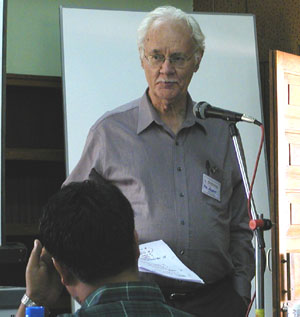 Someone once said that PhD. stands for “piled higher and deeper.” Such comments are usually from people who don’t have a degree and feel better about themselves if they can tear down those with more education. It is true, however, that sometimes those with advanced degrees can be pretentious and arrogant. Attending a consultation this past week with a bunch of academician’s there was enough posturing at the meeting to last me for a year.
 Dr. Paul Hiebert was at the conference, a man who is well known in missiological circles and whose writings on issues of contextualization, anthropology and mission are often cited. I have used Dr. Hiebert’s classic article on the “Flaw of the Excluded Middle,” many times as well as his classification of epistemology.
Having breakfast with this, now 73-year-old man, I was blessed with his genuine humble and gentle spirit. He grew up in India and we talked about the difficulties and blessings of “third culture kids” (TCK’s). I told him about my own children and what a rich experience it was for them to have been raised in Kenya. After I delivered my paper, he did not display his superior knowledge but was kind and encouraging toward my presentation.
I thought of another kind and tender scholar I met several years ago, Dr. Lloyd Kwast. Lloyd, who taught at Biola University, was one of the gentlest men I have ever known, and was as godly as he was brilliant. He passed away too young but his testimony to those he taught continues to resonate.
It won’t be too many years before I will reach the age of these two men who I admire. Though I cannot emulate their intellectual abilities, I can try to imitate their humility of spirit. My appreciation is to those who are brilliant yet who remain gracious.
Friday, January 13, 2006
Military Ministry
 I cut my ministry teeth in Del Rio, Texas thirty-five years ago. Bethel Baptist Church was my first real pastorate and where I learned what it meant to be in full-time Christian service. Most of the congregation was made up military people from Laughlin Air Force Base outside of town. I look back with fond memories of the three years we were there but wish I knew then what I know now as to the importance of serving the Lord in a military town.
Last week the memories of Laughlin came back as I spoke at the Mission Baptist Church (http://www.missionbaptist.com) outside of Seoul. Mission Baptist is an international church, but the congregation is primarily people from Osan Air Base. I had the privilege to speak at the men’s prayer breakfast on Saturday and then to the morning service on Sunday. As I met people who, far away from home, faithfully find a church where they can worship each week, I was touched by their commitment to Christ. Military life is not easy and if you’re single or assigned overseas without your family, it can be doubly tough. I admire Christians who take their commitment of faith wherever they may be throughout the world.
To pastor Mike Ivey and to all those who provide a community of fellowship for believers who live away from their native land, thanks for the work you do.
Tuesday, January 10, 2006
Thank You
 On my first visit to South Korea in 1980 I was overwhelmed by one word, kam sah hamnida, which means “thank you.”
A simple word, but I did not hear many “thank you’s,” in the previous four years while living in Kenya. Our family was on our way home from a grueling first term working in the bush of Africa and we spent twelve days in Korea visiting friends and speaking in churches from Seoul to Pusan. Among the tribal people of Pokot and Turkana, thank you didn’t come easily from many and non-existent for most. As a mzungu (white person) from the West, what I did for them was more expected than appreciated. It’s not that I need affirmation but I didn’t realize how nice it was to be valued until we visited Korea. The people of that country bowed and said kam sah hamnida to everything, all the time. They even thanked me for America’s part in the Korean war, though I was only four years old during those days in the early 1950’s.
In the early 1980’s I invited Dr. Kim to Kenya to speak to our pastors. He immediately asked me to teach him to say “thank you” in Swahili (which is asante). I thought it was interesting that the word he wanted to learn was one of appreciation. (I also told him the word for “toilet” was choo. He laughed and said that was a family name in his country.) What a wonderful culture that incorporates such an expression of respect in their language.

On this most recent visit to speak at the forty-fifth anniversary of the Bul Kwang Dong Bible Baptist Church I was reminded once again of the gracious spirit of the Korean people. Dr. Daniel Kim is a one of the nicest men I know, and it was a privilege to be invited to speak at their missions conference.
To Dr. Kim and the people of the Bible Baptist Church, let me say publicly, Kam sah hamnida. You were a great blessing to me this past week.
Wednesday, January 04, 2006
Korea
 I am in Seoul this week, guest speaker for the 45th anniversary of the Bible Baptist Church. When the church was founded in 1961 there were about 1 million Christians in the country, 2% of its population. Forty-five years later there are 12 million Christians, 30% of the population. Korea, once a receiving nation of missionaries, now has the third highest missionary force, sending over 10,400 cross-cultural workers around the globe.
Its been said that when a Chinese goes to another country they start a restaurant. When a Japanese moves across the border they establish a business. When a Korean moves to another area they start a church. Not a bad reputation.
Thursday, December 29, 2005
60 New Years
This will be my 60th New Year celebration. I obviously don’t remember my first one, as I was only two months old. That first New Year Harry Truman had just become the 33rd U.S. President after the death of FDR; I was living in California. My earliest memories of New Year’s Day is watching the Rose Parade on our black and white television and then spending the whole day glued to the tube watching college football. Those were the days when there was only the Orange, Sugar, Cotton and Rose Bowl’s, spaced out to end that afternoon on the west coast as there were no night games in the mid-1950’s. For an eight-year-old boy, it was about the best day of the year.
When we moved to Arkansas our standard of living dropped dramatically and one New Year’s Day was spent helping my dad on a construction job. I thought it was criminal to be working instead of sitting in front of the one-eyed monster eating Fritos and bean dip.
I preached my first sermon on New Year’s Eve, 1967 at what they called a “watch night” service. A tradition in our little Baptist church where we would gather at 8 p.m. to sing, eat and pray the New Year in. It was also a good time to let lay preachers and seminarians speak. I was a first year student in a Bible college and so they let me give it a try (after all, they had four hours to kill). I preached the whole book of Revelation in under thirty minutes.
New Year’s Day in Kenya was a bit dull. The kids were home from boarding school and Sandy usually made biscuit’s and chocolate gravy. No place to go in the small town we lived in. I’d listen to football games January 2nd on Armed Forces Radio.
Ten years ago I was in London with my friend Woody Phillips. He was living in Hungary at the time and we met there to look at a piece of property that the organization wanted to buy for a training school. The property was worthless but the time was well spent as I made a dear friend on that trip. We walked through Piccadilly Circus, found a quaint restaurant and watched fireworks. Woody and I had a lot in common and I valued his friendship. Wonder what we would have talked about if we knew he would be dead six years later?
This New Year’s day I will be in Seoul speaking at the Bul Kwang Dong Bible Baptist Church in Seoul, which has been a supporter for over twenty years. It will be cold and I don’t have winter clothes. Though a bit anxious, I count it a privilege to be asked to be the main speaker for their conference. I won’t be going through the events of Armageddon in a half an hour, but I will be just as excited to talk about my Savior as I was thirty-eight years ago.
A New Year. New opportunities. I wonder where I’ll be six years from now? If I live to see my 70th New Year’s, I wonder what the world will be like? The years really don’t matter, but each day that God gives me. I’m blessed. Happy New Year.
When we moved to Arkansas our standard of living dropped dramatically and one New Year’s Day was spent helping my dad on a construction job. I thought it was criminal to be working instead of sitting in front of the one-eyed monster eating Fritos and bean dip.
I preached my first sermon on New Year’s Eve, 1967 at what they called a “watch night” service. A tradition in our little Baptist church where we would gather at 8 p.m. to sing, eat and pray the New Year in. It was also a good time to let lay preachers and seminarians speak. I was a first year student in a Bible college and so they let me give it a try (after all, they had four hours to kill). I preached the whole book of Revelation in under thirty minutes.
New Year’s Day in Kenya was a bit dull. The kids were home from boarding school and Sandy usually made biscuit’s and chocolate gravy. No place to go in the small town we lived in. I’d listen to football games January 2nd on Armed Forces Radio.
Ten years ago I was in London with my friend Woody Phillips. He was living in Hungary at the time and we met there to look at a piece of property that the organization wanted to buy for a training school. The property was worthless but the time was well spent as I made a dear friend on that trip. We walked through Piccadilly Circus, found a quaint restaurant and watched fireworks. Woody and I had a lot in common and I valued his friendship. Wonder what we would have talked about if we knew he would be dead six years later?
This New Year’s day I will be in Seoul speaking at the Bul Kwang Dong Bible Baptist Church in Seoul, which has been a supporter for over twenty years. It will be cold and I don’t have winter clothes. Though a bit anxious, I count it a privilege to be asked to be the main speaker for their conference. I won’t be going through the events of Armageddon in a half an hour, but I will be just as excited to talk about my Savior as I was thirty-eight years ago.
A New Year. New opportunities. I wonder where I’ll be six years from now? If I live to see my 70th New Year’s, I wonder what the world will be like? The years really don’t matter, but each day that God gives me. I’m blessed. Happy New Year.
Friday, December 23, 2005
Merry Christmas

T’is the night before Christmas and all through our Delhi flat,
It’s so dang cold here, not a creature is stirring, not even a rat.
I look out the window, as the fog settles in,
And wonder if Jesus will be remembered in this world of sadness and sin?
With all the other gods the people do pray,
Will anyone remember why even celebrate this day?
I think of my kids, as they gather around their tree,
And pray for God blessing on them as they worship our Savior without Sandy and me.
We celebrate His birth with fellow believers tonight,
But I am reminded that our colleagues around the world are facing our same plight.
Grateful to God for His marvelous Grace,
It will be a wonderful Christmas without seeing jolly St. Nick’s face.
A poet I’m not, you no doubt agree by this time,
But it’s the thought that counts, not the uneven rhyme.
I just wanted to send out a greeting to all those we love,
And remember again our wonderful Lord and King above.
Merry Christmas.
Thursday, December 22, 2005
Why Jimmy Quits
Years ago growing up in Los Angeles we use to play sandlot football. I stood in line, along with other kids, hoping to be picked to be on a good team. I liked being on the same team with Johnny Odom, a fat Japanese fifth grade kid, as he was almost unmovable. He was slow and clumsy, but if we needed short down yardage we would always give the ball to fat Johnny who, with his shiny blue and gold LA Rams helmet (the envy of us all), would squash the opposing team with ease.
Denny Dietrich was also a good guy to have on our side as he was wiry and strong. I liked playing against Chucky Green as he was as light as a feather and I could toss him around with ease. Jimmy Farmer was a bit of a whiner and usually got hurt every game we played. Jimmy was always the last kid to be picked. No one really liked him, but when you have to have enough kids to play a game you take whoever shows up.
On my walk this morning I thought about Jimmy as it relates to overseas teams. I have noticed that usually in every team situation there is a guy or a family that the rest of the team doesn’t really like. Maybe they are whiny or they have an irritating personality. Or, perhaps, they just don’t have that indefinable chemistry which determines if they will be insiders or outsiders within the group. Whatever the reason, there seems to be a Jimmy Farmer in every group.
Like Jimmy, this odd guy (or couple) volunteers for an assignment and the organization usually picks them, with reservation. Jimmy goes to the field and the team leader doesn’t like him and never really gives him the attention he gives to others on the team. Attitude always shows up, and even Jimmy knows he was picked out of necessity, not because they want him around. Before long, either by Jimmy or the organization, a decision is made to release him from the team. Jimmy goes home and everyone points fingers on whose fault it was that he didn’t make it. Sadly, someone usually blames God saying it was His will or they missed understanding His will. It’s common in Christian circles that when things don’t go according to plan we can always cover our mistakes by attributing the failure to a higher power.
So who is at fault for Jimmy’s failure? Certainly Jimmy bears a lot of the responsibility. If he is not gifted to play ball (or be on the field) he shouldn’t try. He should look for another game. If he insists on playing the game then he needs to work on not being such an irritant and work on his interpersonal skills.
The team and team owner also shares in Jimmy’s failure. If you don’t like the guy, don’t pick him to play on the team. If the team is going to accept him, then treat him like a full fledge member, don’t make his life so miserable that you force him to quit. In fact, given his difficult personality, the team will need to go the extra mile to make sure he does succeed. Anyone can coach a talented team. The coach of the year is the one who can take a less than talented group to the playoffs. It’s disingenuous to take the credit when things are going well, but blame Jimmy when the wheels fall off.
I wonder where Jimmy is now? I know he never played in the NFL, but bet the guy ended up doing all right playing another game. I’ve seen a lot of Jimmy’s leave the game overseas and though there are a myriad of reasons why they didn’t make it I’m certain it wasn’t God’s fault.
Denny Dietrich was also a good guy to have on our side as he was wiry and strong. I liked playing against Chucky Green as he was as light as a feather and I could toss him around with ease. Jimmy Farmer was a bit of a whiner and usually got hurt every game we played. Jimmy was always the last kid to be picked. No one really liked him, but when you have to have enough kids to play a game you take whoever shows up.
On my walk this morning I thought about Jimmy as it relates to overseas teams. I have noticed that usually in every team situation there is a guy or a family that the rest of the team doesn’t really like. Maybe they are whiny or they have an irritating personality. Or, perhaps, they just don’t have that indefinable chemistry which determines if they will be insiders or outsiders within the group. Whatever the reason, there seems to be a Jimmy Farmer in every group.
Like Jimmy, this odd guy (or couple) volunteers for an assignment and the organization usually picks them, with reservation. Jimmy goes to the field and the team leader doesn’t like him and never really gives him the attention he gives to others on the team. Attitude always shows up, and even Jimmy knows he was picked out of necessity, not because they want him around. Before long, either by Jimmy or the organization, a decision is made to release him from the team. Jimmy goes home and everyone points fingers on whose fault it was that he didn’t make it. Sadly, someone usually blames God saying it was His will or they missed understanding His will. It’s common in Christian circles that when things don’t go according to plan we can always cover our mistakes by attributing the failure to a higher power.
So who is at fault for Jimmy’s failure? Certainly Jimmy bears a lot of the responsibility. If he is not gifted to play ball (or be on the field) he shouldn’t try. He should look for another game. If he insists on playing the game then he needs to work on not being such an irritant and work on his interpersonal skills.
The team and team owner also shares in Jimmy’s failure. If you don’t like the guy, don’t pick him to play on the team. If the team is going to accept him, then treat him like a full fledge member, don’t make his life so miserable that you force him to quit. In fact, given his difficult personality, the team will need to go the extra mile to make sure he does succeed. Anyone can coach a talented team. The coach of the year is the one who can take a less than talented group to the playoffs. It’s disingenuous to take the credit when things are going well, but blame Jimmy when the wheels fall off.
I wonder where Jimmy is now? I know he never played in the NFL, but bet the guy ended up doing all right playing another game. I’ve seen a lot of Jimmy’s leave the game overseas and though there are a myriad of reasons why they didn’t make it I’m certain it wasn’t God’s fault.
Tuesday, December 20, 2005
Daily Reminder
 It’s 7 a.m. when I step outside for my daily walk. My rounds are always interesting, but even more so this time of the year. I live in a city of 12 million people and in the midst of the masses we live in a colony. Not really a suburb, nor a separate township, but a thirty square mile area of privately owned three story apartments. On my walk I pass the Hindu and Sikh temples, a few Hindu shrines and a park. The streets are not yet congested, but there are a few buses picking up school kids, auto rickshaws loaded with vegetables head for the market and cows eating from garbage bens. There are a few old people like me, getting their early morning exercise and servants walking the dogs of their owners. The street sweepers are out, usually women with straw brooms stirring dust as they rake up yesterday’s trash, which is considerable as everyone throws their trash on the ground
There is a film over the city this time of the year and the fog is thick. Plane and train travel is delayed because of the haze that has descended and between the pollution, dust and smoke from the fires of the homeless who try to stay warm through the night, if the sun shines at all it won’t break through the smog until noon.
Though I like living here, there is nothing aesthetically appealing to this place. My morning walks does not lend to spiritual inspiration, except for the reminder of God’s grace. Each morning I am reminded of man’s fallen condition and what an ugly place we have made of His creation.
I am reminded how blessed I am to have spent the night in warm bed instead of the cold concrete in a plastic tent next to the open sewer that I see every morning on my walk.
I’m reminded how shallow so many of us are in the West who measure life by the house we have or the one we would like to have and how that our service to Him are the leftovers. We would like to do more, but we just can’t afford it right now.
And, I’m reminded that, even though I am grateful for what I do have, whether it’s a modest flat or a mansion, in God’s eyes, it’s still a dump.
I long for that morning walk my Creator intended for me. A place where there is no fog and a river that is not polluted.
Thursday, December 15, 2005
Leadership Test
Of course these things aren't accurate, but it's fun and interesting. The 45 questions described me as....

What Famous Leader Are You?
personality tests by similarminds.com
Take the test. What kind of a leader are you?
What Famous Leader Are You?
personality tests by similarminds.com
Take the test. What kind of a leader are you?
Tending Sheep
In the late ‘70’s California Governor Jerry Brown, and his then girlfriend Linda Ronstandt, visited some tribal’s in northern Kenya. He observed the Samburu herders in the desert who, from sunup to sundown, just follow their grazing herds.
“Is that all they do everyday,” he asked in astonishment?
Well, yes, that’s all they do. Illiterate bushman have no book to read or cassette’s to listen to and their only activity is guarding their herds and leading them to grass and water.
This week I am tending sheep. That’s code for doing the mundane things of my work; preparing a paper I have been asked to submit to group of academic’s next month, putting in order messages for a conference in Korea in a couple of weeks, doing financial book work and reading. These projects are tedious for me. I was raised with a mindset that emphasized action and so if I’m not moving I’m not working. These days I don’t feel engaged, like I’m not doing anything significant.
On my daily early morning walk I was thinking about the life of shepherds. It’s indeed a monotonous life, looking at the same goats every day, herding the same cattle, looking at the same terrain. Their days are punctuated with excitement in throwing rocks at birds, practicing their skills with the bow and arrow and catching up with the latest gossip from fellow herders. On a really big day they may have to chase away a jackal or carry a newborn kid back to the kraal.
Such was the life of a guy named Abraham, Moses and David. Though the Scriptures highlight their rise to prominence, great faith and lasting reputation for all succeeding generations, prior to fame, they were just herders of sheep. The shepherds, 2,000 years ago, were just watching the flocks at night. No kraal for them, just open field, when the angelic host of heaven announced that the Messiah had been born in a barn in Bethlehem. Talking about breaking monotony!
Most of life is sheep tending. It may be a housewife taking care of the kids, a grad-student preparing for an exam, a carpenter doing a remodeling job. Much of life is mundane and sometimes tedious. But it’s in the droning of life that God does His best work. Not all shepherds end up leading His people out of Egypt. Not all caretakers of sheep kill lions and bears and grow up to sit on a throne. There were a lot of shepherds tending their flocks that night, the angels only appeared to few.
What will be the headline of my next newsletter to our supporters? “The Lion Didn’t Eat Me--Successfully Tended Sheep,” might work…but then they have to read this blog to understand it.
“Is that all they do everyday,” he asked in astonishment?
Well, yes, that’s all they do. Illiterate bushman have no book to read or cassette’s to listen to and their only activity is guarding their herds and leading them to grass and water.
This week I am tending sheep. That’s code for doing the mundane things of my work; preparing a paper I have been asked to submit to group of academic’s next month, putting in order messages for a conference in Korea in a couple of weeks, doing financial book work and reading. These projects are tedious for me. I was raised with a mindset that emphasized action and so if I’m not moving I’m not working. These days I don’t feel engaged, like I’m not doing anything significant.
On my daily early morning walk I was thinking about the life of shepherds. It’s indeed a monotonous life, looking at the same goats every day, herding the same cattle, looking at the same terrain. Their days are punctuated with excitement in throwing rocks at birds, practicing their skills with the bow and arrow and catching up with the latest gossip from fellow herders. On a really big day they may have to chase away a jackal or carry a newborn kid back to the kraal.
Such was the life of a guy named Abraham, Moses and David. Though the Scriptures highlight their rise to prominence, great faith and lasting reputation for all succeeding generations, prior to fame, they were just herders of sheep. The shepherds, 2,000 years ago, were just watching the flocks at night. No kraal for them, just open field, when the angelic host of heaven announced that the Messiah had been born in a barn in Bethlehem. Talking about breaking monotony!
Most of life is sheep tending. It may be a housewife taking care of the kids, a grad-student preparing for an exam, a carpenter doing a remodeling job. Much of life is mundane and sometimes tedious. But it’s in the droning of life that God does His best work. Not all shepherds end up leading His people out of Egypt. Not all caretakers of sheep kill lions and bears and grow up to sit on a throne. There were a lot of shepherds tending their flocks that night, the angels only appeared to few.
What will be the headline of my next newsletter to our supporters? “The Lion Didn’t Eat Me--Successfully Tended Sheep,” might work…but then they have to read this blog to understand it.
Sunday, December 11, 2005
Time/Event and Christmas
The discussion on whether U.S. churches should have services on Christmas Day is interesting. I am torn between those who are unyielding to the world (secular, non-Christian) and maintain that they will have services; versus those who say they will yield to the reality of the day we live in and find Christmas alternatives. My Christian worldview tells me one thing, my missiology tells me something else. When you spend everyday trying to make the Gospel relevant in the context in which you live, I am uneasy about saying, “Forget about culture reality, the message is more important than the context,” because without context the message is irrelevant. However, I am equally uncomfortable with saying, “Ignore the ritualism of one day, as the message of Christ is more than once a year and must be lived daily,” because ritualism is a message that can transcend context. Both are right, both are wrong.
The reality is that both sides have a good argument. You can make a strong Christian witness statement by holding church services on Christmas Day. A faithful few will show up, partly because of their desire to be in the Lord’s house on that special day; partly so they can self-righteously feel superior to those who don’t show up. Those who will not have Christmas services will do so because they feel it is only an issue if we make it so, will have celebrated Christmas with the church members before the 25th in many other forms, and partly because they, too, don’t want to be inconvenienced by splitting up their day between family and a religious gathering.
Of course, in many parts of the world, the matter on whether to meet is simply not up for debate. For most Christians in developing countries, or where followers of Jesus are in the minority, there is only one place a Christian will be on Christmas day, whether it falls on a Sunday or a Thursday, and that’s in church.
One reason Christmas is viewed differently is cultural perception of time and event. In the West, Christmas is time activity. To take out time to get the kids dressed, drive to church, have a one-hour service, breaks up the time day. When will we open presents? Will we make it over to Grandma’s house for dinner? Christmas is a time dilemma; it’s an inconvenient time for a church service.
For event-oriented cultures, Christmas is not confined to a segment of the day but is an all day happening. When you are a minority group it’s an event to be noticed, even if that means further persecution. It would be unthinkable NOT to go to church on the special event celebrating Christ’s birth.
So what’s the answer, to have church services or not to have church services this December 25th? There is no universal answer. It’s a matter of personal preference, conviction and culture. I know what I will be doing on that day, but I wouldn’t assume to dictate my preference onto others. It’s negotiable…not an issue I will die for, nor break fellowship with others who hold a different view.
The reality is that both sides have a good argument. You can make a strong Christian witness statement by holding church services on Christmas Day. A faithful few will show up, partly because of their desire to be in the Lord’s house on that special day; partly so they can self-righteously feel superior to those who don’t show up. Those who will not have Christmas services will do so because they feel it is only an issue if we make it so, will have celebrated Christmas with the church members before the 25th in many other forms, and partly because they, too, don’t want to be inconvenienced by splitting up their day between family and a religious gathering.
Of course, in many parts of the world, the matter on whether to meet is simply not up for debate. For most Christians in developing countries, or where followers of Jesus are in the minority, there is only one place a Christian will be on Christmas day, whether it falls on a Sunday or a Thursday, and that’s in church.
One reason Christmas is viewed differently is cultural perception of time and event. In the West, Christmas is time activity. To take out time to get the kids dressed, drive to church, have a one-hour service, breaks up the time day. When will we open presents? Will we make it over to Grandma’s house for dinner? Christmas is a time dilemma; it’s an inconvenient time for a church service.
For event-oriented cultures, Christmas is not confined to a segment of the day but is an all day happening. When you are a minority group it’s an event to be noticed, even if that means further persecution. It would be unthinkable NOT to go to church on the special event celebrating Christ’s birth.
So what’s the answer, to have church services or not to have church services this December 25th? There is no universal answer. It’s a matter of personal preference, conviction and culture. I know what I will be doing on that day, but I wouldn’t assume to dictate my preference onto others. It’s negotiable…not an issue I will die for, nor break fellowship with others who hold a different view.
Thursday, December 08, 2005
Brick and Mortar
 As I toured the campus I was impressed with the complex. This national institution has been around for many years and has significant funding. As I spoke to the chapel of 1,000 students it is clear that the vision of the founder is unquestioned and I have nothing but admiration for this brother who has made a significant contribution for the Kingdom. On closer inspection of the premises it was apparent that perhaps the vision is maybe a bit of overkill as many of the massive structures are underused. But, this brother keeps building because people from the West are enamored with construction and continue to fund an already impressive ministry.
There’s something uniquely human about the need to build edifices. From the days of the Tower of Babel, Pharaoh’s pyramids to Saddam’s many presidential palaces, we seem to have a lust for building monuments to ourselves. The Church has always had a love affair with brick and mortar as it something people can see and touch. One of the motivations for buildings, as Gluckman wrote about 40 years ago (Politics, law and ritual in tribal society) is because of status… “Particular kinds of property are valued in terms of their roles in status relations.” Whether it is the car we drive, the house we live in or the church we attend, our worth is derived from property status.
There is, of course, nothing inherently wrong with property as long as it is balanced. There is, however, something unseemly about conspicuous production. In some cases production is about power and the desire to move upward in community status. Envy is another motivation for property. Dominated by the “market,” people around the world labor to lift their status and keep up with the Jones’s or the Jain’s. Sometimes the Church also tears down barns to build bigger barns motivated by envy and to maintain a presence of status, either in their communities or among their peers.
A pastor friend of mine was in the process of a one million dollar capital campaign but confided in me, “I’m uneasy about this project. We need some more classroom space, but our church really isn’t growing and I wonder if it is really wise to go into this kind of a debt just to have a new facility?” He eventually compromised and built for the congregation’s need, not its wants.
The fine balance between use-value of property and symbol-value is an interesting study. Since the erection of monuments has been around since time began it’s not something that is going pass away, until, of course, time itself passes.
Monday, December 05, 2005
This Fleeting Life
 A few weeks back I mentioned on a group e-list that I was reading a biography on the life of Bishop J. Waskom Pickett. A pastor wrote me asking where he could find a copy saying, “When I was a young man in ministry I worked in a retirement home and met the Pickett’s. I didn’t know much about them, except they lived in India. They were always very kind to me.”
Admittedly, I, too, had no prior knowledge of Bishop Pickett, but having read his life story I am struck by how fleeting life is and the contribution on this earth, though significant, is quickly forgotten. Pickett, who arrived in India before WWI, was a contemporary of E. Stanley Jones, was the inspiration of Donald McGavran’s work on church growth movements, was a personal friend of Nehru, India’s first Prime Minister. Though Waskom did not agree with Mahatma Gandhi, he had intense discussions with the Father of India and met him, at the request of Nehru, two days before his assassination to warn him of the dangers on his life. Bishop Pickett raised millions of dollars for schools, the building of churches and food aid for those starving on the sub-continent in the early ‘50’s. He met several times with President Truman and Eisenhower as a good will ambassador for India.
In today’s market Christianity, where present worth is determined by the size of one’s contribution as a pastor, missionary or layperson in the church, accomplishing great things so that we might receive great credit, often sidetracks us. In his time, Pickett received his just reward, but in the end he and his wife, Ruth, were just nice old people living in an Ohio retirement home.
I am sure the pastor who wrote me now wishes he had appreciated that elderly couple that was nice to him. An opportunity to sit and learn from living history lost forever. Well, not forever, for we will have eternity to listen to their stories and countless thousands more that faithfully served our Lord.
Thursday, December 01, 2005
More Than Religion
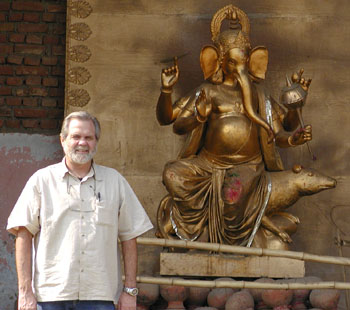 In a recent newspaper article it stated that India was one of the most religious countries in the world. 86% of the population, according to the report, has a religious belief. This is only second to the Philippines, which claimed to be 91% religious.
The issue of being religious or, the new term, being spiritual, is of course not the point. One can be a devout Christian and still commit the atrocities of ethnic cleansing in Rwanda; a pious Hindu and burn the trains that Muslims ride in; a passionate follower of the Koran and gas Kurds (who are also Muslims). The issue is not religion, but the object of one’s faith. For those who follow Christ, it is never about the institution of religion but what it means to be a follower of Christ. Our emphasis is having a personal and intimate relationship with a personal and living God. Our desire is that people would see the Christ of Christianity, not the religious structure that does not always represent who He is.
Sunday, November 27, 2005
Morning Train
 On my recent trip up north into Bihar, we visited several different villages. A couple of times we had to get up at 4:00 a.m. to catch the train to the next venue.
 Though still in what would be considered Fall, this time of the year the temperatures are quite cool at night. As we were getting ready for our train to arrive I took this picture of those who spent the night on the railway platform. Last year I got stuck in Lucknow with no place to sleep so I, too, had to find a clean place to lie down through the night. It was one of the coldest and most uncomfortable nights I have ever experienced. Sleeping on cold concrete at the railway station ranks right up there with the night I slept in a sleeping bag over a pigpen in the mountains of southwest China. Such is the life of a cross-cultural worker.
Wednesday, November 23, 2005
Can You Hear Me Now?

Standing in the middle of a busy street, some guy asked, “Why are you taking a picture of a telephone pole?”
“Foreigners. They do the strangest things,” he probably was thinking as he walked away.
Later I told my friend that the telephone pole is a visual metaphor of the problem with communication. Whether it’s between person-to-person or person-to-God, the wires on that pole in Bihar symbolize the problem with maintaining a good relationship. If I look close enough perhaps I can make out a bird’s nest, or is that just a rusted light cover? Where do the electric line and the phone line cross? Gee, not only is there a problem with voice transmission, it’s shorting out the power!
My life is filled with my wires twisted, crossed, cluttered. No wonder I can’t hear the voice of God, the wire is either cut or choked by the other junk that is cutting me off from the main line. I wonder sometimes if God isn’t trying to make connection but on the other end no one is picking up. “I think I hear you, Lord. Can you speak a little louder?”
“Fix the line, Richard…Can you hear me now?”
Monday, November 21, 2005
Village Life

This past week I had the opportunity to travel into another state in northeastern India. I always enjoy getting out of the city as it gives me a different perspective that is so different from the middle-class environment I live in most of the time.
It’s harvest time in this part of the country near the Nepal border. From early morning men, women and children work in the fields until late at night. With my zoom lens I was able to photograph one woman walking home after a long day in the field. There is something remarkably peaceful about village life. They know little about world events, as their main concern is eking out a living, having enough money to educate their children, to have enough food for another year. What they lack in material goods they compensate by having a strong community support group. My mind went back to those years I spent in Kenya. Like Africans, every place we visited drinking chai was compulsory. They villagers may not have much, but they more than make up by being kind and generous hosts.
Monday, November 14, 2005
The God of Culture
This past week I have been reading research papers. In my class on cultural anthropology the students are required to choose a people group, do a detailed library research on that people group and come up with a hypothesis on how they might present the Good News to them in a culturally relevant way. Some of the people groups include the migrants moving into New Delhi (why they move to urban areas and the challenges they face when they arrive); Muslims who live on the coast; prostitutes (who are now given the politically correct title as commercial sex trade traffickers) and the disabled. It’s been interesting reading as I learn more about the culture of the varied people in the country.
My role, as a teacher and consultant, is to create a thirst for others to learn and love mosaic of people that God has created. I never tire of learning why people do what they do and how they organize their life. All mankind manipulate their social environment so they can cope with this thing called life. Some cultures have very strong family bonds and their ethnicity or their caste provides them the security they long for in a hostile and cruel world we live in. Others are motivated by pure economics, either to just get by or to collect as much stuff as they possibly can get. Many, most, find religion as the foundation of their being, though some religions operate from the fear of the gods they serve or the unidentified forces they believe control their world. What strikes me as I study culture is how similar we all are, yet so diverse.
It may be true that all roads lead toward heaven, but not all roads actually lead to God. There is a way that seems right to man, the Scriptures tells us, but in the end it leads to death. The key, for all man, is to find the way that is right by Him. That way, God’s way, is hard to find when we are prisoners in our own culture. I pray that my students will learn to love the culture that God has created and in it present the Way that leads to a God who is not be feared but to be loved, for He first loved us.
My role, as a teacher and consultant, is to create a thirst for others to learn and love mosaic of people that God has created. I never tire of learning why people do what they do and how they organize their life. All mankind manipulate their social environment so they can cope with this thing called life. Some cultures have very strong family bonds and their ethnicity or their caste provides them the security they long for in a hostile and cruel world we live in. Others are motivated by pure economics, either to just get by or to collect as much stuff as they possibly can get. Many, most, find religion as the foundation of their being, though some religions operate from the fear of the gods they serve or the unidentified forces they believe control their world. What strikes me as I study culture is how similar we all are, yet so diverse.
It may be true that all roads lead toward heaven, but not all roads actually lead to God. There is a way that seems right to man, the Scriptures tells us, but in the end it leads to death. The key, for all man, is to find the way that is right by Him. That way, God’s way, is hard to find when we are prisoners in our own culture. I pray that my students will learn to love the culture that God has created and in it present the Way that leads to a God who is not be feared but to be loved, for He first loved us.
Sunday, November 13, 2005
Social Time

Last week my twin brother had a birthday.
I hate it when old people ask, “How old do you think I am?” It’s a trick to make you make them feel better by saying they look like they’re in they're ‘60’s when reallly they’re in their ‘80’s. Now I’m doing it, and it’s depressing.
People of different nationalities have a hard time guessing the age of other people of different ethnicities. I always had a hard time guessing the age of the Kenyan’s I worked. with and they never could guess my age (all us white folk look the same, you know). A couple of weeks ago I was teaching a class in India and they asked me how old I was? I did the senior citizen thing, “How old do you think I am?”
I went to the white board and gave them a range of options: 45-50; 50-55; 55-60; 60-65; 65-70; 70-75. Most of them put me in the 65-70 category, some put me in the above 70-age group? Sigh, no one put me in the under 50-age range.
In some ways the students gave me a compliment. While the West places high value on youth, in many other cultures older people are perceived as having legitimacy. Social time means that you have something to say because you’ve been nicked in life and are still standing. Really old people are revered, as they are seemingly closer to God (more truth to that than they intend, I think).
One of my favorite authors passed away yesterday. At the age of 95, Peter Drucker was still sought after for his youthful and innovative thinking without the foolishness of youth. Age, as the old saying goes, is often more a state of mind. If I can grow old with a mind that is focused on the future and not the past, it really doesn’t matter how many years I rack up.
Happy birthday, Bill. How old are you?
Saturday, November 05, 2005
Words Of Affirmation

As I sat listening to the, not hardly five foot girl speak in Sunday morning chapel, she spoke emotionally about her father. Konya’s father, a nominal Christian living in the northeast of India, loves his daughter and had great aspirations for her life. Konya is bright and outgoing and her dad wished that one day she would enter politics. To that end she was moving, until she accepted Christ at a youth meeting. Her life was transformed. Leaving the ambitions of a career in the secular world, Konya took a job working for a Christian organization, much to her parent’s disappointment. After a few years her fellow workers, no doubt seeing her potential, encouraged her to pursue further studies. She is now in her second year pursuing her MA in missions.
Konya broke down as she talked about how that all her other friends at home had good jobs and was getting on with life. Then, fighting back the tears with lips quivering she said, “But I am still dependent on my parents.”
The bond between a father and daughter is unique. I know, as I have two precious grown daughters of my own. As Konya spoke I thought of how, because of her close relationship with her father she cares what he thinks. Her motivation in life is to serve Christ regardless of the price, but in the deep recesses of her heart she is motivated to please her earthly father as well. No greater affirmation can a child receive in life than a word of “I’m proud of you,” from your father or mother. That’s true if the child is three or fifty-three.
But the words of affirmation only have meaning if the relationship is grounded in affection. If throughout the child’s life they have been criticized and made to feel of little worth, even a “good job,” rings hollow. A son or daughter from a negative home atmosphere is likely to say, “I could care less what my parent’s think.” If the motivation is to gain acceptance from an abusive parent, will it ever be satisfying? Probably not.
Konya’s testimony reminded me, first, to remember to be mindful of my children and grandchildren. They don’t need my affirmation, but may they always know that I am proud of them no matter how God leads them in life. Second, and most importantly, I am reminded that my Father loves me, is proud of me, and I long to hear Him say, “Well done.”


